
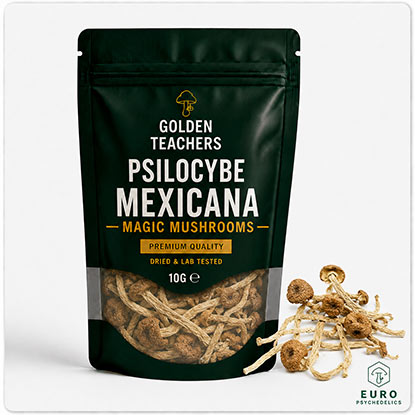
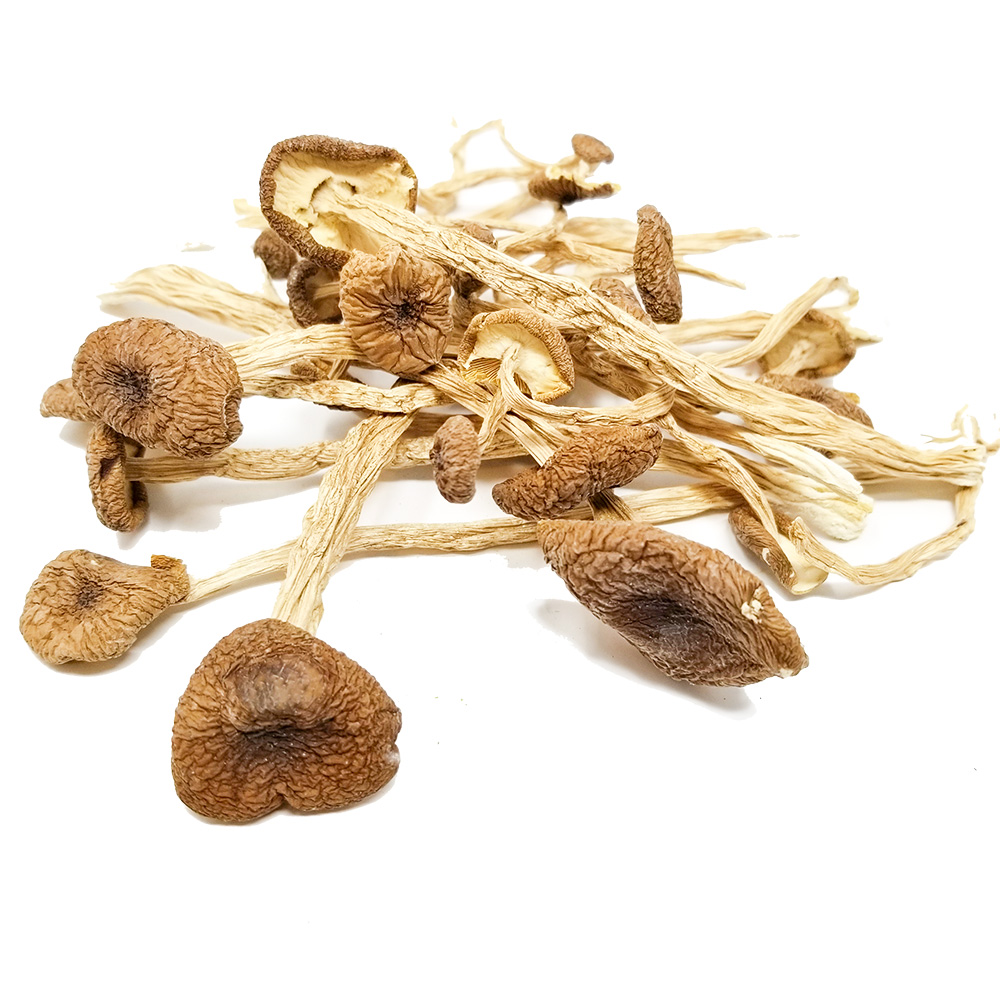
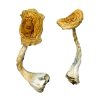
Psilocybe Mexicana Mushrooms
Psilocybe mexicana is one of the best-known psilocybin-producing mushroom species in the history of mycology and psychedelic research. Native to Mexico and associated with a long tradition of ceremonial mushroom use, the species has particular scientific importance because it was among the mushrooms used in the early investigation that led to the isolation and identification of psilocybin.
Unlike generic phrases such as “magic mushrooms,” Psilocybe mexicana is a recognized scientific name referring to a particular species. Scientific literature identifies psilocybin as a major active constituent of P. mexicana, although the concentration of naturally occurring compounds can vary among individual mushrooms and growing conditions.
The species is therefore significant from several perspectives: taxonomy, ethnomycology, chemistry, psychedelic research, and cultural history. It is also important to understand that scientific information about a species should not be interpreted as a recommendation for unsupervised consumption. Psilocybin can produce unpredictable psychological and physical effects, and laws governing psilocybin-containing mushrooms differ substantially between countries and jurisdictions.
What Is Psilocybe mexicana?
Psilocybe mexicana is a psilocybin-producing mushroom belonging to the genus Psilocybe. The species has become particularly prominent because of its connection with the traditional use of psychoactive mushrooms in Mexico and its role in the history of modern psychedelic science.
Scientific literature describes P. mexicana as one of the species containing psilocybin and other related compounds. A review of psilocybin mushrooms identifies psilocybin as the major active constituent of Psilocybe mexicana and explains its conversion into psilocin after ingestion.
The species is sometimes discussed alongside other well-known Psilocybe mushrooms, but it should not simply be treated as interchangeable with them. Different species can have different chemical profiles, ecological characteristics, and historical associations.
The name also has considerable cultural importance. Historical literature concerning Mexican psychoactive mushrooms helped draw scientific attention to Indigenous traditions involving fungi with unusual effects on perception and consciousness.
Taxonomy and Scientific Identity
A scientific name provides a more precise reference than commercial or colloquial mushroom names.
The genus Psilocybe contains numerous species, including both psychoactive and non-psychoactive fungi. Modern fungal taxonomy continues to evolve as researchers use morphological, chemical, and molecular evidence to understand relationships among species.
For Psilocybe mexicana, the scientific name is especially important because common names can vary between regions and communities. Names such as “magic mushrooms” describe a broad category rather than a single biological species.
A species-level identification should therefore not be based solely on a general photograph or an internet listing. Mushroom identification can require examination of habitat, physical characteristics, microscopic features, and, in some circumstances, molecular evidence.
Why Scientific Identification Matters
Correct identification matters for both research and safety.
Several mushroom species can have superficially similar appearances, while their chemistry can differ dramatically. The presence or absence of psilocybin cannot reliably be determined simply by applying a common name.
The National Center for Complementary and Integrative Health warns that some poisonous mushrooms can resemble psilocybin-containing mushrooms. Misidentification can consequently lead to serious or potentially fatal poisoning.
For this reason, Psilocybe mexicana should be understood as a scientific taxonomic designation rather than a generic label for any mushroom marketed as a psychedelic.
Historical Importance of Psilocybe mexicana
One of the most remarkable aspects of Psilocybe mexicana is its place in the history of psychedelic chemistry.
The species became central to research during the mid-20th century, when European and American scientists began systematically investigating the mushrooms associated with Indigenous Mexican traditions.
Historical reviews report that Albert Hofmann isolated psilocybin from Psilocybe mexicana in the late 1950s. Subsequent research established the chemical identity and psychedelic properties of psilocybin and psilocin.
This work represented an important transition from ethnomycological observations to modern pharmacology.
Researchers were no longer simply documenting reports about unusual mushrooms. They were identifying the compounds responsible for their effects and beginning to investigate how those compounds interact with the human nervous system.
Traditional and Cultural Context
Psilocybin-containing mushrooms have a long history of traditional use in parts of Mexico and Central America.
NCCIH notes that Indigenous peoples in parts of Mexico and Central America have used psilocybin-containing mushrooms for thousands of years as part of sacred traditions.
Historical research into these practices helped bring international attention to the fungi during the 20th century. The mushroom commonly identified as Psilocybe mexicana is therefore relevant not only to biology but also to ethnomycology—the study of relationships between people and fungi.
It is important, however, to avoid reducing Indigenous traditions to modern recreational terminology. Traditional ceremonial contexts have their own cultural, spiritual, social, and historical meanings that are not necessarily equivalent to contemporary recreational use.
Psilocybin in Psilocybe mexicana
The principal compound of interest in Psilocybe mexicana is psilocybin.
Psilocybin is a naturally occurring tryptamine compound. After entering the body, it is converted into psilocin, which interacts with serotonin systems in the brain. Research has particularly focused on activity involving the serotonin 5-HT2A receptor and its relationship to altered perception and cognition.
This biochemical pathway helps explain why psilocybin-containing mushrooms can produce profound changes in subjective experience.
The effects are not simply a matter of seeing visual patterns. Psilocybin can influence mood, perception, thought processes, emotional responses, and the subjective experience of time and self. NCCIH describes possible experiences including strong emotions, vivid memories, perceptual changes, and a sense of timelessness or altered self-awareness.
What Effects Are Associated With the Species?
Because P. mexicana contains psilocybin, its effects are broadly associated with the psychedelic properties of psilocybin mushrooms.
Possible effects can include:
- Changes in visual perception
- Altered perception of time
- Intensified emotions
- Changes in thought patterns
- Unusual associations between ideas
- Heightened sensory experiences
- Vivid memories
- Altered perception of self
- Hallucinations
- Anxiety or fear
Physical effects can include nausea, dizziness, headache, fatigue, increased heart rate, and increased blood pressure.
The experience can vary substantially from person to person. Mood, expectations, surroundings, individual health, previous experience, the mushroom’s chemical composition, and interactions with other substances can all influence the outcome.
Consequently, descriptions of a particular species should not be interpreted as a guarantee of a particular subjective experience.
Potency and Chemical Variation
One of the most misunderstood aspects of psilocybin mushrooms is potency.
The amount of psilocybin in a mushroom is not necessarily identical from one specimen to another. Biological variation, genetics, environmental conditions, maturity, storage, and other factors can influence chemical composition.
Research into Psilocybe species has also demonstrated substantial chemical and genetic diversity across the genus. A recent review emphasizes that researchers are continuing to investigate the biochemical diversity of Psilocybe mushrooms and their various metabolites.
This means that a species name alone should not be treated as a precise measurement of chemical content.
It is particularly inappropriate to assume that an online description, regional nickname, appearance, or claimed “strain strength” provides laboratory-level information about psilocybin concentration.
Physical Characteristics and Identification
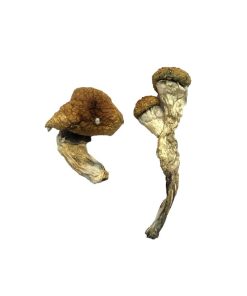
Descriptions of Psilocybe mexicana in mycological literature concern characteristics such as the mushroom’s cap, stem, spore-producing structures, habitat, and microscopic features.
However, identification of wild mushrooms can be difficult even for experienced observers.
Environmental conditions can change the appearance of fungal specimens, and related species may share overlapping characteristics. Photographs can be useful for preliminary discussion but are not always sufficient for definitive identification.
This distinction is especially important because a mistaken identification can have serious consequences when a poisonous species is involved. NCCIH specifically warns that poisonous mushrooms can look similar to psilocybin-containing varieties.
For educational or scientific purposes, professional mycological identification and appropriate laboratory methods provide substantially stronger evidence than informal visual comparison.
Psilocybe mexicana and Modern Psychedelic Research
The historical significance of P. mexicana has continued into modern scientific research.
Psilocybin has become a major subject of investigation in psychiatry and neuroscience. Researchers have examined its potential applications in areas including depression, anxiety associated with serious illness, substance-use disorders, and other psychiatric conditions.
NCCIH reports growing research interest in psychedelic-assisted approaches and notes that the U.S. FDA has granted breakthrough-therapy designations to psilocybin-assisted psychotherapy for major depressive disorder and treatment-resistant depression.
This does not mean that psilocybin mushrooms themselves are established treatments for these conditions.
Clinical research generally involves carefully screened participants, controlled environments, standardized or characterized substances, trained professionals, and structured psychological support. Those conditions are very different from unsupervised use of mushrooms of uncertain identity or chemical composition.
Why Clinical Research Is Different
Modern psychedelic research places substantial emphasis on set, setting, screening, supervision, and follow-up.
Participants may be evaluated for medical and psychiatric risk factors before entering a study. Researchers can also characterize the substance being administered and monitor participants throughout the experience.
This controlled approach allows researchers to distinguish therapeutic outcomes from adverse events more effectively.
By contrast, an unidentified mushroom does not provide reliable information about its species or chemical composition. Even correctly identified mushrooms can vary in their concentrations of naturally occurring compounds.
Therefore, promising findings from clinical trials should not be interpreted as proof that consuming wild or commercially labeled Psilocybe mexicana will produce the same outcomes.
Safety Considerations
Psilocybin is not risk-free.
NCCIH lists possible adverse effects including increased heart rate and blood pressure, nausea, dizziness, headache, fatigue, anxiety, paranoia, hallucinations, and, in some cases, persistent psychosis.
Psychological reactions can be particularly unpredictable. A person may experience intense fear, confusion, or panic, sometimes described as a “bad trip.”
Individual mental health history is also important. NCCIH states that psilocybin is not considered safe for people with psychotic disorders such as schizophrenia or schizoaffective disorder, as well as certain other severe psychiatric conditions.
Another major safety issue is accidental mushroom poisoning. A mushroom incorrectly identified as Psilocybe mexicana could instead belong to a toxic species.
Interactions and Uncertainty
Combining psychoactive substances can make effects less predictable.
NCCIH notes that the experience can be affected by a person’s health, the type of mushroom, previous experience, and combined use with other drugs.
This is one reason medical and scientific researchers treat psychedelic administration as a controlled process rather than simply focusing on the identity of the mushroom.
Legal Status
The legality of Psilocybe mexicana depends on the jurisdiction and can change over time.
In many places, legal controls focus on psilocybin and psilocin rather than merely on the biological name of the mushroom. Consequently, the legal status of a particular mushroom can depend on the jurisdiction, the compounds it contains, and the activity involved.
For example, NCCIH notes that psilocybin remains federally controlled in the United States while some U.S. jurisdictions have adopted different approaches.
Anyone researching Psilocybe mexicana for academic, botanical, or legal purposes should therefore check the current laws applicable to their specific location rather than relying on outdated internet claims.
Why Psilocybe mexicana Remains Scientifically Important
The importance of Psilocybe mexicana extends well beyond its reputation as a psychedelic mushroom.
It occupies a distinctive position in the history of natural-products chemistry because research on the species contributed to the identification of psilocybin.
It also represents an important link between ethnomycology and modern pharmacology. Traditional knowledge helped draw scientific attention to psychoactive fungi, while subsequent chemical research identified the compounds responsible for their effects.
Today, researchers continue investigating psilocybin chemistry, fungal biology, biosynthesis, genetics, and potential therapeutic applications. Recent scientific reviews describe psilocybin as an increasingly important research subject in neuroscience, psychiatry, pharmacology, and biotechnology.
That combination of cultural history, fungal biology, chemistry, and neuroscience makes P. mexicana one of the most historically significant species in psychedelic research.
Frequently Asked Questions About Psilocybe mexicana Mushrooms
1. What are Psilocybe mexicana mushrooms?
Psilocybe mexicana is a recognized species of mushroom associated with Mexico and known for containing psilocybin. It is one of the species that played an important role in the history of modern psilocybin research.
2. Does Psilocybe mexicana contain psilocybin?
Yes. Scientific literature identifies psilocybin as a major active constituent of Psilocybe mexicana. Psilocybin is metabolized into psilocin in the body, producing the psychedelic effects associated with the species.
3. What is Psilocybe mexicana known for historically?
The species is particularly notable because it was involved in the early scientific investigation of psychoactive mushrooms. Albert Hofmann’s isolation and characterization of psilocybin from P. mexicana in the 1950s was a major milestone in psychedelic chemistry.
4. Are Psilocybe mexicana mushrooms safe?
They cannot automatically be considered safe. Psilocybin can cause adverse psychological and physical effects, while incorrect identification of wild mushrooms can create an additional poisoning risk.
5. Is Psilocybe mexicana used in medical research?
The species is historically important to psilocybin research, while modern clinical research generally focuses on controlled administration of psilocybin rather than treating an unidentified mushroom as a standardized medicine. Current research is investigating possible applications in several mental-health settings.
6. Is Psilocybe mexicana legal?
Its legal status depends on the country or jurisdiction and may change. Because psilocybin and psilocin are controlled in many jurisdictions, anyone researching the species should consult current local laws rather than relying on informal online product descriptions.
| Quantity | 7grams, 14grams, 28grams |
|---|
Be the first to review “Psilocybe Mexicana Mushrooms”
Related products
Magic Mushrooms
Magic Mushrooms
Magic Mushrooms
Magic Mushrooms
Magic Mushrooms
Magic Mushrooms
Magic Mushrooms
Magic Mushrooms
Reviews
There are no reviews yet.