
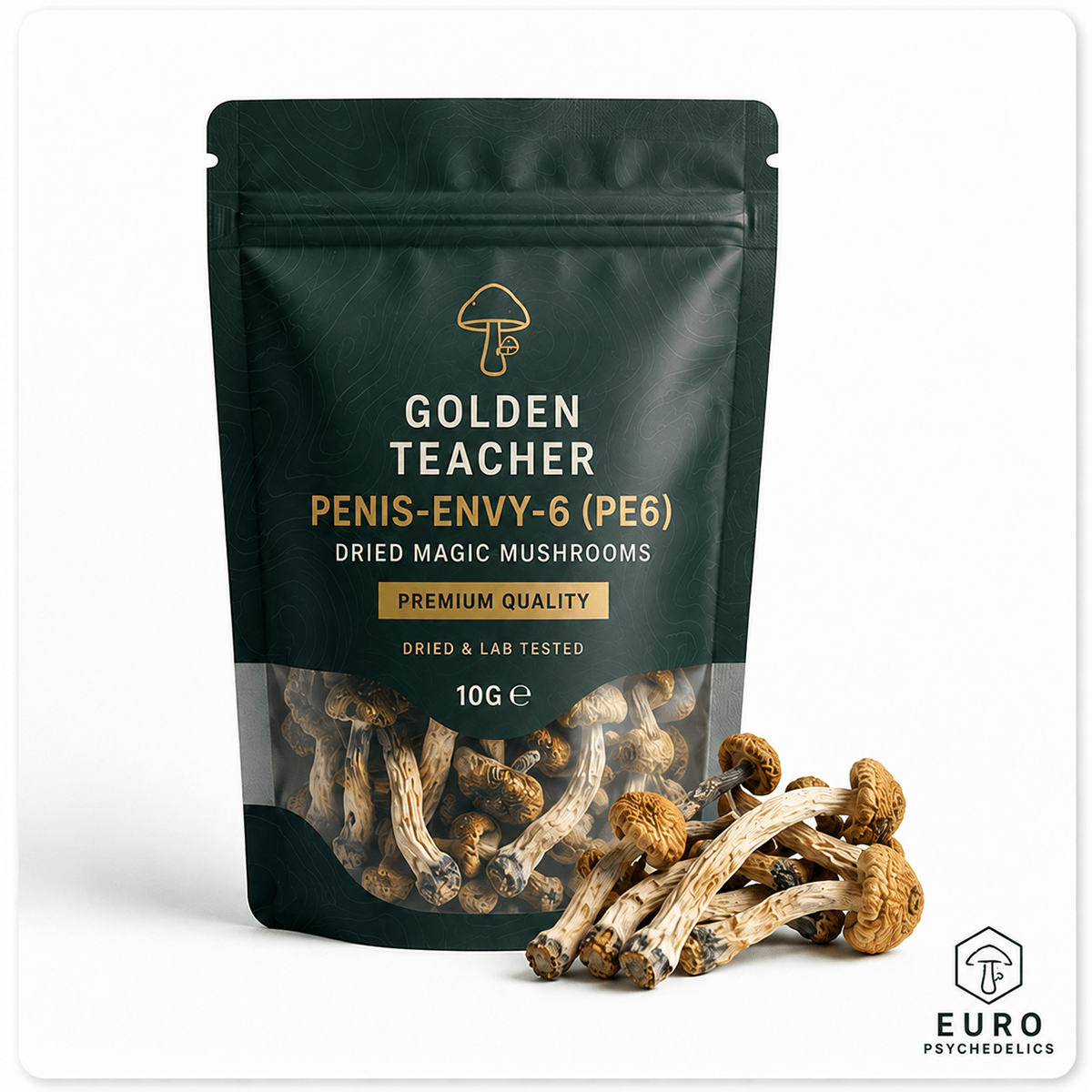
Penis Envy 6 (PE6) Dried Magic Mushrooms: Origins, Taxonomy, Characteristics & European Legal Context
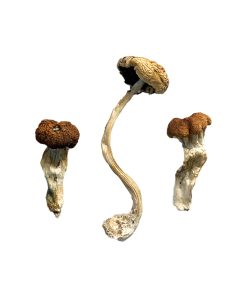
Penis Envy 6 (PE6) Dried Magic Mushrooms is a name used in contemporary mushroom culture for a lineage or variety associated with Psilocybe cubensis. The terminology can be confusing because names such as Penis Envy, PE6 and related labels are generally not formal scientific taxonomic categories. Instead, they are commonly used to distinguish particular cultivated lineages, phenotypes or community-recognised varieties.
From a scientific perspective, Psilocybe cubensis is a recognised fungal species. NCBI lists Psilocybe cubensis as a species of basidiomycete fungus, with the taxonomy identifier 181762.
The PE6 designation therefore needs to be understood primarily as a lineage-style name rather than a separate species. Public descriptions of cultivated mushroom varieties can differ considerably, and there is no universally accepted scientific standard that establishes every commercial or community variety name as a distinct genetic or taxonomic entity.
What Does PE6 Mean?
PE6 is generally encountered as an abbreviation connected with the broader Penis Envy naming family. The name Penis Envy itself is widely associated with a distinctive Psilocybe cubensis phenotype and has become one of the more recognisable informal variety names within contemporary mushroom culture.
The number 6 in PE6 should not automatically be interpreted as a scientific classification, generation number or formally documented taxonomic rank. Informal mushroom nomenclature frequently develops through community cultivation history, exchanges of genetic material and individual naming conventions.
This is an important distinction for an educational product page. Scientific taxonomy and enthusiast terminology are not the same thing.
The scientific name Psilocybe cubensis refers to an actual species. By contrast, PE6 is better understood as a cultivar, lineage-style designation or community label whose precise provenance may depend on the source describing it.
The Taxonomy of Psilocybe cubensis
Psilocybe cubensis belongs to the fungal kingdom and is classified within the genus Psilocybe. NCBI currently records Psilocybe cubensis as the accepted species name and gives its full taxonomic lineage through Fungi, Basidiomycota, Agaricomycetes and Agaricales.
This distinction matters because mushroom names can sometimes make a particular lineage sound like a separate species.
For example:
- Kingdom: Fungi
- Phylum: Basidiomycota
- Class: Agaricomycetes
- Order: Agaricales
- Genus: Psilocybe
- Species: Psilocybe cubensis
- Informal lineage/variety name: Penis Envy / PE6
NCBI also records Stropharia cubensis as the basionym associated with the species, reflecting historical changes in fungal nomenclature.
Consequently, PE6 should not be presented as a separate species unless reliable scientific evidence specifically supports such a classification.
Characteristics Associated With Penis Envy Lineages
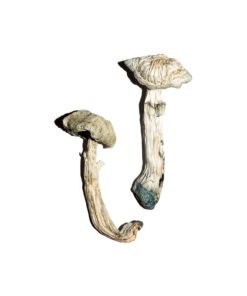
Penis Envy-associated mushrooms are generally discussed in relation to unusual morphology within the broader Psilocybe cubensis group.
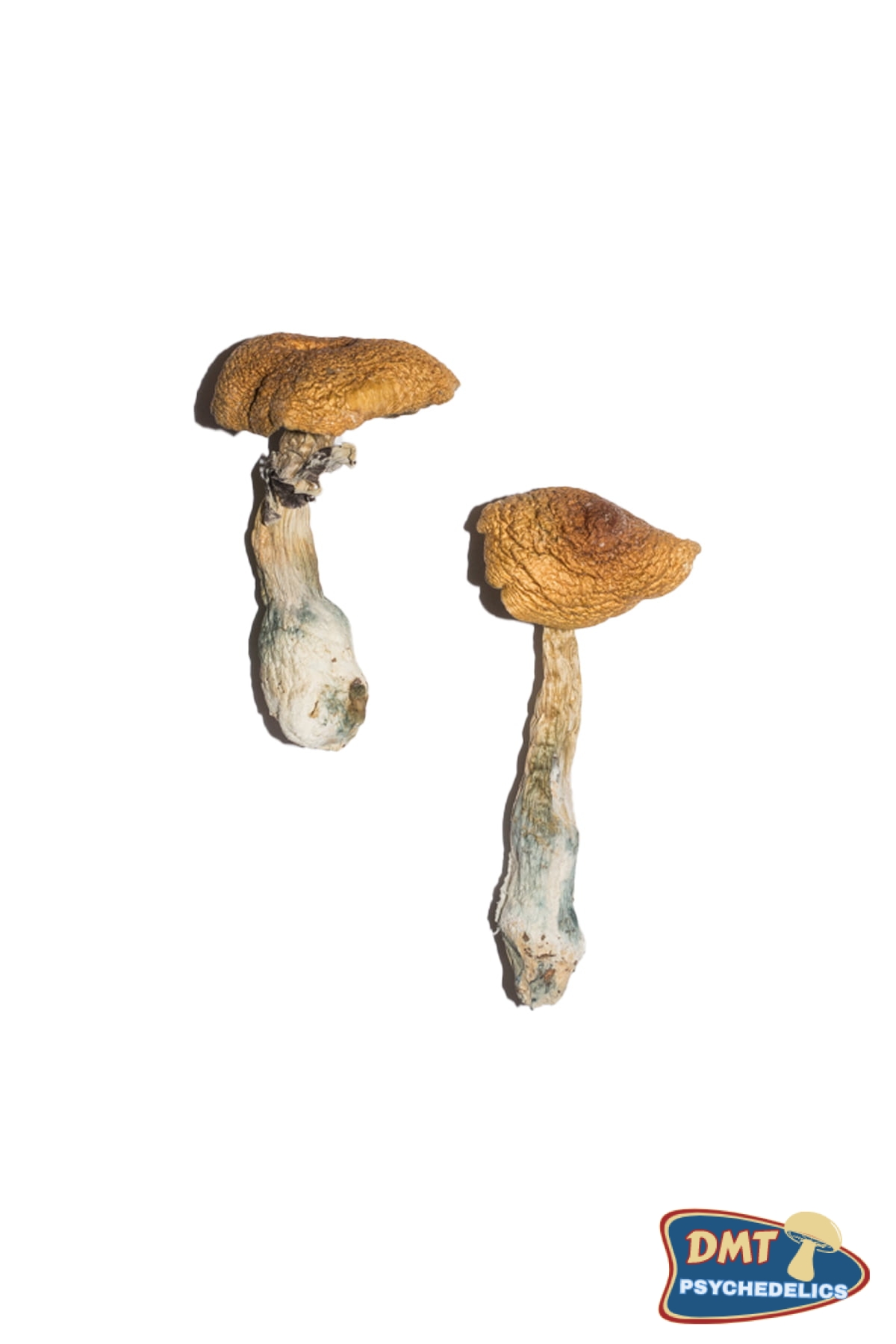
Descriptions commonly focus on features such as comparatively substantial stems, compact fruiting structures and caps that may develop differently from more conventional P. cubensis forms.
However, appearance can vary significantly.
Environmental conditions, genetics and individual specimens can all influence morphology. A photograph or commercial name alone therefore cannot establish the exact genetic identity of a mushroom.
This is particularly relevant for PE6 because informal lineage names can be used inconsistently.
Two mushrooms carrying the same community name are not necessarily genetically identical, and the same underlying lineage can sometimes receive different names in different communities.
Colour and Morphology
Psilocybe cubensis specimens can display a range of colours, commonly involving cream, tan, golden or brown tones depending on genetics and maturity.
Some specimens associated with Penis Envy-type lineages are described as having relatively dense or robust structures compared with commonly illustrated P. cubensis examples.
Nevertheless, these characteristics should be regarded as descriptive rather than diagnostic.
Scientific identification of fungi is more complicated than matching a mushroom’s visual appearance with an online photograph or variety name.
The European Union Drugs Agency notes that psilocybin-containing fungi can be difficult to distinguish morphologically from other fungi and that wild mushroom identification can present risks.
Psilocybin and Psilocin
One of the most important scientific distinctions surrounding these mushrooms concerns their chemistry.
Certain species of Psilocybe contain the naturally occurring compounds psilocybin and psilocin. The EUDA identifies psilocybin as the principal psychoactive compound in hallucinogenic mushrooms and explains that psilocybin is converted into psilocin in the body.
The chemistry of individual fungal specimens can vary, however. A variety name should not automatically be treated as a laboratory measurement of chemical composition.
This means that labels such as PE6 do not constitute a scientifically validated guarantee of a particular concentration or chemical profile.
For an educational website, it is therefore more accurate to discuss these mushrooms in terms of their species, known compounds and documented scientific research rather than assigning fixed chemical characteristics to an informal lineage name.
Penis Envy and Modern Mushroom Culture
The Penis Envy name has become particularly prominent in modern online mushroom communities.
Unlike scientific species names, contemporary cultivar names often develop through informal documentation, cultivation communities and exchanges of genetic material. As these names become popular, they can acquire histories that are partly documented and partly based on community tradition.
That makes it difficult to establish a single authoritative origin story for every named lineage.
PE6 should consequently be presented carefully. It is reasonable to discuss it as part of the broader Penis Envy naming family while avoiding unsupported claims about an exact original specimen, breeder or geographic discovery.
This approach also makes the content more scientifically responsible.
Why Lineage Names Can Be Confusing
The terminology surrounding Psilocybe cubensis can include several different categories:
Scientific species names describe biological taxonomy.
Cultivar or variety names may distinguish selected characteristics within a species.
Lineage names can describe a particular genetic history or community-recognised branch.
Marketing names may simply be labels used to differentiate products or collections.
These categories can overlap, but they should not be treated as interchangeable.
For SEO content, this distinction is especially valuable because searches for a particular mushroom name do not necessarily mean that the name represents an officially recognised scientific taxon.
Dried Mushrooms and Scientific Description
The term dried describes physical condition rather than taxonomy.
A dried specimen remains biologically associated with the same species from which it originated. Drying does not transform Psilocybe cubensis into a different species.
The EUDA’s information on hallucinogenic mushrooms recognises that these fungi can occur in fresh and treated or preserved forms, including deliberately dried material.
For that reason, the scientifically useful terminology is to separate:
- species identity,
- lineage or variety name,
- physical condition,
- chemical composition,
- and legal status.
Keeping those categories separate produces more accurate educational information.
European Legal Context
The legal position surrounding psilocybin-containing mushrooms is particularly important for European readers.
Psilocybin and psilocin are controlled under the 1971 United Nations Convention on Psychotropic Substances. However, national implementation differs considerably between European jurisdictions.
Some countries specifically regulate mushrooms containing these compounds, while others approach the issue through legislation concerning the controlled compounds themselves. The legal treatment of fresh, dried, prepared or otherwise processed mushrooms can also differ.
Consequently, there is no single European legal rule that can safely be applied to every country.
The EUDA specifically notes that national laws and penalties differ and that legislation can change, meaning individuals should consult the competent authority in the relevant jurisdiction for current information.
For a European-facing website, this distinction is essential.
A statement such as “legal in Europe” would be misleading because Europe contains numerous separate legal jurisdictions with different approaches to controlled substances.
Research Into Psychedelic Mushrooms
Scientific interest in psilocybin has expanded substantially over recent decades.
Researchers have investigated psilocybin-assisted approaches in areas including depression and other psychiatric conditions. However, research findings should not be confused with regulatory approval.
The EUDA reports that, as of its 2024 therapeutic-use overview, no classical psychedelic had received EU or Member State regulatory approval for medical treatment of neuropsychiatric disorders. It also notes that psilocybin research has progressed into advanced clinical development.
This distinction between research and approved medical treatment is important when discussing psychedelic mushrooms online.
A mushroom variety should not be described as a medical treatment simply because its active compounds are being investigated in clinical research.
Responsible Interpretation of PE6
The most scientifically defensible way to describe Penis Envy 6 is as a community-recognised lineage or variety name associated with Psilocybe cubensis rather than as an independently recognised species.
The designation can be useful for discussing mushroom culture, genetics and morphology, but it should not be treated as a formal scientific classification.
Similarly, claims about potency, exact geographic origin or genetic ancestry should be supported by reliable documentation rather than repeated simply because they appear frequently on websites.
This approach helps distinguish established scientific information from community terminology and internet folklore.
Frequently Asked Questions
1. What are Penis Envy 6 (PE6) Dried Magic Mushrooms?
Penis Envy 6 (PE6) Dried Magic Mushrooms is a name associated with a Penis Envy-type lineage or variety of Psilocybe cubensis. PE6 is not itself a formally recognised scientific species. The underlying species, Psilocybe cubensis, is a recognised species of basidiomycete fungus.
2. Is PE6 a separate mushroom species?
No. PE6 should not automatically be described as a separate species. The scientific species most commonly associated with the Penis Envy naming family is Psilocybe cubensis. PE6 is better understood as an informal lineage or variety designation.
3. What does the PE6 name mean?
PE6 is generally used as shorthand connected with the broader Penis Envy naming family. The precise meaning and provenance of the number “6” are not established as a formal scientific classification, so claims about its exact origin should be treated cautiously.
4. What compounds are associated with Psilocybe cubensis?
Psilocybin and psilocin are the principal psychoactive compounds associated with hallucinogenic mushrooms. The EUDA explains that psilocybin is converted into psilocin in the body.
5. Are Penis Envy 6 mushrooms legal throughout Europe?
No. European laws differ between countries. Psilocybin and psilocin are internationally controlled substances, while national laws determine how mushrooms containing them are regulated.
6. Is PE6 an officially recognised scientific variety?
The PE6 designation should not be confused with formal botanical or mycological taxonomy. It is primarily encountered as a community or lineage-style name associated with Psilocybe cubensis. Scientific species classification and informal mushroom variety names serve different purposes.
| Quantity | 7grams, 14grams, 28grams |
|---|
Be the first to review “penis-envy-6-pe6-dried-magic-mushrooms”
Related products
Magic Mushrooms
Magic Mushrooms
Magic Mushrooms
Magic Mushrooms
Magic Mushrooms
Magic Mushrooms
Magic Mushrooms
Magic Mushrooms
Reviews
There are no reviews yet.