
Leucistic Burma Magic Mushrooms: Characteristics, Taxonomy, Origins & European Legal Context
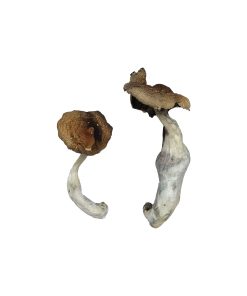
Leucistic Burma Magic Mushrooms is a name used within contemporary psychedelic mushroom culture to describe a distinctive, pale mushroom variety associated with the broader Burma lineage naming tradition. The term combines a geographic-style name with the biological concept of leucism, referring to reduced pigmentation.
It is important to distinguish this popular terminology from formal fungal taxonomy. “Leucistic Burma” is not, by itself, the scientific name of a separate mushroom species. A named variety or lineage can have a recognisable identity within mushroom communities while still belonging to a broader scientifically recognised species.
The word Burma refers historically to present-day Myanmar, while leucistic describes an observable pigmentation characteristic. Neither term alone establishes the exact species, genetics, chemical composition or geographical provenance of an individual specimen.
For European readers, these distinctions are particularly relevant. Scientific identification, chemical composition and legal classification are separate questions. The European legal position surrounding psilocybin-containing mushrooms also differs between countries, making country-specific information essential.
What Are Leucistic Burma Magic Mushrooms?
The name Leucistic Burma Magic Mushrooms is best understood as a popular variety or lineage-style designation.
The term “leucistic” draws attention to the mushroom’s unusually pale appearance, while “Burma” provides a geographic-style association with Myanmar.
A name like this does not automatically establish:
- a unique scientific species;
- a confirmed genetic lineage;
- a precise geographical origin;
- a specific concentration of psilocybin or psilocin;
- a particular potency; or
- a legal classification.
These characteristics require independent evidence.
This distinction is useful when evaluating mushroom information online because informal variety names can sometimes be presented with a level of scientific certainty that the available evidence does not support.
What Does Leucistic Mean?
Leucism is a biological condition involving reduced pigmentation.
A leucistic organism can appear substantially paler than normally pigmented examples while retaining some pigmentation.
This is different from the way albinism is generally defined, although the two terms are sometimes confused in informal mushroom terminology.
In the context of mushroom varieties, “leucistic” is primarily a description of an observable phenotype.
Leucism and mushroom appearance
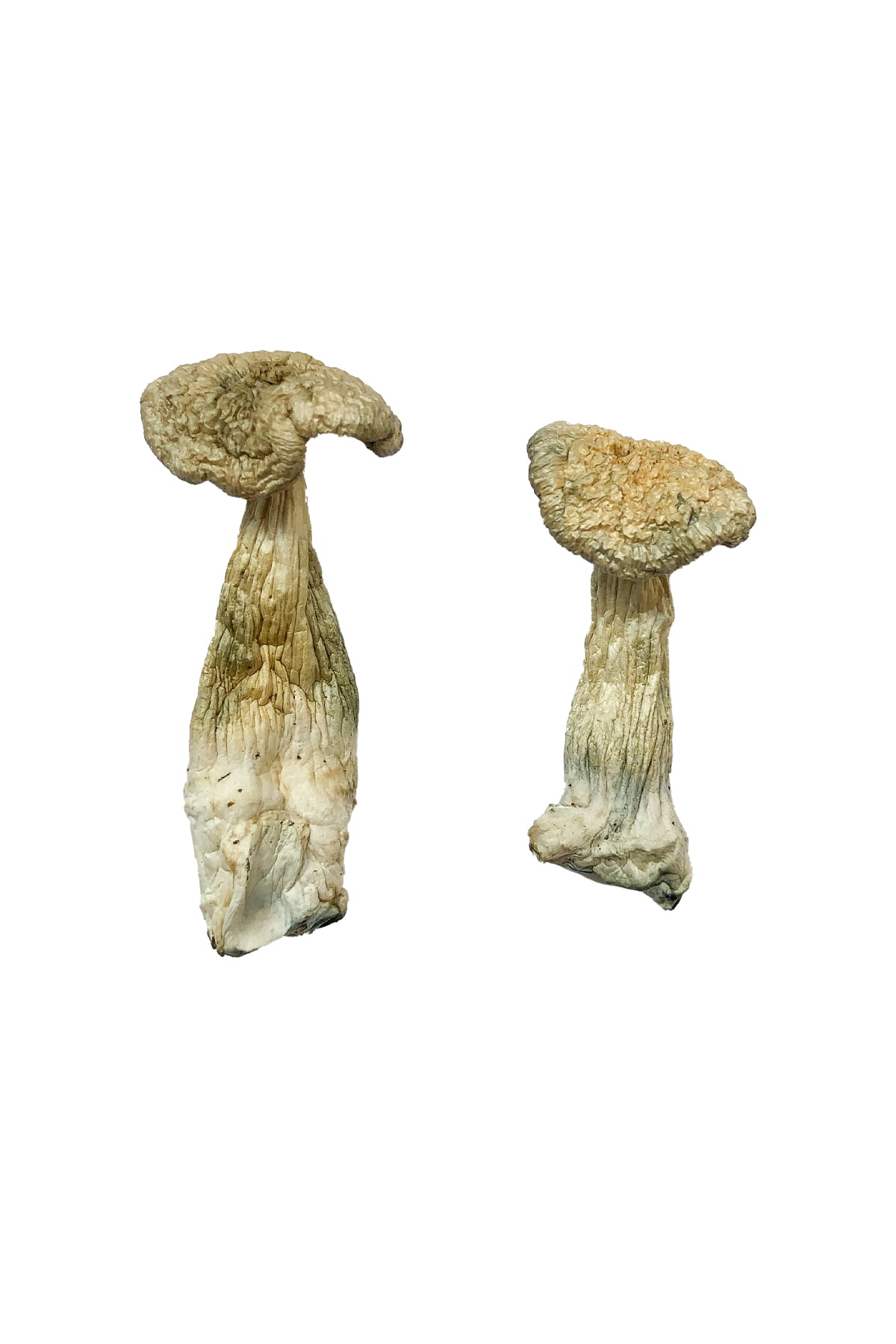
Reduced pigmentation may result in characteristics such as:
- pale caps;
- cream or off-white coloration;
- lighter stems;
- reduced colour intensity; and
- an overall pale appearance.
The visual characteristic itself does not establish that the mushroom represents a separate species.
A phenotype can occur within a recognised species without changing the organism’s formal taxonomic classification.
Why Is It Called Burma?
The term Burma is the former English name commonly associated with Myanmar.
In mushroom culture, Burma has been used as part of names for particular mushroom lineages.
However, the presence of “Burma” in a variety name should not automatically be interpreted as proof that every specimen carrying that name was collected in Myanmar.
Cultivated mushroom lineages can move between countries and can be propagated far from their historical locations.
This creates an important distinction between geographic association and verified provenance.
Scientific Taxonomy Versus Popular Mushroom Names
Scientific taxonomy provides a formal system for identifying and classifying organisms.
Popular mushroom names work differently.
A name can develop through:
- community traditions;
- historical collections;
- cultivation lineages;
- phenotype selection;
- online communities; or
- commercial terminology.
A name may become widely recognised without becoming a formal scientific species.
One well-known species associated with the broader magic-mushroom category is Psilocybe cubensis. Scientific databases recognise P. cubensis as a distinct fungal species.
However, the name “Leucistic Burma” should not automatically be presented as a separate species or assumed to establish a particular scientific classification.
Species, Lineage and Phenotype
Understanding three terms makes named mushrooms easier to interpret.
Species
A species is a formal biological classification supported by taxonomic evidence.
Lineage
A lineage describes ancestry or genetic descent within a population.
Phenotype
A phenotype describes observable characteristics resulting from genetics and environmental influences.
Leucism is primarily relevant to phenotype.
This means that a mushroom can have a distinctive pale appearance while remaining within a broader recognised species.
Appearance of Leucistic Mushrooms
The appearance of a mushroom can vary considerably.
Characteristics researchers may examine include:
- cap morphology;
- pigmentation;
- stem structure;
- gill arrangement;
- surface texture;
- developmental stage; and
- overall fruiting-body structure.
Leucistic specimens can appear noticeably different from normally pigmented examples.
However, colour alone is not enough to determine scientific identity.
Environmental factors can also affect fungal development and appearance, meaning that individual specimens can vary even when they share a common lineage.
Psilocybin and Psilocin
The broader term magic mushrooms commonly refers to fungi associated with naturally occurring psychedelic compounds, particularly psilocybin and psilocin.
Psilocybin is converted within the body into psilocin, which is associated with the psychedelic effects of these substances.
These compounds have become an important subject of modern scientific research.
Researchers have investigated areas including:
- perception;
- consciousness;
- brain activity;
- mood;
- psychotherapy;
- depression;
- anxiety; and
- other psychiatric conditions.
Scientific interest in psilocybin does not mean that every mushroom variety has an identical chemical composition or that unsupervised use is medically established.
Does Leucistic Appearance Indicate Potency?
No reliable conclusion about potency can be made simply from pigmentation.
The concentration of naturally occurring compounds in fungal material can vary due to biological and environmental factors.
Potential influences include:
- genetics;
- species;
- environmental conditions;
- developmental stage;
- biological variation; and
- storage.
Therefore, a pale or leucistic appearance should not be treated as evidence of a particular psilocybin or psilocin concentration.
Chemical composition is a laboratory question rather than something that can be established from a variety name or colour.
Mushroom Identification
Accurate fungal identification can be challenging.
Visual similarities between different mushrooms can make identification difficult, while the same species can exhibit substantial variation.
Professional identification may involve multiple forms of evidence.
Macroscopic characteristics
Researchers can examine visible features including:
- cap shape;
- pigmentation;
- stem morphology;
- gills;
- surface texture; and
- developmental characteristics.
Microscopic characteristics
Microscopy can reveal structures that are not visible to the naked eye.
Spore characteristics and other microscopic features can provide valuable taxonomic information.
Molecular identification
DNA-based techniques can provide additional evidence concerning species identity and genetic relationships.
This is why an informal name such as Leucistic Burma should not be treated as definitive scientific identification.
The Importance of Genetic Lineage
Genetics is particularly relevant when discussing named mushroom varieties.
A lineage can develop an identity within a community based on its reported ancestry and observable characteristics.
However, historical lineage claims are not always supported by publicly available genetic studies.
A variety may have a long-standing community history while still lacking extensive peer-reviewed genetic documentation.
This is an important distinction between community knowledge and scientifically verified lineage information.
Leucistic Burma and Modern Mushroom Culture
Leucistic varieties have attracted considerable interest within mushroom communities because their reduced pigmentation gives them a distinctive appearance.
The popularity of visually unusual mushrooms has contributed to a large vocabulary of named varieties.
Names may describe:
- colour;
- morphology;
- geography;
- cultural references;
- historical associations; or
- perceived lineage.
This naming tradition has become particularly prominent through online communities.
The resulting terminology can be useful for communication within those communities while remaining separate from formal fungal taxonomy.
Why Online Information Can Be Difficult to Verify
Information about named mushroom varieties is often distributed across many different types of websites.
Sources can include:
- scientific publications;
- biodiversity databases;
- community forums;
- social media;
- blogs;
- commercial pages; and
- anecdotal reports.
These sources do not have equal evidentiary value.
A claim repeated across multiple websites may ultimately originate from one undocumented source.
For scientifically responsible content, it is therefore useful to distinguish:
Documented scientific information from community descriptions and historical claims.
This is particularly important for statements about genetics, geographic origin and chemical composition.
Cultural and Geographic Naming
The use of geographic names in mushroom culture is not unique to Burma.
Names may reference:
- countries;
- regions;
- islands;
- towns;
- mountains; or
- other locations.
These names can preserve historical associations, but they do not necessarily indicate where every modern specimen originated.
Modern cultivation and distribution can separate a lineage from the location that originally inspired its name.
Psychedelic Research in Europe
Interest in psychedelic science has increased substantially throughout Europe.
Researchers are investigating substances such as psilocybin in controlled scientific settings.
Research areas include:
- neuroscience;
- psychology;
- psychiatry;
- consciousness;
- perception;
- depression; and
- anxiety.
The European Union Drugs Agency (EUDA) has recognised increasing scientific interest in psychedelic substances while also discussing regulatory and public-health considerations.
Clinical research should not be confused with uncontrolled personal use. Research studies operate within defined protocols, ethical frameworks and professional oversight.
European Legal Context
The legal status of psilocybin-containing mushrooms varies across Europe.
There is no single European law that applies identically to every country.
EUDA states that psilocybin and psilocin are controlled under the 1971 United Nations Convention on Psychotropic Substances. Individual European countries implement their own national legislation concerning these substances.
Depending on the jurisdiction, laws may address:
- possession;
- cultivation;
- preparation;
- importation;
- distribution;
- supply;
- the form of the material; and
- specific controlled substances.
Why European law must be checked nationally
It would therefore be inaccurate to describe Leucistic Burma Magic Mushrooms as universally legal or illegal throughout Europe.
The applicable rules depend on the specific jurisdiction and circumstances.
Legislation can also change over time, so current national legislation and the relevant competent authority should be consulted when determining legal status.
Health Considerations
Psychedelic mushrooms can cause substantial changes in perception, cognition and mood.
Individual responses can vary considerably.
Potential concerns include:
- anxiety;
- confusion;
- impaired judgement;
- psychological distress; and
- unexpected psychological reactions.
There is also a general risk associated with mushroom misidentification because visually similar fungi can have very different properties.
Questions involving medications, mental health or possible interactions should be discussed with a qualified healthcare professional.
Leucistic Burma in the Context of Mycology
From a mycological perspective, the most interesting feature of the Leucistic Burma name is the combination of phenotype and geographic-style lineage terminology.
“Leucistic” describes an observable pigmentation characteristic.
“Burma” describes a geographic association.
“Magic mushroom” is a broad popular term associated with fungi containing psychedelic compounds.
These descriptions operate at different levels.
They should not be combined into an assumption about a mushroom’s exact species or chemical profile.
Why Responsible Mushroom Information Matters
High-quality mushroom information should clearly distinguish between what is known and what is uncertain.
For example:
- A scientific species can be documented through taxonomy.
- A lineage can be described through genetic or historical evidence.
- A phenotype can be described through observable characteristics.
- Chemical composition can be established through analytical testing.
- Legal status can be determined through applicable legislation.
Keeping these categories separate produces more accurate and useful information.
Leucistic Burma Magic Mushrooms in Context
Leucistic Burma Magic Mushrooms represents a distinctive example of modern named mushroom varieties.
The term combines the concept of leucism with the geographic-style name Burma. Its identity within mushroom culture is therefore connected to both visual characteristics and lineage terminology.
Scientifically, however, the name alone does not establish a separate species, precise genetic history, chemical composition or potency.
For European readers, legal status must likewise be assessed according to the relevant national jurisdiction.
The most reliable approach is to distinguish popular mushroom terminology, fungal taxonomy, genetics, chemistry, cultural history and legislation rather than treating a variety name as definitive evidence of all these characteristics.
Frequently Asked Questions
1. What are Leucistic Burma Magic Mushrooms?
Leucistic Burma Magic Mushrooms is a popular name for a pale or reduced-pigmentation mushroom variety associated with the broader Burma lineage naming tradition. It is not, by itself, the formal scientific name of a separate mushroom species.
2. What does “leucistic” mean?
Leucistic refers to reduced pigmentation. A leucistic mushroom may appear substantially paler than normally pigmented examples while retaining some pigmentation. The term describes an observable characteristic rather than automatically identifying a separate species.
3. Does “Burma” prove that the mushrooms originate from Myanmar?
No. Burma is the former English name associated with Myanmar, but a geographic-style mushroom name does not by itself establish the provenance of an individual specimen. Cultivated lineages can be propagated far from their historical associations.
4. Does leucistic coloration indicate a particular potency?
No. Colour and pigmentation cannot reliably establish the concentration of psilocybin, psilocin or other compounds. Chemical composition can vary and requires appropriate analytical evidence.
5. Are Leucistic Burma Magic Mushrooms legal in Europe?
There is no universal European answer. Laws concerning psilocybin, psilocin and mushrooms containing these substances differ between European countries. Current legislation for the specific jurisdiction should be consulted.
6. Is Leucistic Burma a scientific species?
No. “Leucistic Burma” is a popular variety or lineage-style designation. Formal fungal species identification requires appropriate taxonomic evidence and should not be inferred from a community name alone.
| Quantity | 14grams, Oz, Qp, Hp, 1p |
|---|
Be the first to review “Leucistic Burma Magic Mushrooms”
Related products
Magic Mushrooms
Magic Mushrooms
Magic Mushrooms
Magic Mushrooms
Magic Mushrooms
Magic Mushrooms
Magic Mushrooms
Magic Mushrooms
Reviews
There are no reviews yet.