
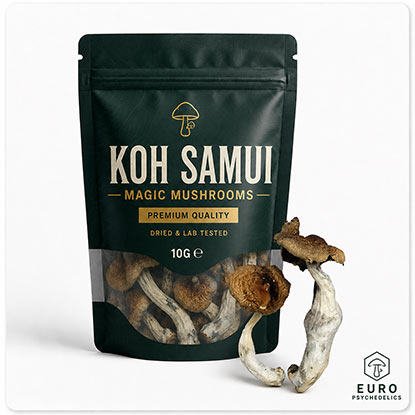
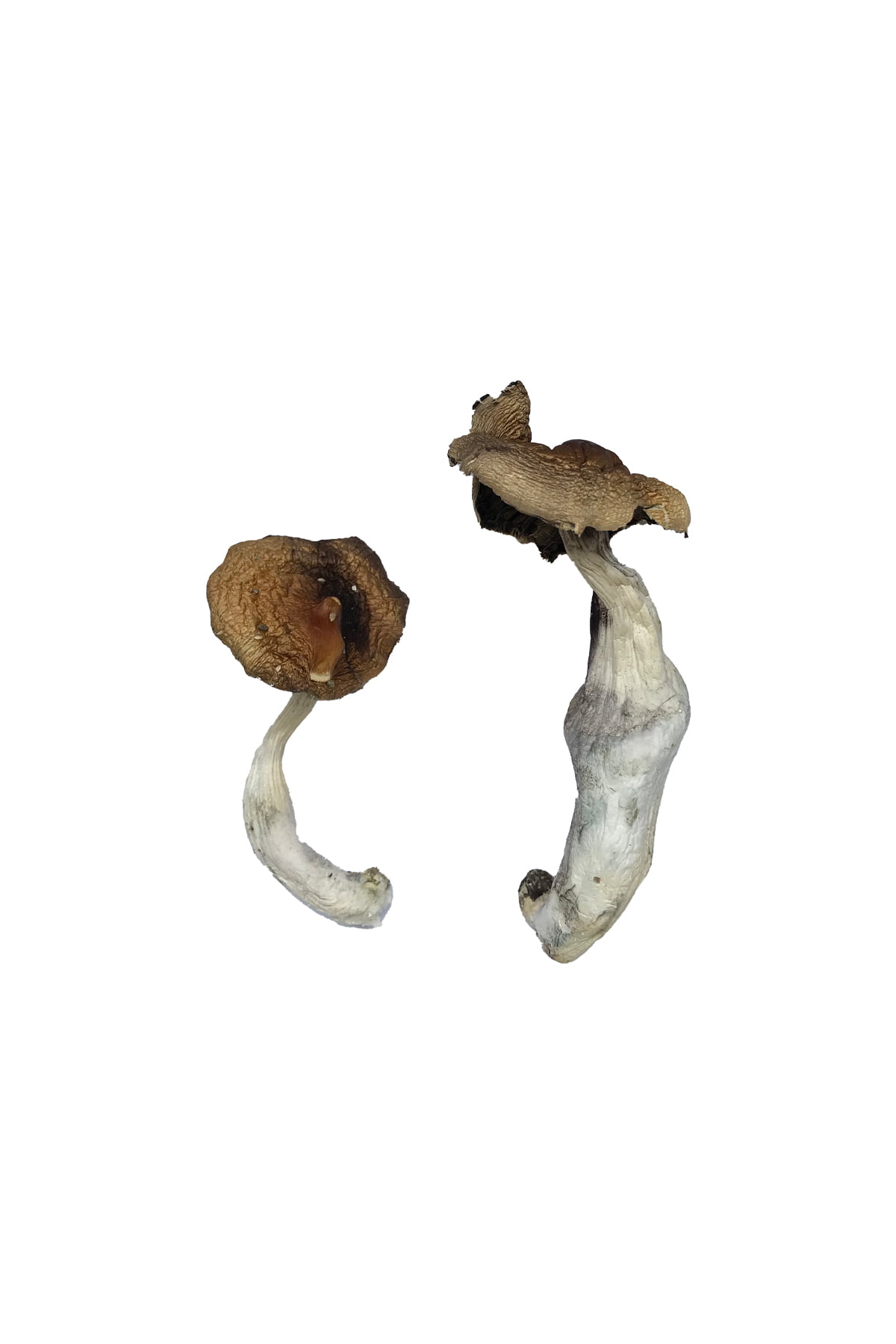
Koh Samui Magic Mushrooms: Origins, Characteristics, Taxonomy & European Legal Context
Koh Samui Magic Mushrooms is a geographic-style name associated with psychedelic mushroom culture and the Thai island of Koh Samui. As with many named mushroom varieties, the name is better understood as a popular lineage or regional designation than as the formal scientific name of a separate mushroom species.
The term “Koh Samui” refers to a specific location in Thailand, but a geographic name alone does not establish the exact biological origin, genetics or chemical composition of every mushroom carrying that label.
This distinction is important when discussing psychedelic mushrooms because popular names, scientific taxonomy and laboratory chemistry are separate areas of knowledge. A named variety may have a recognised history within mushroom communities without having an independently established taxonomic status.
For European readers, legal context is equally important. Psilocybin and psilocin are internationally controlled substances, while European countries have different national approaches to mushrooms containing these compounds.
What Are Koh Samui Magic Mushrooms?
The name Koh Samui Magic Mushrooms combines a geographic reference with the broad term “magic mushrooms.”
“Koh Samui” is an island in Thailand, and the name is commonly associated with particular mushroom lineages discussed within psychedelic mushroom communities.
However, the name should not automatically be interpreted as:
- a formal scientific species;
- proof of current geographic origin;
- a verified genetic lineage;
- evidence of a specific chemical composition; or
- an indication of legal status.
Scientific identification requires evidence beyond a popular or commercial name.
Geographic names and mushroom terminology
Geographic mushroom names are relatively common within informal mushroom culture.
They may originate from:
- historical collections;
- local discoveries;
- cultivation lineages;
- community naming;
- commercial terminology; or
- associations with a particular location.
Over time, a geographic name can become strongly associated with a particular lineage even when the precise original collection history is difficult to independently verify.
Koh Samui and Thailand’s Fungal Environment
Koh Samui is part of Thailand’s tropical environment, where warm temperatures and seasonal rainfall support diverse plant and fungal communities.
Fungi perform important ecological functions throughout tropical ecosystems.
They contribute to:
- decomposition;
- nutrient cycling;
- soil ecology;
- interactions with plants;
- biodiversity; and
- ecosystem functioning.
Psychedelic fungi are only one small part of this wider fungal diversity.
A geographic association with Koh Samui should therefore be viewed within the broader ecological context rather than as proof that one particular mushroom species is unique to the island.
Species Versus Named Lineage
One of the most important concepts when researching Koh Samui mushrooms is the difference between a scientific species and a named lineage.
A scientific species has a recognised taxonomic position supported by biological evidence.
A named lineage can instead represent a particular population, phenotype or cultivation history.
These categories are not interchangeable.
For example, Psilocybe cubensis is a recognised fungal species frequently discussed in connection with magic mushrooms. A name such as “Koh Samui,” however, does not itself establish a separate scientific species.
This distinction helps prevent popular mushroom terminology from being mistaken for formal taxonomy.
Psilocybe cubensis and Koh Samui Terminology
Psilocybe cubensis is one of the best-known species associated with psychedelic mushrooms.
Scientific taxonomic databases recognise P. cubensis as a distinct fungal species.
Within mushroom culture, numerous named varieties and geographic-style lineages have become associated with this broader species.
However, claims about the precise relationship between an informal name and a scientific species should be treated carefully unless supported by reliable documentation.
A lineage name may have a well-established community history without constituting a formally recognised taxonomic category.
Understanding Mushroom Phenotypes
A mushroom’s visible appearance is known as part of its phenotype.
Phenotypic characteristics can be influenced by both genetics and environmental conditions.
Researchers may observe differences in:
- cap shape;
- colour;
- stem morphology;
- growth characteristics;
- maturity;
- surface texture; and
- other physical traits.
These differences do not necessarily mean that two visually different mushrooms belong to different species.
The same principle applies to named mushroom varieties. A distinctive appearance can become associated with a particular lineage without creating a new scientific classification.
Psilocybin and Psilocin
The broader term “magic mushrooms” generally refers to fungi associated with naturally occurring psychedelic compounds, particularly psilocybin and psilocin.
Psilocybin is metabolised by the body into psilocin, which contributes to the psychedelic effects associated with these compounds.
Scientific interest in psilocybin has increased significantly in recent years.
Research has investigated subjects including:
- altered perception;
- consciousness;
- brain activity;
- mood;
- psychotherapy;
- depression;
- anxiety; and
- other psychiatric applications.
Scientific research, however, should not be confused with uncontrolled use or universal medical approval.
Can the Koh Samui Name Tell You Its Chemistry?
No.
A geographic or lineage-style name cannot by itself establish the chemical composition of a mushroom.
Biological variation can affect the presence and concentration of naturally occurring compounds. Environmental factors and genetic differences can also contribute to variation.
Consequently, it would be scientifically inappropriate to infer a precise psilocybin or psilocin concentration simply from the name “Koh Samui.”
Laboratory analysis is fundamentally different from relying on a popular variety name.
Mushroom Identification and Scientific Evidence
Reliable fungal identification can involve several levels of evidence.
Macroscopic identification
Researchers may examine visible characteristics such as:
- cap morphology;
- stem structure;
- gills;
- surface characteristics;
- colour;
- developmental stage.
Microscopic identification
Microscopic examination can reveal characteristics that cannot be reliably determined from ordinary photographs.
Spore morphology and other microscopic structures can be useful when distinguishing related fungi.
Molecular identification
DNA-based methods can provide additional evidence about species identity and genetic relationships.
This layered approach is particularly valuable when dealing with informal names whose origins or taxonomy are uncertain.
The History of Named Mushroom Varieties
Named mushroom lineages are an interesting part of modern fungal culture.
Some names have been associated with particular geographic regions for decades, while others emerged more recently through online communities.
The history of a particular name may involve:
- original collections;
- cultivation;
- selective propagation;
- community documentation;
- photographs;
- informal records; and
- subsequent commercial naming.
Not every historical claim has the same level of scientific documentation.
For high-quality informational content, it is therefore preferable to distinguish documented evidence from community tradition.
Why Online Mushroom Information Can Be Confusing
Search results for named mushroom varieties often combine scientific literature with informal community descriptions.
This can make it difficult to determine which claims are independently verified.
Common problems include:
- treating a strain name as a species;
- presenting anecdotal potency claims as scientific measurements;
- assuming a geographic name proves provenance;
- confusing phenotype with taxonomy; and
- applying the law of one country to another.
Using authoritative scientific and governmental sources helps reduce these problems.
Psychedelic Mushroom Research in Europe
Europe has become increasingly involved in psychedelic research.
Researchers are studying substances such as psilocybin in controlled settings, including research into neuroscience and potential therapeutic applications.
The European Union Drugs Agency has documented increasing scientific interest in psychedelic substances while also discussing regulatory and public-health issues.
This distinction matters because scientific research takes place under controlled conditions.
Research findings should not automatically be interpreted as evidence that unregulated use is safe or legally permitted.
European Legal Context
The legal status of psychedelic mushrooms differs across Europe.
There is no single European rule that applies identically to every country.
EUDA states that psilocybin and psilocin are controlled under the 1971 United Nations Convention on Psychotropic Substances. National governments implement their own legislation, which can result in different approaches to mushrooms and the substances they contain.
Depending on the jurisdiction, legal rules can address:
- possession;
- cultivation;
- preparation;
- importation;
- supply;
- distribution;
- the form of the material; and
- specific controlled substances.
Why country-specific information is essential
It would therefore be inaccurate to describe Koh Samui Magic Mushrooms simply as “legal in Europe” or “illegal everywhere in Europe.”
The relevant legal position depends on the specific country and circumstances.
Because legislation can change, European readers should consult current national legislation and the relevant competent authority before drawing legal conclusions.
Thailand and the Geographic Association
Because “Koh Samui” refers to Thailand, it is natural for readers to associate the name with Thai mushroom culture.
However, geographic association should not be confused with legal or scientific certainty.
The fact that a mushroom variety carries a Thai geographic name does not independently prove where a particular specimen was collected or cultivated.
Nor does the geographic name establish its legal status in Thailand or elsewhere.
Scientific provenance requires documented evidence.
Health Considerations
Psychedelic mushrooms can produce significant changes in perception, mood and cognition.
Individual reactions can vary.
Potential adverse experiences may include:
- anxiety;
- confusion;
- psychological distress;
- impaired judgement; and
- unexpected psychological reactions.
There can also be risks associated with incorrect fungal identification, because visually similar mushrooms may have very different properties.
People with questions about medications, mental health or possible interactions should seek advice from a qualified healthcare professional.
Koh Samui Magic Mushrooms in Modern Mushroom Culture
The continuing popularity of the Koh Samui name illustrates how mushroom terminology can develop beyond formal taxonomy.
A geographic name can become a recognised cultural label for a particular lineage even when the underlying scientific classification remains broader.
This makes the subject relevant to several fields:
- mycology;
- fungal taxonomy;
- ethnobotany;
- natural-product chemistry;
- neuroscience;
- psychedelic research;
- cultural history; and
- drug policy.
Understanding those distinctions provides a more accurate picture than treating every named mushroom as a separate scientific species.
A Scientific Perspective on Koh Samui Magic Mushrooms
The most accurate way to discuss Koh Samui Magic Mushrooms is as a popular geographic-style mushroom name associated with psychedelic mushroom culture, rather than automatically presenting it as a formally recognised species.
The word “Koh Samui” provides a geographic association, while “magic mushroom” is a broad popular category.
Neither term alone establishes:
- exact species;
- genetics;
- chemical composition;
- potency; or
- legal status.
For European readers, the legal situation should always be evaluated according to the specific national jurisdiction.
For scientific information, recognised taxonomic databases, peer-reviewed literature and official European drug-policy sources provide a stronger foundation than informal strain descriptions.
Frequently Asked Questions
1. What are Koh Samui Magic Mushrooms?
Koh Samui Magic Mushrooms is a geographic-style name associated with psychedelic mushroom culture and the Thai island of Koh Samui. It is better understood as a popular lineage designation than as the formal scientific name of a separate species.
2. Is Koh Samui a scientific mushroom species?
No. “Koh Samui” is a geographic name. It does not constitute a formal fungal species name. Scientific identification requires appropriate taxonomic evidence.
3. Are Koh Samui mushrooms the same as Psilocybe cubensis?
The name alone does not establish this with certainty. Psilocybe cubensis is a recognised species, while Koh Samui is a popular geographic-style lineage name. Claims about their precise relationship should be supported by reliable taxonomic or genetic evidence.
4. Does the Koh Samui name indicate potency?
No. A mushroom’s popular name cannot reliably establish its psilocybin or psilocin concentration. Chemical composition can vary and requires appropriate analytical evidence.
5. Are Koh Samui Magic Mushrooms legal in Europe?
There is no single answer for Europe as a whole. European countries have different national laws concerning psilocybin, psilocin and mushrooms containing these compounds. The current law of the specific country should be consulted.
6. Why are geographic mushroom names sometimes used?
Geographic names can originate from historical collections, cultivation lineages, community traditions or commercial terminology. They can become established within mushroom culture without becoming formal scientific classifications.
| Quantity | 14grams, Oz, Qp, Hp, 1p |
|---|
Be the first to review “Koh Samui Magic Mushrooms”
Related products
Magic Mushrooms
Magic Mushrooms
Magic Mushrooms
Magic Mushrooms
Magic Mushrooms
Magic Mushrooms
Magic Mushrooms
Magic Mushrooms
Reviews
There are no reviews yet.