
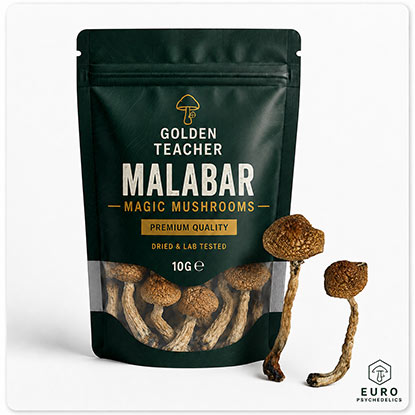
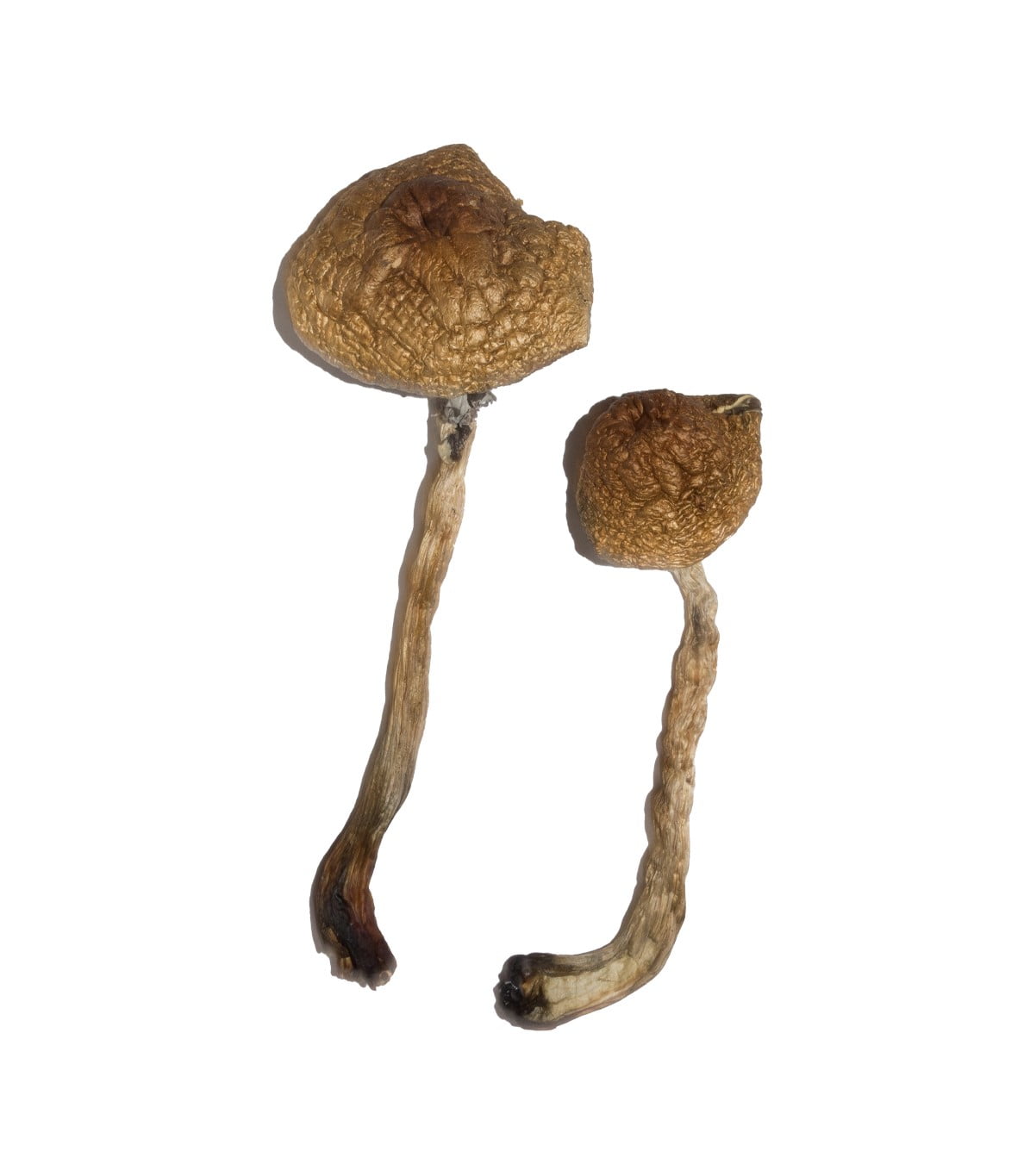
Malabar Magic Mushrooms: Origins, Species, Characteristics & European Legal Context
The term “Malabar Magic Mushrooms” is generally used as a geographic or cultivar-style name rather than the formal scientific name of a single mushroom species. “Malabar” historically refers to the southwestern coastal region of the Indian subcontinent, particularly areas associated with present-day Kerala and neighbouring parts of southern India.
When discussing mushrooms scientifically, it is important to distinguish a popular name from verified taxonomy. A label such as “Malabar” does not, by itself, establish the exact species, genetics, chemical composition, geographical provenance, or legal status of a mushroom.
The broader category of magic mushrooms commonly refers to fungi associated with the naturally occurring psychedelic compounds psilocybin and psilocin. One well-known species in this field is Psilocybe cubensis, which is recognised as a distinct fungal species by scientific taxonomic databases. However, a regional name should not automatically be treated as synonymous with P. cubensis.
For European readers, this distinction is especially relevant because the legal treatment of psilocybin-containing mushrooms varies considerably between countries.
What Are Malabar Magic Mushrooms?
“Malabar Magic Mushrooms” is best understood as a popular geographic designation rather than a formal taxonomic classification.
The name suggests an association with the Malabar region, but commercial and internet terminology can sometimes use geographic names in ways that do not correspond precisely to scientific collection locations.
A scientifically reliable description requires information such as:
- the accepted scientific species name;
- collection or cultivation history;
- morphological characteristics;
- genetic information where available;
- ecological origin; and
- laboratory analysis where chemical composition is relevant.
This is why geographic labels should be treated cautiously.
Geographic names are not scientific species names
Scientific taxonomy exists to provide consistent identification across languages and regions.
For example, Psilocybe cubensis is a recognised species. By contrast, “Malabar Magic Mushrooms” does not function in the same way as a formal Latin binomial.
The distinction is important for SEO content as well. Presenting a regional name as though it were an officially recognised species can create inaccurate claims that may be repeated across websites.
The Malabar Region and Fungal Diversity
Malabar is historically associated with the southwestern part of the Indian subcontinent.
The region’s tropical and subtropical environments support considerable biodiversity, including numerous fungal organisms. Warm temperatures, seasonal rainfall, vegetation and agricultural environments can all influence fungal communities.
Fungi are important components of these ecosystems. They participate in decomposition, nutrient cycling and relationships with plants and other organisms.
Psychedelic fungi represent only a small part of this much broader fungal diversity.
Understanding the environmental context therefore helps explain why geographic mushroom names can become associated with particular regions without necessarily representing a unique biological species.
Psilocybe cubensis and Magic Mushrooms
One of the most frequently discussed species in relation to magic mushrooms is Psilocybe cubensis.
Scientific databases recognise P. cubensis as a distinct species within the fungal kingdom. It is widely associated with the common term “magic mushroom.”
The species has attracted attention from mycologists, ethnobotanists, neuroscientists and pharmacological researchers because of its association with psilocybin and psilocin.
However, it is important not to assume that every mushroom marketed under a regional name such as “Malabar” is necessarily Psilocybe cubensis.
A name used online or commercially does not replace scientific identification.
Psilocybin and Psilocin
The psychedelic properties associated with many species commonly called magic mushrooms are primarily connected with psilocybin and psilocin.
Psilocybin is a naturally occurring psychedelic compound that is converted in the body into psilocin. Research into these compounds has expanded significantly over recent decades.
Modern scientific studies have investigated psychedelic substances in areas including neuroscience, psychology and potential psychiatric applications.
At the same time, research findings should not be interpreted as evidence that uncontrolled use is universally safe or medically appropriate.
Why chemical composition matters
Mushrooms are biological organisms rather than chemically identical manufactured products.
Chemical composition can potentially vary according to factors including:
- species;
- genetics;
- environmental conditions;
- maturity;
- storage;
- biological variation; and
- other characteristics of the organism.
Consequently, a regional or cultivar-style name should not be treated as a precise indicator of chemical content.
Why Mushroom Identification Is Difficult
Fungal identification can be considerably more complicated than identifying many familiar plants.
Two mushrooms can share similar visible characteristics while belonging to different species. Conversely, specimens of the same species can look different depending on their development and environmental conditions.
Mycologists may examine:
Macroscopic features
These can include:
- cap shape;
- cap colour;
- surface texture;
- stem structure;
- gill characteristics;
- bruising or colour changes; and
- developmental stage.
Microscopic features
Microscopy can reveal structures that cannot be reliably assessed from ordinary photographs, particularly characteristics associated with spores and reproductive structures.
Molecular evidence
DNA-based methods can provide additional evidence when morphological characteristics are insufficient to distinguish closely related fungi.
For this reason, photographs and popular names should not be treated as definitive scientific identification.
Why the Name “Malabar” Can Be Misleading
Geographical mushroom names can create an impression of precise provenance.
In reality, a name referring to a particular region does not necessarily establish that every specimen carrying the name originated there.
This is a broader issue in mushroom nomenclature. Informal names can develop through:
- historical collections;
- cultivation communities;
- regional associations;
- commercial naming;
- online communities; and
- informal taxonomy.
Over time, these names may become widely recognised despite not corresponding to an officially defined species.
For scientifically responsible content, it is therefore better to describe the term as a regional or popular designation unless reliable taxonomic evidence establishes otherwise.
Malabar Magic Mushrooms and Ethnomycology
The study of human relationships with fungi is often described as ethnomycology.
Ethnomycology examines how different cultures have historically interacted with fungi, including their roles in food, medicine, rituals, folklore and traditional knowledge.
South Asia has a long history of traditional relationships with plants and fungi, although historical claims about specific psychedelic mushroom traditions should be evaluated carefully against primary sources.
Popular online discussions can sometimes exaggerate historical or cultural connections. A responsible account should distinguish documented ethnographic evidence from modern internet mythology.
Psychedelic Mushroom Research in Europe
Interest in psychedelics has increased throughout Europe as researchers investigate compounds such as psilocybin.
Scientific interest has included research into areas such as:
- consciousness;
- perception;
- brain activity;
- depression;
- anxiety;
- addiction;
- psychotherapy; and
- mental-health research.
This growing research field does not mean that psychedelic mushrooms have a uniform medical or legal status throughout Europe.
The European Union Drugs Agency (EUDA) notes that psychedelic substances remain subject to international and national controls, while national approaches can differ between European jurisdictions.
This distinction between research, medical regulation, and personal possession or use is essential.
European Legal Context
There is no single legal rule that applies identically to “Malabar Magic Mushrooms” throughout Europe.
EUDA explains that psilocybin and psilocin are controlled under the 1971 United Nations Convention on Psychotropic Substances, while individual European countries can implement their own national approaches to mushrooms containing these substances.
Some countries specifically regulate mushrooms, while others focus on the controlled compounds themselves.
Legal treatment can therefore depend on:
- the country involved;
- the substance;
- the form of the material;
- possession;
- cultivation;
- preparation;
- importation;
- distribution; and
- other circumstances established by national law.
European law should be checked country by country
A statement that psychedelic mushrooms are “legal in Europe” is too broad to be reliable.
Likewise, saying that they are “illegal everywhere in Europe” would also overlook differences between national legal systems.
For anyone in Europe researching this subject, the appropriate approach is to consult the current legislation and competent authority for the specific country concerned.
Health and Safety Considerations
Psychedelic mushrooms can produce significant changes in perception, cognition, mood and sensory processing.
Individual responses can differ substantially.
Potential adverse experiences can include psychological distress, confusion, anxiety and impaired judgement. Risks can also increase when substances are combined or when a mushroom has been incorrectly identified.
Mushroom misidentification is particularly important because some poisonous fungi can resemble non-poisonous species.
For that reason, scientific mushroom identification should not be reduced to recognising a name or comparing an online photograph.
People considering questions about psychedelic substances, medications or individual health circumstances should obtain advice from a qualified healthcare professional.
Malabar Magic Mushrooms in a Modern Context
Today, the term “Malabar Magic Mushrooms” exists within a mixture of mycology, internet culture, psychedelic research and commercial terminology.
This creates an interesting distinction between:
Popular terminology
Names used by communities and websites.
Scientific taxonomy
Formal classification based on biological evidence.
Chemical analysis
Laboratory determination of compounds present in a specimen.
Legal classification
The rules established by the relevant national government.
These four categories should not be confused.
A geographic name cannot independently establish scientific identity, chemical composition or legal status.
Frequently Asked Questions
1. What are Malabar Magic Mushrooms?
“Malabar Magic Mushrooms” is a popular geographic-style name associated with psychedelic mushrooms. It is not, by itself, the formal scientific name of one universally recognised mushroom species. The exact biological identity behind such a label should be established through appropriate taxonomic evidence.
2. Is Malabar a species of mushroom?
No. “Malabar” is a geographic term rather than a scientific species name. A mushroom described as Malabar may be associated with a particular regional lineage or naming tradition, but the name alone does not establish its taxonomy.
3. Are Malabar Magic Mushrooms the same as Psilocybe cubensis?
Not necessarily. Psilocybe cubensis is a recognised scientific species, but a regional or commercial name should not automatically be treated as synonymous with it. Reliable identification requires appropriate biological evidence.
4. Do Malabar Magic Mushrooms contain psilocybin?
The term is generally used in connection with psychedelic mushrooms, but a name alone cannot establish the chemical composition of a particular specimen. Determining the compounds present requires reliable identification and, where appropriate, analytical testing.
5. Are magic mushrooms legal in Europe?
European laws differ by country. EUDA notes that psilocybin and psilocin are internationally controlled and that European countries have different national approaches to mushrooms containing these substances. Current national legislation should therefore be checked for the specific jurisdiction.
6. Why is scientific identification important for mushrooms?
Mushroom species can share similar physical characteristics, and visual identification can be difficult. Accurate identification may involve macroscopic examination, microscopy and molecular methods. A popular name such as “Malabar” should therefore not be considered definitive scientific identification.
| Quantity | 14grams, Oz, Qp, Hp, 1p |
|---|
Be the first to review “Malabar Magic Mushrooms”
Related products
Magic Mushrooms
Magic Mushrooms
Magic Mushrooms
Magic Mushrooms
Magic Mushrooms
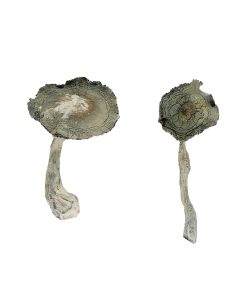
Magic Mushrooms
Magic Mushrooms
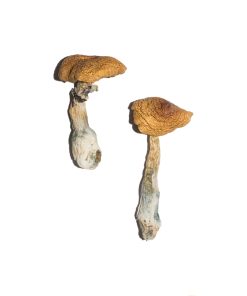
Magic Mushrooms
Reviews
There are no reviews yet.