
Arenal Volcano Magic Mushrooms: Origins, Characteristics, Taxonomy & European Legal Context
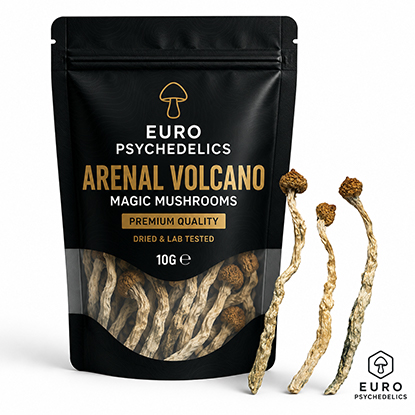
Arenal Volcano Magic Mushrooms is a geographical and community-style name associated with psychedelic mushroom culture. The name refers to the Arenal Volcano region of Costa Rica and is generally used as a lineage or variety designation rather than as the formal scientific name of a separate mushroom species.
As with many geographically named mushrooms, it is important to distinguish between the name used by mushroom communities, the scientific taxonomy of the underlying fungus, and the documented biodiversity of the region itself. This distinction provides a more accurate way to understand what the name means.
What Are Arenal Volcano Magic Mushrooms?
The term “Arenal Volcano” is generally used in mushroom communities to describe a lineage associated with the Arenal region of Costa Rica.
The name itself does not constitute a scientific species classification.
In discussions of named psychedelic mushroom lineages, Arenal Volcano is commonly associated with Psilocybe cubensis. P. cubensis is a formally recognised fungal species, while Arenal Volcano is an informal lineage-style designation.
This means that the two names serve different purposes:
- Arenal Volcano — common or lineage-style terminology.
- Psilocybe cubensis — scientific species classification.
A geographical name also does not independently prove the precise origin of every specimen carrying that name. Establishing provenance requires documented collection and genetic information rather than relying solely on a label.
The Arenal Volcano Region
Arenal Volcano is located in northern Costa Rica and is one of the country’s most recognisable volcanic landmarks.
The surrounding region is characterised by tropical vegetation, substantial rainfall and diverse ecosystems. Volcanic soils, forests, grasslands and agricultural environments create numerous habitats for fungi.
Costa Rica itself is recognised for exceptional biodiversity, and fungi form an important but comparatively less understood component of its ecosystems.
The Arenal region therefore provides an interesting geographical context for discussing mushroom biodiversity, regardless of whether a particular modern lineage name can be conclusively connected to a wild population.
Costa Rica and Fungal Biodiversity
Costa Rica is internationally known for its biological diversity.
Its combination of tropical climate, mountainous terrain and varied ecosystems supports a large number of plant, animal and fungal species.
Fungi perform essential ecological functions throughout these environments. They participate in decomposition, nutrient cycling and interactions with plants and other organisms.
Psychedelic fungi represent only a small part of this wider fungal ecosystem.
Consequently, a geographical mushroom name such as Arenal Volcano can be considered within the much broader context of Costa Rican mycology.
Taxonomy of Psilocybe cubensis
When the Arenal Volcano name is used for a Psilocybe cubensis lineage, the relevant scientific classification is:
- Kingdom: Fungi
- Phylum: Basidiomycota
- Class: Agaricomycetes
- Order: Agaricales
- Genus: Psilocybe
- Species: Psilocybe cubensis
Psilocybe cubensis is a recognised species in modern taxonomic databases.
Arenal Volcano should therefore not be presented as though it were a separate scientific species.
Geographic Name Versus Scientific Name
Geographical names are particularly common within modern mushroom terminology.
Examples include names referencing:
- Costa Rica;
- Mexico;
- Brazil;
- Thailand;
- Burma/Myanmar;
- Cambodia;
- other locations associated with particular lineages.
Such names can preserve community traditions or reported lineage histories, but they are not necessarily equivalent to formal taxonomic categories.
A mushroom carrying a geographical name may therefore be scientifically identical to mushrooms carrying completely different community names.
Appearance and General Morphology
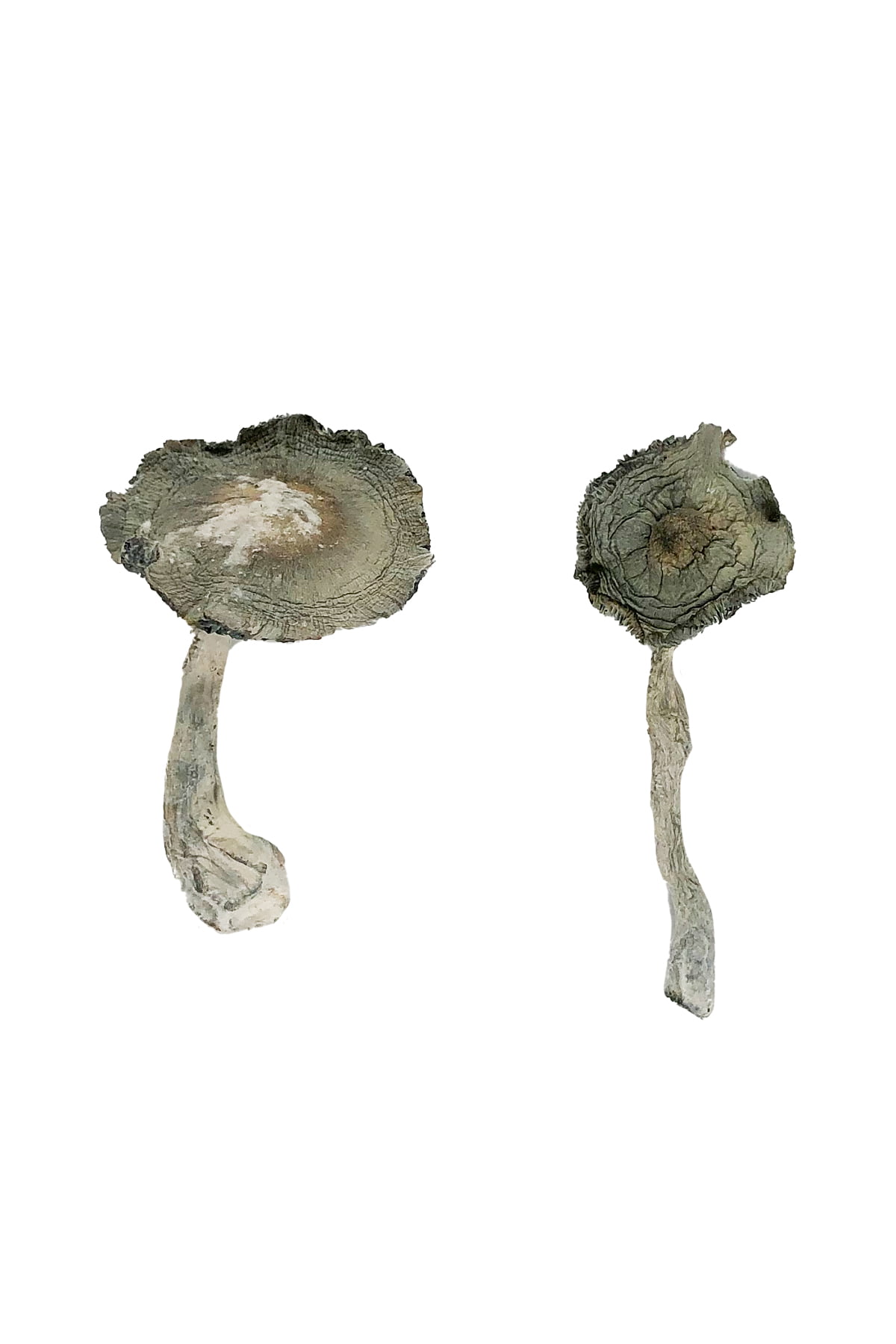
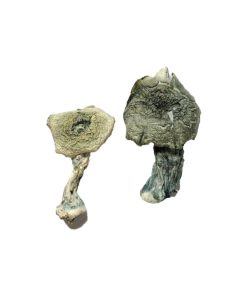
Descriptions associated with Arenal Volcano generally fall within the broad morphological range of Psilocybe cubensis.
Typical P. cubensis morphology includes a cap, central stem and gills on the underside of the cap.
The appearance of individual specimens can vary considerably.
Characteristics may include differences in:
- cap shape;
- cap colour;
- stem thickness;
- overall size;
- maturity;
- surface texture.
Genetics and environmental conditions can influence these characteristics.
Because of this variation, visual appearance alone is not sufficient for definitive identification.
Mushroom Identification
Accurate fungal identification is a specialised scientific process.
Researchers may consider:
- macroscopic morphology;
- microscopic characteristics;
- spore features;
- geographical distribution;
- ecological habitat;
- DNA sequencing.
A common name such as Arenal Volcano provides useful cultural information but cannot substitute for scientific identification.
This is particularly important with mushrooms because unrelated species can sometimes exhibit superficially similar characteristics.
Psilocybin and Psilocin
The scientific interest surrounding Psilocybe cubensis is largely connected with naturally occurring compounds including psilocybin and psilocin.
Psilocybin is metabolised into psilocin in the body. Psilocin interacts with serotonin receptors and can cause significant changes in perception, cognition and subjective experience.
Researchers have studied these compounds in neuroscience, psychology and psychiatry.
Research has investigated areas including:
- altered states of consciousness;
- perception;
- emotional processing;
- brain activity;
- depression;
- addiction;
- therapeutic mechanisms.
Scientific investigation, however, takes place under controlled conditions and should not be interpreted as evidence of unrestricted safety or legality.
Arenal Volcano and Modern Mushroom Culture
The Arenal Volcano name illustrates the strong influence of geography on modern mushroom culture.
Geographical names can provide a sense of identity and help distinguish one lineage from another within informal communities.
However, their historical accuracy can be difficult to establish.
A name may originate from:
- a reported collection location;
- a grower’s attribution;
- a lineage tradition;
- a community naming convention;
- a commercial naming practice.
Without documented provenance, it is difficult to determine exactly how a particular named lineage relates to wild populations.
Costa Rica’s Ethnomycological Context
Costa Rica has a rich history of Indigenous cultures and ethnobotanical knowledge.
However, the ethnomycological history of Central America should not be reduced to the better-known traditions of southern Mexico.
Mesoamerican cultures developed diverse relationships with plants and fungi, and practices differed substantially between communities and regions.
A modern “Arenal Volcano” mushroom name should therefore not automatically be described as an ancient Costa Rican ceremonial lineage without reliable historical evidence.
Distinguishing Modern Culture From Indigenous History
This distinction is important when discussing psychedelic mushroom names.
A modern lineage can have a geographical name without having a documented historical relationship with Indigenous traditions from that location.
Similarly, a mushroom named after a volcano does not necessarily mean that it was traditionally used by communities living around that volcano.
Responsible descriptions should distinguish:
Documented history from modern naming.
That approach avoids turning a modern community name into an unsupported historical claim.
Modern Scientific Research
Psilocybin has become an important subject of modern scientific research.
Studies have examined its potential effects on brain function and psychological states, while clinical researchers have investigated possible therapeutic applications.
Interest in these compounds has increased significantly, but the evidence remains an evolving area of research.
Research settings also differ substantially from uncontrolled environments.
Clinical studies typically involve defined protocols, participant screening and professional supervision.
Consequently, research findings should be interpreted in their proper scientific and regulatory context.
European Legal Context
For European readers, the geographical origin of a mushroom does not determine its legal status.
The relevant considerations generally concern the mushroom itself, its chemical constituents and the legislation of the specific jurisdiction.
The European Union Drugs Agency states that psilocybin and psilocin are controlled under international drug-control conventions, while national approaches to mushrooms containing these substances vary across European countries.
Some countries specifically regulate mushrooms, while others focus on controlled compounds.
Therefore, the term “Arenal Volcano” does not create a separate legal category.
Different Laws Across Europe
European countries can differ substantially in their treatment of psilocybin-containing fungi.
Depending on the country, legislation may address:
- possession;
- cultivation;
- importation;
- distribution;
- preparation;
- scientific research;
- medical use.
These laws can also change over time.
For that reason, current official national sources are more reliable than older articles, social-media posts or community discussions when determining the legal position.
Health and Safety Considerations
Psilocybin-containing mushrooms can produce significant psychological and perceptual effects.
Potential unwanted effects can include:
- anxiety;
- panic;
- confusion;
- nausea;
- impaired judgement;
- distressing perceptual experiences;
- temporary physiological changes.
Responses vary considerably between individuals.
The European Union Drugs Agency has also highlighted concerns surrounding unregulated psychedelic practices and potential risks for vulnerable people and those with pre-existing mental-health difficulties.
Mushroom identification presents another important consideration. Wild fungi can be difficult to identify accurately, and confusing a psychedelic mushroom with a poisonous species can have serious consequences.
Arenal Volcano: A Lineage Name Rather Than a Species
The simplest way to understand Arenal Volcano Magic Mushrooms is:
Arenal Volcano is a geographical and lineage-style name, not a formal scientific species.
When the name refers to a Psilocybe cubensis lineage, the scientific species is Psilocybe cubensis.
The Arenal Volcano reference provides cultural or geographical context, while the scientific name provides biological classification.
Keeping those two concepts separate makes the terminology considerably clearer.
Why the Name Remains Interesting
Despite its informal status, Arenal Volcano is an interesting example of how modern mushroom culture connects geography and mycology.
Costa Rica’s extraordinary biodiversity provides an appropriate backdrop for discussions about fungi, while the name itself reflects the tendency to associate particular mushroom lineages with memorable geographical landmarks.
From a scientific perspective, however, the most useful questions concern:
- species identification;
- genetic relationships;
- geographic distribution;
- fungal ecology;
- chemical composition;
- documented provenance.
These questions provide considerably more information than a common name alone.
Frequently Asked Questions
1. What are Arenal Volcano Magic Mushrooms?
Arenal Volcano Magic Mushrooms is an informal name associated with a mushroom lineage linked by name to the Arenal Volcano region of Costa Rica. It is generally discussed in connection with Psilocybe cubensis rather than as a separate scientific species.
2. Are Arenal Volcano mushrooms a separate species?
No. Arenal Volcano is not a formal scientific species name. Where the term refers to a Psilocybe cubensis lineage, the recognised species is P. cubensis.
3. Where does the name Arenal Volcano come from?
The name refers to Arenal Volcano in Costa Rica. Within modern mushroom culture, geographical names are often used to describe particular lineages or reported origins.
4. Are Arenal Volcano mushrooms native to Costa Rica?
The name indicates an association with Costa Rica, but a common lineage name alone does not scientifically establish the provenance of every specimen carrying that name.
5. What compounds are associated with Psilocybe cubensis?
Psilocybe cubensis is associated with naturally occurring psychedelic compounds including psilocybin and psilocin. Scientific research continues to examine their effects and potential applications.
6. Are Arenal Volcano Magic Mushrooms legal in Europe?
There is no single answer for all European countries. Psilocybin and psilocin are internationally controlled, while national laws concerning mushrooms containing these substances differ between jurisdictions.
| Quantity | 7grams, 14grams, 28grams |
|---|
Be the first to review “Arenal Volcano Magic Mushrooms”
Related products

Magic Mushrooms
Magic Mushrooms

Magic Mushrooms
Magic Mushrooms

Magic Mushrooms
Magic Mushrooms
Magic Mushrooms
Magic Mushrooms
Reviews
There are no reviews yet.