
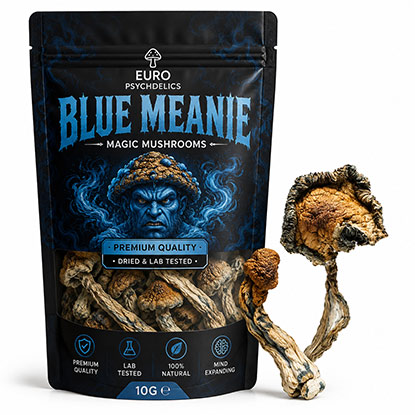
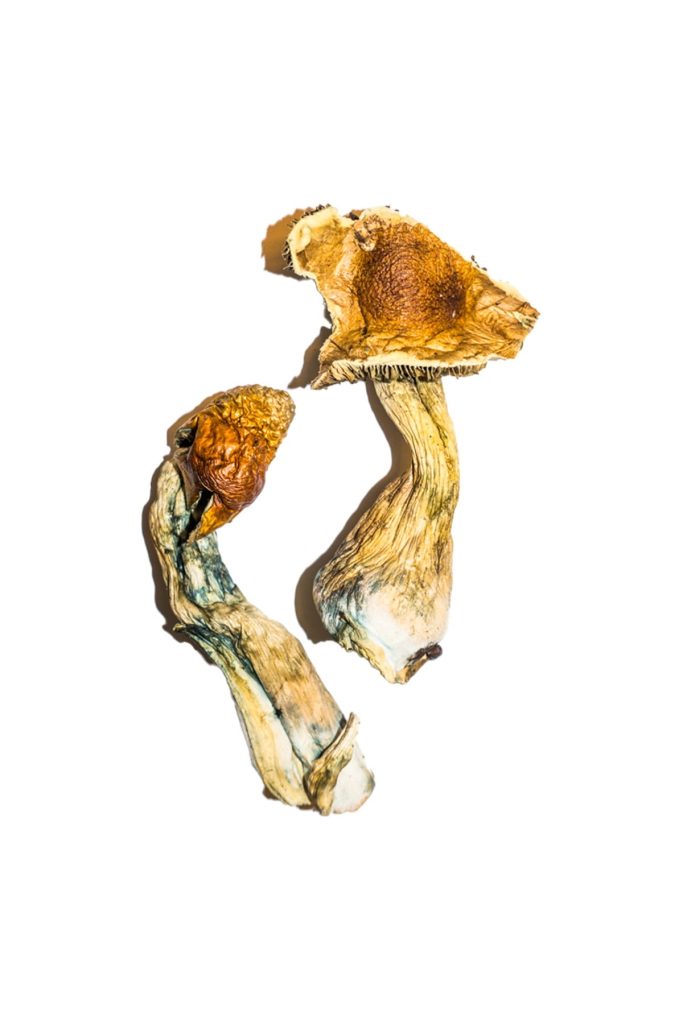
Blue Meanie Magic Mushrooms
€90 – €990Price range: €90 through €990
Brazilian Magic Mushrooms: Origins, Taxonomy, Characteristics & European Legal Context
Brazilian Magic Mushrooms is a common name used in psychedelic mushroom communities for mushroom varieties associated with Brazil and, in many cases, lineages of Psilocybe cubensis. The name is primarily geographical and cultural rather than a formal scientific classification. Understanding what the name represents requires separating the biology of the mushroom from the terminology used by collectors, enthusiasts, and online communities.
What Are Brazilian Magic Mushrooms?
The term “Brazilian Magic Mushrooms” generally refers to psilocybin-containing mushrooms associated with Brazil. In informal terminology, Brazilian is often used as a lineage or variety designation rather than as the name of a distinct species.
The species most commonly associated with these names is Psilocybe cubensis, a recognised fungal species belonging to the genus Psilocybe. Taxonomic databases maintained by the U.S. National Library of Medicine recognise Psilocybe cubensis as a distinct species.
Brazil itself has considerable fungal biodiversity, meaning that a geographical label should not automatically be interpreted as a precise taxonomic identification. Different fungi can occur across Brazil’s varied environments, from tropical forests to grasslands and agricultural landscapes.
This distinction is particularly important when discussing psychedelic mushrooms because common names can remain consistent even when the underlying biological classification is more complicated.
Brazilian Origins and Geographic Context
Brazil provides an exceptionally diverse environment for fungi. It is one of the world’s largest countries and contains ecosystems including the Amazon rainforest, Atlantic Forest, Cerrado, Caatinga, Pantanal and southern temperate regions.
This environmental diversity creates numerous ecological niches for fungi.
For mushrooms associated with Psilocybe cubensis, geographic terminology can describe a reported origin or lineage rather than a completely separate species. Consequently, “Brazilian” should generally be understood as a descriptor rather than a taxonomic rank.
Geographical names are common throughout mushroom terminology. Similar naming conventions appear in terms associated with Thailand, Burma/Myanmar, Mexico and other regions.
Taxonomy of Psilocybe cubensis
Psilocybe cubensis belongs to the genus Psilocybe, a group containing numerous mushroom species. The species was formally described in the nineteenth century and is now one of the best-known psilocybin-containing fungi.
Its classification can be broadly represented as:
- Kingdom: Fungi
- Phylum: Basidiomycota
- Class: Agaricomycetes
- Order: Agaricales
- Family: Hymenogastraceae
- Genus: Psilocybe
- Species: Psilocybe cubensis
The species name should not be confused with the various informal names used for particular lineages.
Scientific taxonomy and community terminology serve different purposes. Taxonomy attempts to establish biological relationships and classifications, while names such as “Brazilian” may describe perceived geographical ancestry or a particular cultivated lineage.
Appearance and General Characteristics
Descriptions of Brazilian-associated Psilocybe cubensis varieties commonly resemble the general morphology of P. cubensis.
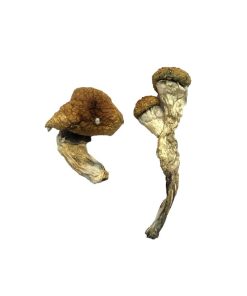
Typical characteristics of this species include a mushroom cap supported by a central stem. The cap can change considerably in appearance as the mushroom develops, while colour can vary according to age, environmental conditions and individual genetics.
Young specimens may have more rounded or conical caps. As development progresses, the cap can become broader and flatter.
The stem is typically pale when young, although colouration can change with age and physical handling. The underside contains the mushroom’s gills, where spores are produced.
These characteristics are useful for understanding fungal morphology, but appearance alone should never be considered sufficient for identifying an unknown mushroom.
Why Geographic Names Can Be Misleading
One of the most important concepts when discussing named mushroom varieties is the distinction between species, strain, cultivar, lineage and common name.
A geographical name such as Brazilian does not necessarily represent a separate species.
For example, two mushrooms can have different community names while belonging to the same recognised species. Conversely, mushrooms collected from the same geographical region can potentially belong to different species.
This means that statements such as “Brazilian mushrooms are a separate species” should be treated cautiously unless supported by formal taxonomic evidence.
The terminology is particularly important for online product descriptions because informal names can create an impression of scientific precision that does not actually exist.
Psilocybin and Psilocin
The scientific interest surrounding these mushrooms is largely related to two compounds: psilocybin and psilocin.
Psilocybin is a naturally occurring psychedelic compound found in numerous fungal species. After ingestion, psilocybin is metabolised into psilocin, which interacts with serotonin receptors in the brain.
These interactions are associated with altered perception, changes in sensory processing, changes in the experience of time, and other psychological effects.
The experience can vary considerably between individuals and circumstances. Scientific research has also highlighted the importance of psychological and environmental factors when studying psychedelic experiences.
Importantly, the presence of naturally occurring compounds does not make a mushroom legally unrestricted.
Scientific Research and Psychedelic Studies
Psilocybin has become an important subject of modern neuroscience and psychiatric research.
Researchers have investigated its potential relationship with conditions including depression, anxiety associated with serious illness and substance-use disorders. However, research findings should not be confused with general approval for personal use.
Clinical research typically occurs under controlled conditions involving carefully selected participants, professional supervision and defined research protocols.
The European legal situation remains separate from the scientific question. Evidence that a compound is being investigated medically does not automatically mean that possession, sale or consumption is lawful.
Brazilian Cultural and Ethnomycological Context
Brazil has a long and complex relationship with psychoactive plants and fungi, although the ethnomycological history of psilocybin mushrooms in Brazil differs from the particularly well-documented traditions of some Indigenous communities in Mexico.
Brazil’s broader ethnobotanical traditions encompass many plants and fungi used for cultural, medicinal and ceremonial purposes.
Modern interest in Brazilian-associated mushrooms has also been influenced by international mushroom culture. Geographic names can become attached to lineages as they circulate between collectors and mycological communities.
This means that the cultural meaning of “Brazilian” can encompass both geographical history and modern community naming.
Brazilian Biodiversity
Brazil is particularly significant from a mycological perspective because of its enormous biodiversity.
The Amazon alone contains an extraordinary range of fungal habitats, while the Atlantic Forest and Cerrado provide additional ecological environments.
Fungi play essential ecological roles. They decompose organic matter, participate in nutrient cycling and form relationships with plants and other organisms.
The study of fungal biodiversity remains an active scientific field, and many fungal species are still poorly documented compared with plants and animals.
This broader ecological perspective is useful because psychedelic mushrooms represent only a very small portion of Brazil’s enormous fungal diversity.
Brazilian Magic Mushrooms in European Context
For European readers, the most important issue is that the legal status of psilocybin-containing mushrooms varies between jurisdictions.
The European Union does not have one simple rule that applies identically to every country.
The European Union Drugs Agency notes that psilocybin and psilocin are controlled substances internationally and that national approaches to mushrooms containing these compounds vary. Some jurisdictions regulate the compounds themselves, while others have specific provisions concerning mushrooms.
Consequently, the legality of a mushroom cannot reliably be determined simply from its common name.
A mushroom marketed or described as “Brazilian” does not acquire a different legal status merely because of its geographical label.
European consumers should consult current legislation and official government guidance for their specific country before making assumptions about possession, handling or other activities involving controlled substances.
Differences Between European Countries
Drug legislation can differ substantially between European countries.
Some jurisdictions have explicit restrictions concerning psilocybin mushrooms. Others structure their legislation around controlled substances or particular active compounds.
There can also be important differences concerning:
- fresh versus processed material;
- possession;
- cultivation;
- distribution;
- importation;
- preparation;
- scientific research;
- medical applications.
Because legislation can change, information from an old website or forum may no longer accurately describe the current position.
The European Union Drugs Agency specifically recommends considering national legislation because control systems and penalties differ between countries.
Identification and Scientific Classification
Correct fungal identification is an important scientific discipline.
Mushroom identification can involve:
- physical morphology;
- microscopic characteristics;
- geographical information;
- ecological habitat;
- spore characteristics;
- DNA sequencing;
- comparison with authenticated specimens.
A commercial or community name by itself is not equivalent to a laboratory identification.
This is especially relevant to names such as Brazilian, Cambodian, Burmese, Mexican or Thai, which can function as lineage labels rather than formal species classifications.
Why Responsible Information Matters
Psychedelic mushrooms should not be treated as ordinary edible mushrooms.
Misidentification can have serious consequences because unrelated fungi can resemble one another. Some poisonous mushrooms can produce symptoms ranging from gastrointestinal distress to severe organ damage.
There are also psychological risks associated with psilocybin-containing mushrooms. Effects can be unpredictable and may include anxiety, panic, confusion or perceptual disturbances.
The European Union Drugs Agency has also highlighted concerns surrounding unregulated psychedelic use and wellness practices, particularly where people may have vulnerabilities or existing mental-health difficulties.
For these reasons, educational information should distinguish established scientific evidence from community claims and marketing terminology.
Brazilian Magic Mushrooms: Species or Strain?
The simplest answer is:
“Brazilian” is generally a geographic or lineage-style name, not a scientific species name.
When the term is used in connection with Psilocybe cubensis, it refers to a particular lineage or community designation within the broader species.
That distinction is important because a name can become widely established without representing a formally recognised taxonomic category.
Scientific classification should therefore take precedence over informal naming when discussing fungal biology.
Frequently Asked Questions
1. What are Brazilian Magic Mushrooms?
Brazilian Magic Mushrooms is an informal name generally associated with psilocybin-containing mushroom lineages connected with Brazil. The name is commonly used as a geographical or lineage descriptor rather than a formal scientific species name.
2. Are Brazilian Magic Mushrooms a separate species?
Not necessarily. The term is commonly associated with Psilocybe cubensis, which is a recognised species. “Brazilian” generally describes a lineage or geographical association rather than a separate species.
3. What compounds are associated with these mushrooms?
Psilocybin and psilocin are the principal psychedelic compounds associated with Psilocybe cubensis and other psilocybin-containing fungi.
4. Are Brazilian Magic Mushrooms legal in Europe?
There is no single European-wide answer. Laws differ between countries, and psilocybin and psilocin are controlled substances under international drug-control frameworks. National legislation should therefore be checked for the specific European jurisdiction.
5. Does the name “Brazilian” prove where a mushroom originated?
No. A common or lineage name does not independently establish geographical provenance. Formal documentation and scientific identification are needed to establish origin reliably.
6. Why is Psilocybe cubensis important when discussing Brazilian mushrooms?
Because P. cubensis is the recognised species most commonly associated with many geographical and lineage-style names used in contemporary psychedelic mushroom culture. The species-level classification provides a more scientifically meaningful reference than the informal “Brazilian” label.
SEO Information
SEO Title:
Brazilian Magic Mushrooms: Origins, Taxonomy & European Legal Context
Meta Description:
Brazilian Magic Mushrooms explained: explore their origins, Psilocybe cubensis taxonomy, characteristics, cultural background and European legal context.
Recommended URL Slug:brazilian-magic-mushrooms
Focus Keyword:
Brazilian Magic Mushrooms
Secondary Keywords:
Brazilian mushroom taxonomy, Brazilian Psilocybe cubensis, Brazilian mushroom origins, Psilocybe cubensis Brazil, psilocybin mushrooms Europe, Brazilian mushroom characteristics
Product Tags:
Brazilian Magic Mushrooms, Psilocybe cubensis, Brazilian mushrooms, mushroom taxonomy, fungal biodiversity, Brazilian fungi, psilocybin research, ethnomycology, psychedelic mushroom history, European legal context
Blue Meanie Magic Mushrooms: Origins, Taxonomy, Characteristics & European Legal Context
Blue Meanie Magic Mushrooms is a name associated with psychedelic mushroom culture, but it is also a particularly interesting example of why common mushroom names should not automatically be treated as scientific classifications. Depending on the context, “Blue Meanie” can refer to different mushroom lineages or even different Psilocybe species.
For a European audience, understanding the distinction between common names, taxonomy, geography and legal status is especially important. The following overview focuses on the biology, history, terminology and legal context surrounding the name without making assumptions about a particular commercial specimen.
What Are Blue Meanie Magic Mushrooms?
“Blue Meanie” is an informal name used for certain psilocybin-containing mushrooms. Unlike a scientific species name, it does not uniquely identify one biological organism.
In contemporary mushroom communities, the name is frequently associated with a Psilocybe cubensis lineage. However, “Blue Meanies” has also historically been used in connection with Panaeolus cyanescens, a separate species known for its blue bruising and psychedelic properties.
This creates an important taxonomic distinction.
A mushroom described as “Blue Meanie” cannot necessarily be identified to species level from the name alone. Scientific identification requires additional evidence, including morphology and, where appropriate, microscopic or molecular analysis.
The Two Meanings of “Blue Meanie”
The name has developed two particularly important meanings.
Blue Meanie as a Psilocybe cubensis Lineage
In modern cultivation and mushroom-community terminology, Blue Meanie is often used as a name for a Psilocybe cubensis lineage.
Psilocybe cubensis is a formally recognised fungal species. The species belongs to the genus Psilocybe, while names such as Blue Meanie can describe particular lineages or informal varieties within the broader species.
Therefore, a Blue Meanie-labelled mushroom may be biologically classified as P. cubensis even though Blue Meanie itself is not a formal species designation.
Blue Meanies as Panaeolus cyanescens
The name has also been associated with Panaeolus cyanescens, a different mushroom species.
This species belongs to a different genus and therefore should not be casually treated as another form of Psilocybe cubensis.
This is one of the clearest examples of why common names can cause confusion in mushroom identification.
Psilocybe cubensis Taxonomy
When Blue Meanie refers to a Psilocybe cubensis lineage, the relevant scientific classification is:
- Kingdom: Fungi
- Phylum: Basidiomycota
- Class: Agaricomycetes
- Order: Agaricales
- Genus: Psilocybe
- Species: Psilocybe cubensis
Psilocybe cubensis is a recognised species in modern taxonomic databases.
The scientific name provides considerably more precision than a name such as Blue Meanie because it identifies the species rather than relying on community terminology.
Panaeolus cyanescens and the Alternative Meaning
Panaeolus cyanescens is taxonomically distinct from Psilocybe cubensis.
It belongs to the genus Panaeolus, a group of small, dark-spored mushrooms. The species has a widespread tropical and subtropical distribution and is associated with nutrient-rich environments.
The historical use of “Blue Meanies” for Panaeolus cyanescens likely relates partly to the characteristic colour changes that can occur when its tissues are damaged.
Consequently, two mushrooms carrying the same informal name can represent very different biological lineages.
What Does the “Blue” Refer To?
The word “blue” is particularly relevant to psychedelic mushroom terminology because certain psilocybin-containing fungi can exhibit blue or blue-green colouration after physical damage.
This phenomenon is commonly called blue bruising.
Colour changes are scientifically interesting because they can be associated with chemical reactions involving indole compounds and mushroom tissue. However, colour alone is not a reliable method for identifying a mushroom or determining its chemical composition.
Not every mushroom that turns blue contains psilocybin, and not every mushroom containing psilocybin will necessarily display identical colour changes.
Scientific identification should therefore never be based on bruising colour alone.
Appearance and Morphology
Descriptions of Blue Meanie mushrooms vary depending on which organism the name refers to.
A Psilocybe cubensis lineage will generally display the broad morphological characteristics associated with P. cubensis: a distinct cap, central stem and gill structure beneath the cap.
Individual specimens can differ considerably in:
- cap shape;
- cap colour;
- stem thickness;
- surface texture;
- size;
- maturity;
- environmental appearance.
These characteristics can also vary between different genetic lineages.
Panaeolus cyanescens, meanwhile, has its own distinctive morphology and belongs to a different genus.
This variability demonstrates why photographs and common names alone may be insufficient for definitive fungal identification.
Psilocybin and Psilocin
The scientific importance of many mushrooms referred to as Blue Meanies comes from naturally occurring psychedelic compounds.
The best-known are psilocybin and psilocin.
Psilocybin is a naturally occurring compound that is metabolised into psilocin in the human body. Psilocin interacts primarily with serotonin receptors, including the 5-HT2A receptor, producing changes in perception and cognition.
Scientific research has investigated these compounds in relation to consciousness, brain function and potential therapeutic applications.
However, research environments are substantially different from unsupervised use. Clinical studies generally involve controlled conditions, carefully selected participants and professional monitoring.
Blue Meanies and Modern Psychedelic Culture
The name “Blue Meanie” has a strong cultural association with psychedelic history.
The phrase itself became widely recognised through popular culture, particularly through the animated world of Yellow Submarine, where the Blue Meanies are fictional antagonists.
The term subsequently became associated with psychedelic mushroom culture.
This cultural connection helps explain why the name can appear in mushroom communities even when there is no precise scientific relationship between the name and a particular fungal species.
It is therefore useful to distinguish cultural naming from scientific naming.
Geographic Distribution
The geographic history of Blue Meanie mushrooms depends on which species is being discussed.
Psilocybe cubensis has a broad distribution in tropical and subtropical regions and has become globally familiar through scientific research and mushroom culture.
Panaeolus cyanescens also occurs across various tropical and subtropical parts of the world.
Neither species should be assumed to originate from a single country simply because a particular lineage or common name has become associated with a geographical location.
Geographic labels used in mushroom communities can describe reported ancestry, collection history or community convention rather than formal biogeographical classification.
Blue Meanie Versus Other Named Mushroom Varieties
Blue Meanie belongs to a broader category of informal mushroom names.
Other commonly encountered names may reference:
- geographical locations;
- historical figures;
- cultural references;
- visual characteristics;
- mythology;
- fictional characters;
- perceived lineage characteristics.
Such names can be useful within hobbyist communities but do not replace formal taxonomy.
For scientific writing, Psilocybe cubensis or Panaeolus cyanescens provides substantially greater precision than Blue Meanie.
Why Taxonomy Matters
Taxonomy is more than simply giving organisms Latin names.
Scientific classification allows researchers to communicate about organisms consistently across countries and languages.
For example, the name Psilocybe cubensis refers to a particular recognised species regardless of whether someone describes it informally as a particular geographical or community lineage.
This is particularly valuable when discussing:
- scientific research;
- biodiversity;
- conservation;
- toxicology;
- pharmacology;
- legal regulation;
- public health.
Common names remain culturally useful, but scientific names reduce ambiguity.
European Legal Context
For European readers, the distinction between common names and scientific classification has an additional significance: legal controls generally depend on the controlled organism or its chemical constituents rather than simply on informal community terminology.
The European Union Drugs Agency explains that psilocybin and psilocin are controlled internationally and that national approaches to mushrooms containing these substances vary across European countries. Some jurisdictions specifically regulate mushrooms, while others focus on the substances they contain.
Consequently, the label “Blue Meanie” does not establish whether a particular mushroom is legal in a European country.
The applicable rules can depend on the species, compounds involved, form of the material and national legislation.
European Countries Have Different Rules
European drug legislation is not completely uniform.
Differences may concern:
- possession;
- cultivation;
- importation;
- distribution;
- preparation;
- research;
- medical use.
Rules can also change over time.
For that reason, information published on forums, social-media pages or older websites should not automatically be considered current legal advice.
Anyone researching the legal position of psychedelic mushrooms in Europe should consult the relevant government or competent authority for the specific country concerned.
Scientific Research Into Psilocybin
Modern research into psilocybin has expanded considerably.
Scientists have studied its effects on perception, cognition, brain connectivity and psychological states. Clinical research has also investigated potential therapeutic applications.
The European Union Drugs Agency notes that psychedelic substances remain subject to international control and that national regulatory frameworks continue to differ.
This creates an important distinction between scientific interest and legal approval.
A substance can be the subject of promising research without being legally approved for general medical or personal use.
Health and Safety Considerations
Psilocybin-containing mushrooms can produce significant alterations in perception and psychological state.
Potential unwanted effects can include:
- anxiety;
- panic;
- confusion;
- nausea;
- impaired judgement;
- distressing perceptual experiences;
- temporary increases in heart rate and blood pressure.
Psychological reactions can also vary according to the person’s circumstances, expectations and environment.
The European Union Drugs Agency has highlighted concerns about unregulated psychedelic practices and potential risks for vulnerable people, including individuals with pre-existing mental-health difficulties.
Another important consideration is mushroom identification. Wild fungi can be difficult to distinguish from one another, and accidental ingestion of a poisonous species can have serious consequences.
Blue Meanie: A Name, Not a Definitive Identification
Perhaps the most important point about Blue Meanie Magic Mushrooms is that the name itself is ambiguous.
It can refer to:
- A Psilocybe cubensis lineage or variety name.
- Panaeolus cyanescens, which has historically been called “Blue Meanies.”
- A broader cultural term used within psychedelic mushroom communities.
Therefore, the scientifically responsible approach is to ask which organism the name is referring to rather than assuming that every Blue Meanie-labelled mushroom belongs to one species.
The Importance of Responsible Mushroom Information
Mushroom terminology can combine scientific knowledge, folklore, community tradition and commercial naming.
Understanding those differences helps readers evaluate information critically.
A responsible description should distinguish:
- verified taxonomy from informal names;
- scientific evidence from anecdotal reports;
- historical associations from documented origins;
- legal information from assumptions;
- research findings from medical claims.
This approach is especially important in Europe, where legislation concerning psilocybin-containing fungi differs between jurisdictions.
Frequently Asked Questions
1. What are Blue Meanie Magic Mushrooms?
Blue Meanie is an informal name associated with psychedelic mushrooms. It can refer to certain Psilocybe cubensis lineages or, historically, to Panaeolus cyanescens. The name itself is therefore not a definitive scientific identification.
2. Are Blue Meanies a species?
No. “Blue Meanie” is a common or lineage-style name rather than a formal scientific species name. Depending on context, it may refer to different fungi.
3. Are Blue Meanies the same as Psilocybe cubensis?
Sometimes the name is used for a Psilocybe cubensis lineage, but not always. The term has also been associated with Panaeolus cyanescens, which is a separate species.
4. Why do some psychedelic mushrooms turn blue?
Blue or blue-green bruising can occur when mushroom tissue is damaged and chemical reactions take place. However, blue bruising by itself is not sufficient to identify a mushroom or establish its chemical composition.
5. Are Blue Meanie mushrooms legal in Europe?
There is no single answer for every European country. Psilocybin and psilocin are internationally controlled substances, while national laws concerning mushrooms containing them vary.
6. Why is the name “Blue Meanie” confusing?
Because it can describe different organisms in different contexts. Scientific names such as Psilocybe cubensis and Panaeolus cyanescens provide greater precision than the informal Blue Meanie designation.
| Quantity | 14grams, Oz, Qp, Hp, 1p |
|---|
Be the first to review “Blue Meanie Magic Mushrooms” Cancel reply
Related products
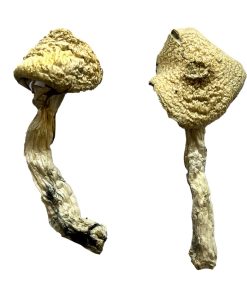
Magic Mushrooms
Magic Mushrooms
Magic Mushrooms
Magic Mushrooms
Magic Mushrooms
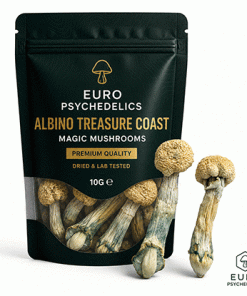
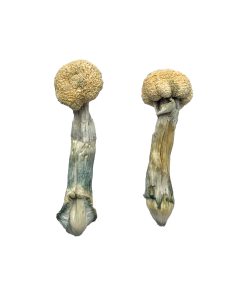
Magic Mushrooms
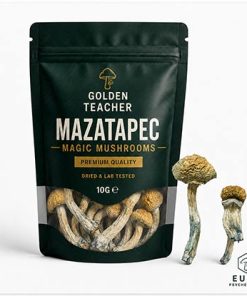
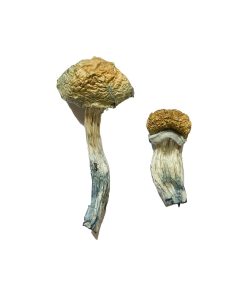
Magic Mushrooms
Magic Mushrooms
Reviews
There are no reviews yet.