
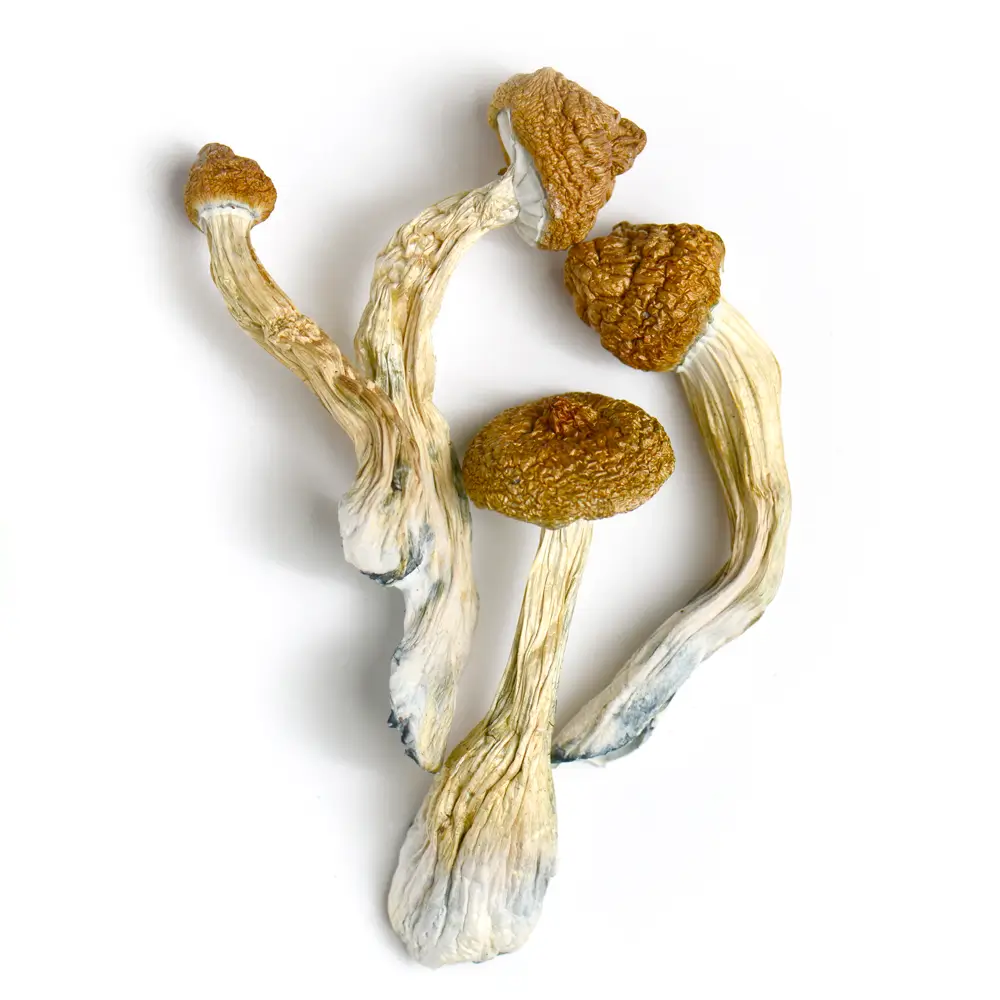
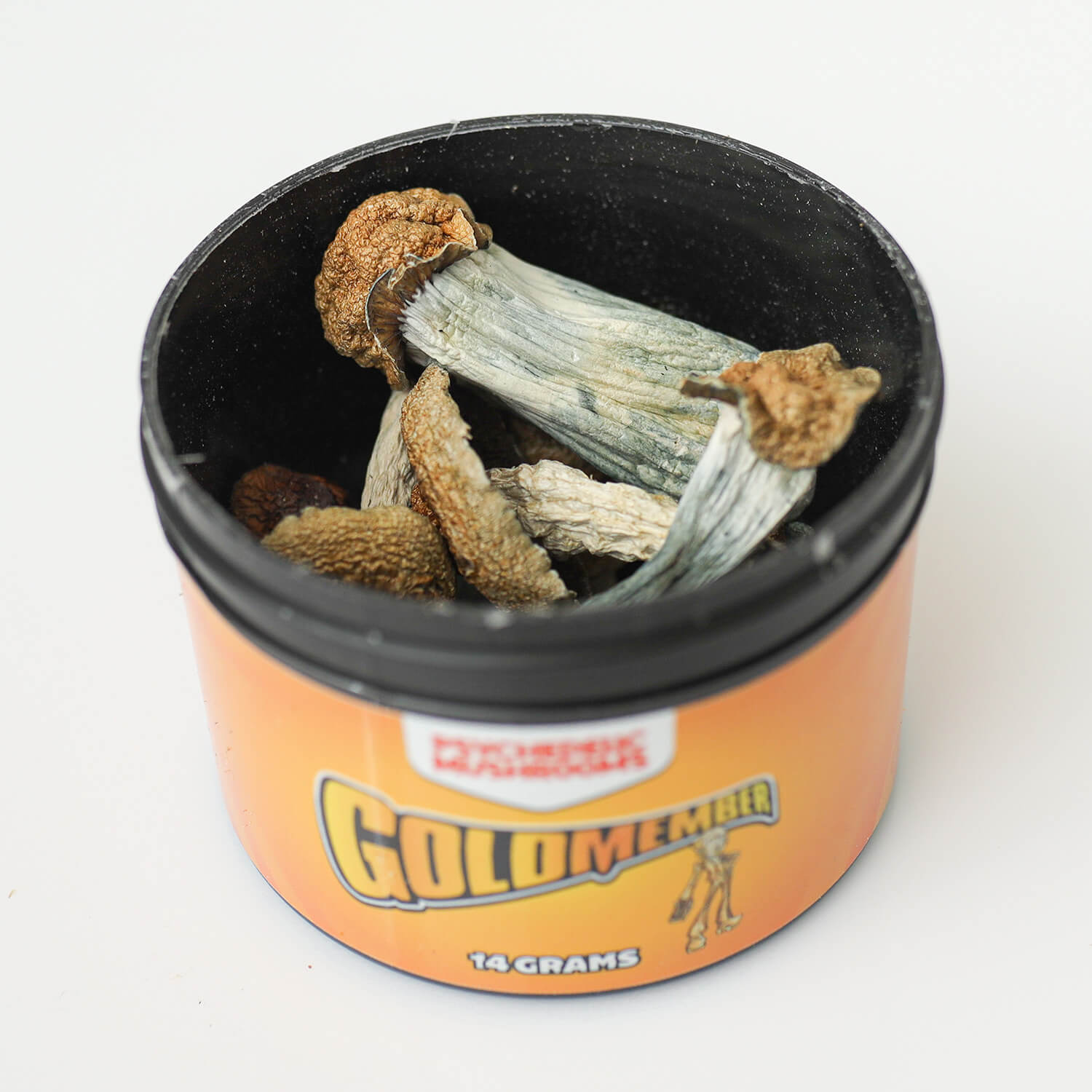


Goldmember Shrooms
Goldmember Shrooms is an informal name used within psychedelic mushroom and mycology communities for a cultivated Psilocybe cubensis lineage. Available community documentation describes Goldmember as a hybrid associated with Golden Teacher and Penis Envy, two widely discussed P. cubensis lineages. Because “Goldmember” is a cultivar or strain-style name rather than a formal scientific species, its name alone does not establish a fixed genetic identity, chemical profile, or potency.
This distinction is particularly important when evaluating descriptions of Goldmember Shrooms online. Informal mushroom names can become widely recognized within cultivation communities without receiving the same taxonomic validation applied to formally described fungal species. Even among scientifically identified P. cubensis material, researchers have documented substantial variation in psilocybin and other tryptamine concentrations.
A recent controlled laboratory study is especially useful in this regard. Researchers examined 14 P. cubensis strains under standardized conditions and found that total measured tryptamine concentrations varied by more than 7.8-fold between strains. They also observed substantial variation between individual fruiting bodies belonging to the same strain.
Goldmember is therefore best understood through several perspectives: its reported lineage, relationship to Psilocybe cubensis, mushroom chemistry, taxonomy, psychedelic research, potential effects, safety considerations, and legal status.
What Are Goldmember Shrooms?
Goldmember Shrooms generally refers to a cultivated Psilocybe cubensis lineage rather than a separate mushroom species.
Community sources describe Goldmember as a cross involving Golden Teacher and Penis Envy. Reports from mushroom communities similarly identify the variety as a Golden Teacher × Penis Envy hybrid.
Golden Teacher and Penis Envy are themselves familiar names within the P. cubensis cultivation community. As a result, Goldmember is often discussed as a hybrid intended to combine characteristics associated with its two reported parent lines.
However, the distinction between species, strain, cultivar, and phenotype is important. Psilocybe cubensis is the scientific species, whereas Goldmember is an informal cultivated-line name. A strain name does not function like a pharmaceutical specification and cannot guarantee a particular concentration of psilocybin.
This distinction is supported by recent scientific research showing considerable biochemical differences between P. cubensis strains.
Goldmember Shrooms at a Glance
| Characteristic | Description |
|---|---|
| Common name | Goldmember |
| Scientific species commonly associated with it | Psilocybe cubensis |
| Reported lineage | Golden Teacher × Penis Envy |
| Classification | Informal cultivated lineage |
| Compounds of scientific interest | Psilocybin, psilocin and related tryptamines |
| Scientific status | Not a separately recognized species |
| Main research relevance | Fungal genetics, chemistry, taxonomy and psychedelic science |
The lineage information should be regarded as community documentation rather than a formally established botanical classification.
The Golden Teacher and Penis Envy Connection
The reported ancestry of Goldmember is one of its defining characteristics.
Community documentation describes Goldmember as a hybrid between Golden Teacher and Penis Envy. The same description has circulated among mushroom growers and online mycology communities for several years.
That history helps explain why Goldmember is often discussed as a distinctive P. cubensis variety.
Golden Teacher has been one of the most recognizable names associated with cultivated P. cubensis, while Penis Envy has developed a separate reputation for its unusual morphology and chemistry. Goldmember is consequently presented within these communities as a hybrid combining traits from both lineages.
The exact genetics of an individual specimen, however, cannot be determined simply from the name.
Cultivated mushroom lines can change through repeated selection, isolation, mutation, and propagation. Different samples carrying the same community name may therefore not necessarily be genetically identical.
Modern fungal research increasingly uses DNA sequencing and chemical analysis to address precisely this problem.
Goldmember and Psilocybe cubensis
Psilocybe cubensis is a recognized species of psilocybin-producing mushroom and is among the most extensively discussed cultivated species in psychedelic mycology.
Scientific research has investigated P. cubensis from several angles, including genetics, morphology, secondary metabolites, cultivation biology, and psilocybin biosynthesis. A recent review describes considerable variation among cultivated P. cubensis strains and highlights the influence of genetics and environmental conditions on both physical characteristics and psychoactive-compound production.
The species is particularly interesting because researchers can compare different cultivated lines while maintaining them under controlled conditions.
Recent research has shown that this comparison produces an important finding: different strains can have substantially different chemical profiles even when grown under the same conditions.
That means Goldmember should not be viewed as having one universal chemical specification.
Psilocybin, Psilocin and Other Compounds
The principal compounds associated with psilocybin-producing mushrooms are psilocybin and psilocin.
After psilocybin enters the body, it is converted into psilocin, which has psychoactive effects through interactions with serotonin-related systems in the brain. NCCIH explains that psilocybin can alter mood, thoughts, perception, and sensory experience.
Research has also identified additional tryptamines in P. cubensis. These include compounds such as baeocystin, norbaeocystin, aeruginascin, and norpsilocin.
A recent laboratory investigation of 14 P. cubensis strains measured several of these compounds and found that their concentrations and relative proportions differed between strains. Psilocybin was the dominant compound in the samples studied, but the other metabolites did not necessarily change in parallel.
This is an important development in understanding psychedelic mushrooms.
Older descriptions often treated potency as though it were determined almost entirely by species or strain. Modern analytical work suggests the chemistry is substantially more complicated.
Chemical Variation in Goldmember Shrooms
There is currently no scientifically established universal psilocybin concentration that can be assigned to every mushroom sold or described under the Goldmember name.
This is because chemical composition can vary between strains and between individual mushrooms.
In the recent controlled study mentioned above, total tryptamine concentrations among 14 P. cubensis strains ranged from 2.62 to 20.65 mg/g, representing more than a sevenfold difference. The researchers also measured individual fruiting bodies separately and found meaningful variation even among mushrooms from the same strain.
This finding has significant implications for online descriptions.
A claim that all Goldmember Shrooms have a particular potency would require appropriate laboratory testing of the specific material. A strain label by itself cannot establish that information.
Why One Sample Cannot Represent Every Mushroom
Biological variation is common in fungi.
Genetic differences, environmental conditions, maturity, storage, processing, and other factors can influence the chemical profile of mushrooms.
Research has previously demonstrated differences in psilocybin and psilocin levels between different portions of a mushroom and between samples grown under ostensibly similar conditions.
Consequently, even a laboratory result from one Goldmember specimen would describe that tested sample rather than automatically establishing the chemistry of every mushroom carrying the same name.
This is why scientific researchers place considerable emphasis on replicated chemical analysis.
Appearance and Identification
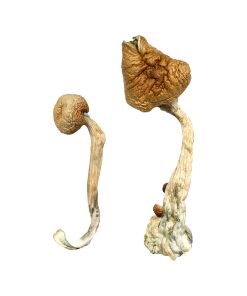
Descriptions of Goldmember commonly focus on its association with the physical characteristics of its reported parent lineages.
However, appearance alone is not sufficient to establish that a mushroom is Goldmember.
Mushroom morphology can change depending on genetics, environmental conditions, developmental stage, and other factors. Closely related mushrooms can also have overlapping physical characteristics.
Scientific identification can involve microscopic examination, morphological characteristics, DNA sequencing, and ecological information.
This matters because informal names can sometimes be applied inconsistently. Research into Psilocybe specimens has found significant historical problems with fungal identification, including specimens whose reported taxonomic identities did not agree with DNA-based analysis.
Therefore, Goldmember should be regarded as a community designation unless the underlying genetic identity has been independently established.
What Effects Are Associated With Goldmember Shrooms?
Because Goldmember is generally associated with psilocybin-producing P. cubensis, discussion of its effects should focus on the established effects of psilocybin rather than promising a particular Goldmember experience.
NCCIH states that psilocybin can produce changes in perception, mood, thoughts, and sensory experiences. People may report intensified emotions, vivid memories, visual changes, altered time perception, or changes in their sense of self.
Potential effects associated with psilocybin include:
- Changes in visual perception
- Altered perception of time
- Intensified emotional experiences
- Changes in thought patterns
- Vivid memories
- Changes in self-perception
- Hallucinations
- Heightened sensory awareness
- Anxiety or fear
- Confusion or paranoia
Physical effects can include nausea, dizziness, headache, fatigue, increased heart rate, and increased blood pressure.
The experience can differ significantly from one person to another.
Set, Setting and Individual Differences
A person’s psychological state and environment can strongly influence a psychedelic experience.
NCCIH explains that effects can vary according to factors including personality, mood, expectations, surroundings, health, previous experience, mushroom type, and the use of other substances.
This helps explain why anecdotal reports about Goldmember can differ considerably.
One person may describe an experience as emotionally intense, while another may report anxiety or confusion. Such reports should not be interpreted as evidence that the mushroom has one fixed psychological effect.
The concept of set and setting is consequently important in psychedelic research. Clinical researchers carefully consider participants’ mental state and the environment in which experimental sessions take place.
Safety Considerations
Goldmember Shrooms should not automatically be considered safe simply because they are described as a natural mushroom.
Psilocybin can produce significant psychological and physical effects. NCCIH lists possible adverse effects including nausea, dizziness, headache, fatigue, increased heart rate and blood pressure, anxiety, paranoia, hallucinations, and persistent psychosis in some circumstances.
Certain psychiatric conditions are also particularly important. NCCIH states that psilocybin is not considered safe for people with psychotic conditions such as schizophrenia or schizoaffective disorder and certain severe psychiatric conditions.
Mushroom Misidentification
A separate safety issue involves mushroom identification.
Some poisonous mushrooms can resemble psilocybin-containing mushrooms. NCCIH warns that confusing poisonous mushrooms with psilocybin mushrooms can result in serious or potentially fatal poisoning.
For that reason, an informal name such as Goldmember cannot substitute for reliable species identification.
If someone suspects they have consumed an unidentified or poisonous mushroom and develops concerning symptoms, urgent medical or poison-control assistance is appropriate.
Goldmember Shrooms and Scientific Research
Although Goldmember itself is primarily a community-level cultivar name, its association with P. cubensis places it within a rapidly developing area of scientific research.
Scientists are studying:
- Psilocybin biosynthesis
- Fungal genetics
- Strain variation
- Secondary metabolites
- Mushroom taxonomy
- Psychedelic pharmacology
- Neuroscience
- Potential therapeutic applications
Recent genomic research has improved understanding of the evolutionary history and genetic diversity of Psilocybe. Meanwhile, chemical studies are demonstrating that different P. cubensis strains can possess markedly different tryptamine profiles.
These findings make named cultivars scientifically interesting even when their community histories have not been formally documented.
Medical Research Into Psilocybin
The wider scientific interest in Goldmember’s parent species is closely connected with renewed research into psilocybin.
NCCIH reports growing investigation into psilocybin-assisted approaches for depression, anxiety associated with serious illness, post-traumatic stress disorder, addiction, and related conditions. The U.S. FDA has also granted breakthrough-therapy designations to psilocybin-assisted psychotherapy for major depressive disorder and treatment-resistant depression.
This research should not be confused with ordinary use of whole mushrooms.
Clinical trials generally involve carefully selected participants, controlled environments, trained professionals, characterized substances, and structured psychological support.
A naturally occurring mushroom with an informal strain name does not provide the same degree of standardization.
Why Laboratory Analysis Matters
Laboratory testing is particularly important when discussing claims about psychedelic mushroom chemistry.
Recent research shows that even P. cubensis strains cultivated under identical laboratory conditions can differ dramatically in total tryptamine concentration. Individual mushrooms within the same strain can also vary.
Another study demonstrated that taxonomic identification and chemical measurements can sometimes be inconsistent when mushroom specimens are examined retrospectively.
Together, these findings show why responsible scientific descriptions should avoid presenting informal names as guaranteed chemical specifications.
For Goldmember, this means that claims about potency, consistency, or exact composition should be treated cautiously unless they are supported by appropriately documented analytical testing.
Legal Considerations
The legal status of psilocybin-containing mushrooms varies considerably between countries, states, provinces, and municipalities.
Some jurisdictions regulate psilocybin and psilocin specifically, while others regulate possession or distribution of the mushrooms themselves. Certain places have introduced limited therapeutic, research, or decriminalization frameworks, while others maintain strict prohibitions.
The name Goldmember does not determine legal status.
Anyone researching the legal position of Goldmember Shrooms should consult the current legislation applicable to their jurisdiction. Laws can change, and rules applicable to scientific research may differ from those governing personal possession or commercial activity.
How to Evaluate Goldmember Information Online
Because Goldmember is primarily an informal cultivar name, readers should evaluate online claims carefully.
Useful questions include:
- Is the underlying species identified as Psilocybe cubensis?
- Is the Goldmember lineage clearly documented?
- Is the Golden Teacher × Penis Envy claim supported by a traceable source?
- Are chemical or potency claims backed by laboratory testing?
- Does the source distinguish one tested specimen from the entire cultivar?
- Are health claims supported by medical or scientific sources?
- Is the legal information current?
This approach helps separate documented information from anecdotal descriptions.
It is particularly important when evaluating potency claims, because recent controlled research shows that P. cubensis chemistry can vary substantially between strains and individual mushrooms.
Why Goldmember Remains an Interesting Mushroom Variety
Goldmember Shrooms are notable because they illustrate how modern mushroom culture, selective cultivation, genetics, and psychedelic science overlap.
The reported Golden Teacher × Penis Envy lineage gives the name a recognizable place within P. cubensis communities.
At the same time, Goldmember demonstrates why informal cultivar names should not be confused with scientific classifications.
Modern research shows that P. cubensis strains can exhibit considerable biochemical variation, while individual fruiting bodies can also differ significantly.
That makes laboratory analysis, genetic characterization, and careful terminology increasingly important.
Rather than viewing Goldmember simply through claims about strength or subjective experience, a more scientifically useful perspective considers its reported lineage, relationship to P. cubensis, chemical diversity, taxonomy, and place within the broader history of psychedelic mushroom research.
Frequently Asked Questions About Goldmember Shrooms
1. What are Goldmember Shrooms?
Goldmember Shrooms is an informal name generally associated with a cultivated Psilocybe cubensis lineage. Community sources describe the variety as a hybrid involving Golden Teacher and Penis Envy. It is not a separately recognized scientific species.
2. Are Goldmember Shrooms a separate species?
No. Goldmember is generally treated as a cultivated lineage or cultivar name associated with Psilocybe cubensis. The scientific species is P. cubensis, while Goldmember is an informal designation used to distinguish a particular lineage.
3. What is the reported lineage of Goldmember Shrooms?
Available community documentation describes Goldmember as a Golden Teacher × Penis Envy hybrid. Because this information primarily comes from cultivation-community sources rather than formal taxonomic literature, it is best described as a reported lineage rather than a formally established taxonomic classification.
4. Do Goldmember Shrooms have a fixed potency?
No scientifically established universal potency can be assigned to every mushroom carrying the Goldmember name. Recent research found more than sevenfold variation in total tryptamine concentrations among 14 P. cubensis strains and substantial variation between individual mushrooms of the same strain.
5. What effects are associated with Goldmember Shrooms?
If the material is genuinely psilocybin-containing P. cubensis, effects can include altered perception, changes in mood and thought patterns, altered time perception, intensified emotions, and hallucinations. Anxiety, paranoia, nausea, dizziness, increased heart rate, and other adverse effects can also occur.
6. Are Goldmember Shrooms legal?
The answer depends on the jurisdiction. Laws governing psilocybin, psilocin, and psilocybin-containing mushrooms vary considerably and can change. The Goldmember name itself does not determine legality, so current local legislation should be consulted for a specific legal question.
| Quantity | 7grams, 14grams, 28grams |
|---|
Be the first to review “Goldmember Shrooms”
Related products

Magic Mushrooms
Magic Mushrooms
Magic Mushrooms
Magic Mushrooms
Magic Mushrooms
Magic Mushrooms
Magic Mushrooms
Magic Mushrooms
Reviews
There are no reviews yet.