
Escondido Magic Mushrooms: The Definitive Guide to Origins, Morphology, Potency, and Cultivation
Introduction and Geographic Origins of Escondido Mushrooms
The world of mycology and psychedelic culture is rich with regional variations, landraces, and specialized strains that have captured the fascination of researchers and enthusiasts for decades. Among the most intriguing regional isolates of Psilocybe cubensis is the Escondido magic mushroom. Tracing its lineage back to the rolling hills and semi-arid microclimates of Southern California—specifically the Escondido area—this strain represents a fascinating chapter in the catalog of psilocybin-producing fungi.
When wild specimens were first discovered and gathered from local pastures in the late 20th century, mycologists noted how remarkably well-adapted the local genetics were to transitioning from outdoor environments into controlled, indoor laboratory conditions. Unlike equatorial strains that thrive exclusively in perpetual tropical humidity, the Escondido isolate evolved under Mediterranean climatic pressures, instilling a resilient constitution that makes it uniquely sturdy.
For cultivators, researchers, and ethnobotanists, understanding the provenance of the Escondido strain provides valuable context regarding why certain phenotypes express specific physical characteristics. This comprehensive guide explores every facet of the Escondido magic mushroom, from its complex chemical taxonomy down to practical insights for academic study and cultivation.
Botanical Characteristics and Phenotypical Morphology
At first glance, Psilocybe cubensis strains can appear quite similar to the untrained eye, but closer examination reveals subtle, distinct visual markers that separate one cultivar from another. The Escondido mushroom exhibits classic cubensis morphology while incorporating unique growth tendencies that make it instantly recognizable to experienced mycology hobbyists.
Detailed Physical Anatomy
-
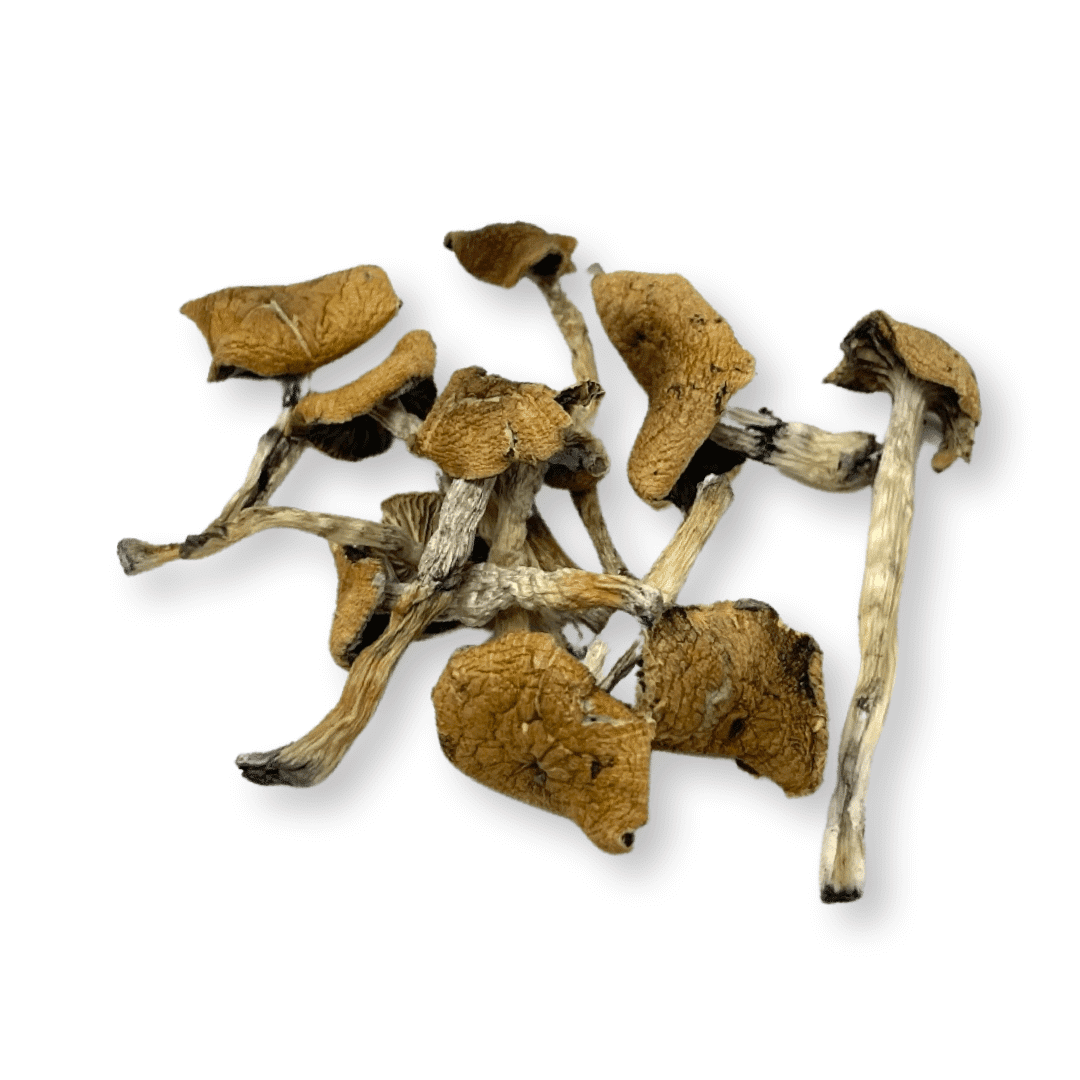
Cap Evolution and Coloration: In its early pin stage, the cap presents as a deep, rich chestnut or caramel brown. As the mushroom matures and the veil stretches, the cap expands into a broad, convex-to-flat shape measuring anywhere from 5 to 9 centimeters across. Mature caps often fade to a warm golden-honey tone while retaining a lighter, cream-colored perimeter.
-
Stipe Structure: The stems are characteristically thick, fibrous, and robust, usually colored white with yellowish undertones. They tend to grow relatively tall and straight, supporting the heavy canopy without excessive bending.
-
Bruising Characteristics: When handled, cut, or harvested, the flesh of the Escondido mushroom rapidly oxidizes, developing a deep, dark blue-indigo bruising pattern. This indigo coloration is a direct biological indicator of psilocybin oxidation.
-
Spore Production and Print Density: Escondido produces heavy, dark purplish-brown spore deposits. Under sterile microscopic examination, the spores display high germination viability, forming dense, multi-nucleated hyphae networks upon encountering favorable nutrient sources.
Chemical Profile and Psychoactive Potency
The psychoactive properties of magic mushrooms are governed by complex biochemical interactions between various tryptamine alkaloids. The primary active agents in Escondido mushrooms—as with all true Psilocybe cubensis varieties—are psilocybin and psilocin, supported by trace auxiliary compounds like baeocystin, norbaeocystin, and aeruginascin.
Alkaloid Distribution and Metabolism
When an individual ingests dried or fresh magic mushrooms, the body’s digestive enzymes and metabolic pathways convert psilocybin into psilocin through a dephosphorylation process. Psilocin then crosses the blood-brain barrier with high affinity, binding to serotonin receptors—specifically the 5-HT2A receptor subtype—in the cerebral cortex. This temporary modulation of neural circuitry alters sensory processing, cognitive pacing, and emotional synthesis.
Potency Classification
-
Dry Weight Concentration: Total tryptamines typically range between 0.5% and 1.0% by dry weight, placing Escondido squarely in the moderate potency bracket.
-
Consistency Across Flushes: Unlike volatile mutant strains that experience dramatic potency drops in later harvest cycles, Escondido maintains a remarkably stable alkaloid distribution across its primary, secondary, and tertiary flushes.
-
Comparative Strength: While significantly milder than specialized high-potency designer strains like Penis Envy, Escondido offers a stronger and more reliable baseline profile than wild-foraged common variants, making standard weight-based measurements predictable for academic research.
Cultivation Dynamics and Ecological Preferences Of Escondido Magic Mushrooms
Because the Escondido strain originates from a distinct geographic region characterized by warm days, cooler nights, and moderate seasonal moisture, it has developed unique biological habits that influence how it behaves in controlled cultivation environments.
Essential Growth Parameters and Optimization
-
Thermal Tolerances: Mycelial colonization thrives when ambient temperatures are maintained between 24°C and 27°C (75°F to 80°F). During the fruiting phase, slight temperature reductions down to 21°C to 23°C help trigger optimal pinning.
-
Substrate Compatibility: Escondido is remarkably versatile, displaying aggressive colonization rates on pasteurized coco coir, vermiculite mixtures, sterilized rye grain spawn, and enriched horse or cow manure formulations.
-
Humidity and Air Exchange: High relative humidity (ranging from 90% to 95%) is mandatory during the primordia development stage. Proper manual or automated fresh air exchange (FAE) prevents carbon dioxide buildup, ensuring straight, uninhibited stipe growth.
-
Contaminant Resistance: Thanks to its vigorous rhizomorphic mycelium, which forms dense, web-like white threads across the substrate, Escondido exhibits strong natural resistance against common competing molds like Trichoderma.
Comprehensive Frequently Asked Questions
Where did the Escondido magic mushroom strain originate?
The Escondido strain traces its geographic roots back to wild specimens collected and isolated in the Escondido region of Southern California. It was subsequently stabilized and integrated into international mycology collection networks.
What is the typical potency level of Escondido mushrooms?
Escondido mushrooms fall into the moderate potency category. Their total psilocybin and psilocin content generally measures between 0.5% and 1.0% by dry weight, making them comparable to classic baseline strains like Golden Teacher.
How do Escondido mushrooms look compared to other cubensis strains?
They display classic Psilocybe cubensis morphology, featuring caramel-to-golden caps that fade at the margins, thick fibrous whitish-yellow stems, and a prominent dark blue bruising reaction when the flesh is compressed or damaged.
Are Escondido mushrooms difficult for beginners to cultivate?
No. Due to their aggressive rhizomorphic colonization rates and high natural resilience against environmental stressors and competing molds, they are considered exceptionally forgiving and ideal for beginning mycology students.
What substrates work best for cultivating Escondido mushrooms?
Escondido performs exceptionally well on standard bulk substrates, including coco coir and vermiculite blends (CVG), sterilized whole-grain rye spawn, and pasteurized manure-based compost substrates.
What active compounds are present in the Escondido strain?
The primary active compounds are psilocybin and psilocin, backed by minor supporting trace alkaloids such as baeocystin, norbaeocystin, and aeruginascin.
| Quantity | 7grams, 14grams, 28grams |
|---|
Be the first to review “Escondido Magic Mushrooms”
Related products
Magic Mushrooms
Magic Mushrooms
Magic Mushrooms
Magic Mushrooms
Magic Mushrooms
Magic Mushrooms
Magic Mushrooms
Magic Mushrooms
Reviews
There are no reviews yet.