
Aztec God Magic Mushrooms: Origins, Taxonomy, Characteristics & European Legal Context
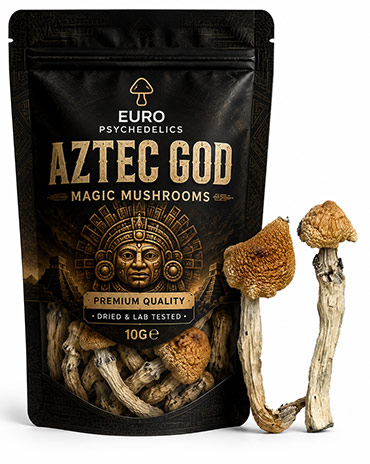
Aztec God Magic Mushrooms is an informal name associated with psychedelic mushroom culture and is generally used as a lineage or variety-style designation rather than a formally recognised scientific species. Like many mushroom names inspired by geography, mythology or ancient cultures, the term can carry historical and cultural associations that are broader than its biological classification.
For European readers, it is useful to distinguish between the common name, the underlying fungal species, historical associations with psychoactive mushrooms, and the legal status of psilocybin-containing fungi. This article focuses on those educational aspects.
What Are Aztec God Magic Mushrooms?
“Aztec God” is not a scientific species name. It is a community-style name that may be used for a particular mushroom lineage, particularly within terminology surrounding Psilocybe cubensis.
The name evokes the ancient cultures of Mesoamerica, where psychoactive fungi have a documented ethnomycological history. However, a modern mushroom carrying an Aztec-inspired name should not automatically be assumed to be an ancient Aztec variety or a direct descendant of mushrooms used historically in Mesoamerican ceremonies.
That distinction is important.
Modern mushroom names frequently combine:
- geographical references;
- historical associations;
- mythology;
- cultural imagery;
- physical characteristics;
- informal lineage terminology.
Consequently, Aztec God is best understood as a common or lineage-style name rather than a formal taxonomic classification.
Taxonomy and Psilocybe cubensis
Where the Aztec God name is used for a Psilocybe cubensis lineage, the relevant scientific species is Psilocybe cubensis.
Its broad classification is:
- Kingdom: Fungi
- Phylum: Basidiomycota
- Class: Agaricomycetes
- Order: Agaricales
- Genus: Psilocybe
- Species: Psilocybe cubensis
Psilocybe cubensis is a formally recognised fungal species. The scientific name provides much greater precision than informal names such as Aztec God.
This distinction is particularly useful when comparing different named mushroom varieties. Two mushrooms can have different popular names while belonging to the same species.
Aztec God Is Not a Formal Species
One of the most important points to understand is that Aztec God is not equivalent to a scientific species name.
A scientific species is established through formal taxonomic research. A lineage name, on the other hand, may become popular through mushroom communities without having a formally defined taxonomic status.
This means that statements about an “Aztec God species” should be treated cautiously.
When reliable scientific information is available, the species-level classification should take priority over informal terminology.
The Mesoamerican Connection
The Aztec association is culturally significant because Mesoamerica has one of the world’s best-documented histories of ceremonial mushroom use.
Historical and ethnographic evidence demonstrates that psychoactive mushrooms were known and used by several Indigenous cultures in Mesoamerica.
The Nahuatl term teonanácatl, often translated in discussions of ethnomycology as “flesh of the gods,” has become particularly famous in writings about historical Mexican mushroom traditions.
However, modern interpretations can sometimes oversimplify this history.
Mesoamerica contained numerous Indigenous cultures with different languages, traditions and religious systems. It would therefore be inaccurate to treat all historical mushroom traditions as belonging to a single “Aztec mushroom culture.”
Aztec Civilization and Ethnomycology
The Aztec Empire was one of the major civilisations of pre-Columbian Mesoamerica.
Its cultural and religious systems incorporated complex relationships with plants, animals, natural phenomena and ritual practices.
Historical accounts and later ethnographic research contributed to modern understanding of psychoactive fungi in Mesoamerica. Twentieth-century researchers played an important role in documenting Indigenous mushroom traditions, particularly in Mexico.
Among the best-known figures in this history is María Sabina, a Mazatec healer whose practices became internationally known during the twentieth century.
Her story is particularly important because it demonstrates that the modern international fascination with psychedelic mushrooms emerged partly from Indigenous traditions that existed long before contemporary psychedelic culture.
The Difference Between Aztec and Mazatec Traditions
The words “Aztec” and “Mazatec” should not be treated as interchangeable.
The Aztec civilisation was centred primarily in central Mexico before the Spanish conquest.
The Mazatec people are an Indigenous group associated particularly with the Sierra Mazateca region of Oaxaca.
Modern ethnomycological literature frequently discusses Mazatec mushroom traditions because researchers documented them in considerable detail during the twentieth century.
Therefore, using an Aztec-inspired name for a modern mushroom lineage does not necessarily indicate a direct historical connection to Mazatec traditions or to a specific Aztec ceremony.
Mushroom Morphology
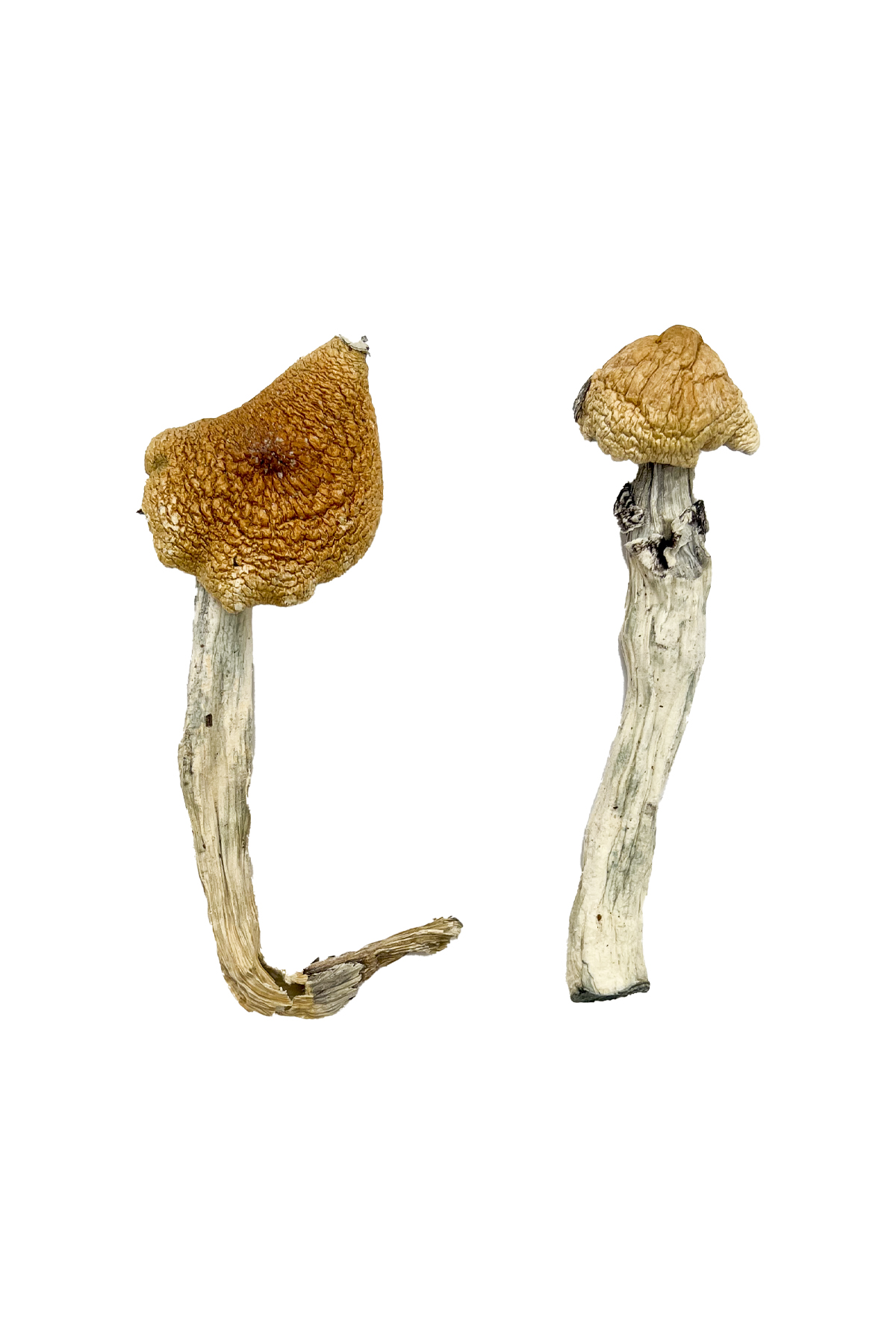
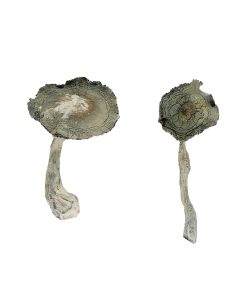
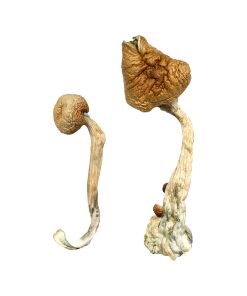
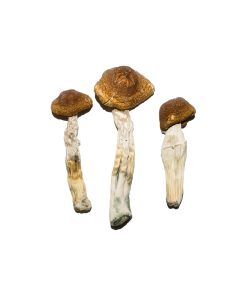
When the Aztec God name refers to Psilocybe cubensis, its general morphology corresponds to that species.
Like other P. cubensis specimens, mushrooms may have:
- a distinct cap;
- a central stem;
- gills beneath the cap;
- dark purplish-brown spores;
- variable cap shape and colour.
Individual mushrooms can differ considerably according to genetics, maturity and environmental conditions.
Consequently, a photograph or common name is not enough to establish definitive species identification.
Scientific identification may involve morphological examination, microscopy and, where necessary, molecular methods.
Why Mushroom Names Can Be Confusing
Mushroom terminology is unusually rich in informal names.
Names can describe:
- location;
- appearance;
- historical associations;
- cultural figures;
- mythology;
- fictional characters;
- perceived ancestry;
- community-defined lineages.
This makes mushroom culture interesting, but it can also create confusion.
For example, a geographical name does not necessarily prove that a mushroom originated in that location, while a cultural name does not necessarily demonstrate a historical relationship with the culture referenced.
The same principle applies to Aztec God.
Psilocybin and Psilocin
When discussing psilocybin-containing mushrooms, two compounds are particularly important: psilocybin and psilocin.
Psilocybin is a naturally occurring psychedelic compound found in numerous fungal species. In the human body, it is converted into psilocin, which interacts with serotonin receptors involved in perception, cognition and mood.
Scientific studies have examined these compounds in neuroscience and psychiatry, including research into altered states of consciousness and potential therapeutic applications.
However, scientific research should not be confused with unrestricted medical approval or general legality.
Clinical research generally takes place under controlled conditions with defined protocols and professional oversight.
Modern Research Interest
Interest in psilocybin has increased substantially in modern neuroscience.
Researchers have examined questions involving:
- perception;
- emotional processing;
- cognition;
- brain network activity;
- consciousness;
- psychiatric disorders;
- therapeutic mechanisms.
Some clinical research has produced promising findings, but interpretation requires care.
A research finding does not automatically establish that a mushroom or compound is safe, effective or legally approved for unrestricted use.
The European legal and medical frameworks remain separate questions from the scientific evidence.
European Legal Context
For European audiences, the legal status of Aztec God Magic Mushrooms depends primarily on the relevant national legislation and the substances involved, rather than on the cultural name itself.
The European Union Drugs Agency explains that psilocybin and psilocin are controlled under international drug-control conventions and that national approaches to mushrooms containing these substances vary between European countries.
Some countries have legislation specifically addressing mushrooms, while others regulate controlled substances or their active compounds.
Therefore, calling a mushroom “Aztec God” does not make it legally distinct from another psilocybin-containing mushroom.
Why European Laws Differ
European countries have developed their own national drug-control frameworks within international obligations.
Consequently, differences may exist regarding:
- possession;
- cultivation;
- importation;
- distribution;
- preparation;
- research;
- medical applications.
Rules can also change over time.
For that reason, a legal statement based on a forum post, social-media discussion or older article may no longer accurately represent the current position.
Anyone researching the status of psilocybin-containing mushrooms should consult current official legislation or guidance applicable to their country.
Cultural Names and Scientific Responsibility
The Aztec God name demonstrates how modern psychedelic culture often draws inspiration from historical traditions.
There is nothing inherently unusual about cultural naming in taxonomy-adjacent communities. Common names have been used for centuries across many branches of biology.
The challenge arises when a cultural name is presented as though it were scientific evidence.
A responsible description should therefore distinguish between:
Historical fact: Mesoamerican cultures had documented traditions involving psychoactive fungi.
Modern naming: Aztec-inspired names are used within contemporary mushroom communities.
Scientific taxonomy: Psilocybe cubensis is a recognised species.
Legal classification: Laws concerning psilocybin-containing mushrooms vary by jurisdiction.
Keeping these categories separate provides a more accurate understanding.
Brazilian, Mexican and Other Geographic Names
Aztec God can also be understood alongside the many geographical and cultural names used in mushroom terminology.
Names inspired by Mexico, Thailand, Brazil, Burma, Cambodia and other locations often describe perceived lineage history or community tradition.
They should not automatically be interpreted as formal scientific classifications.
In particular, a geographical or cultural name does not prove that every specimen carrying that name originated in the corresponding historical region.
Responsible Interpretation of Historical Claims
Psychedelic mushroom history has sometimes been presented through romanticised or simplified narratives.
For example, references to “ancient psychedelic cultures” can unintentionally reduce complex Indigenous traditions to a single recreational narrative.
A better approach is to recognise that Indigenous communities developed their own cultural, spiritual and medicinal frameworks, which should be understood within their historical context.
Modern psychedelic culture is a separate phenomenon, even though it has drawn inspiration from historical and ethnographic literature.
Health and Safety Context
Psilocybin-containing mushrooms can produce substantial changes in perception, cognition and emotional state.
Potential adverse effects can include:
- anxiety;
- panic;
- confusion;
- nausea;
- impaired judgement;
- distressing perceptual experiences;
- temporary physiological changes.
Psychological reactions can vary significantly between individuals.
The European Union Drugs Agency has highlighted concerns surrounding unregulated psychedelic practices, including potential risks for vulnerable individuals and people with pre-existing mental-health difficulties.
Mushroom identification is another important issue. Wild fungi can be difficult to distinguish, and accidental consumption of poisonous species can result in serious illness.
Aztec God Magic Mushrooms in Perspective
The name “Aztec God” sits at the intersection of three different worlds:
- Mycology — the scientific study and classification of fungi.
- Ethnomycology — the study of relationships between people and fungi across cultures.
- Modern psychedelic culture — where informal names and lineages have developed their own traditions.
Understanding all three perspectives makes the terminology easier to interpret.
Most importantly, the cultural name should not be confused with formal scientific taxonomy or current legal status.
Frequently Asked Questions
1. What are Aztec God Magic Mushrooms?
Aztec God Magic Mushrooms is an informal name used within psychedelic mushroom culture, generally as a lineage or variety-style designation. It is not a formal scientific species name.
2. Are Aztec God Magic Mushrooms a separate species?
Not necessarily. The name is commonly discussed in connection with Psilocybe cubensis, a recognised fungal species, but the informal name itself does not establish a scientific classification.
3. Why are they called “Aztec God”?
The name appears to draw inspiration from the religious and cultural history of the Aztec civilisation and broader Mesoamerican traditions. However, a modern mushroom carrying this name should not automatically be considered an authentic historical Aztec mushroom lineage.
4. Did the Aztecs use psychedelic mushrooms?
Historical and ethnographic evidence supports the existence of psychoactive mushroom traditions in Mesoamerica. However, the history is complex, and modern descriptions should distinguish Aztec history from the traditions of other Indigenous peoples, including the Mazatec.
5. What compounds are associated with psilocybin mushrooms?
Psilocybin and psilocin are the principal psychedelic compounds commonly discussed in relation to these fungi. Psilocybin is converted into psilocin in the body.
6. Are Aztec God Magic Mushrooms legal in Europe?
There is no single answer across Europe. Psilocybin and psilocin are internationally controlled, while national laws concerning mushrooms containing these compounds differ between European countries.
| Quantity | 7grams, 14grams, 28grams |
|---|
Be the first to review “Aztec God Magic Mushrooms”
Related products
Magic Mushrooms
Magic Mushrooms
Magic Mushrooms
Magic Mushrooms
Magic Mushrooms
Magic Mushrooms
Magic Mushrooms
Magic Mushrooms
Reviews
There are no reviews yet.