Botanical Research
Buy Magic Mushrooms
Buy Magic Mushrooms: A Complete Guide to Psilocybin, Research and Legality in Europe
Introduction
Interest in magic mushrooms has grown considerably as scientists, researchers, healthcare professionals and the general public explore the potential applications of psychedelic compounds. Among these substances, psilocybin has attracted particular attention because of its effects on perception, cognition, mood and consciousness.
People searching online for buy magic mushrooms may have different motivations. Some are interested in understanding psychedelic mushrooms, others want to learn about their potential therapeutic applications, while researchers may be investigating the chemical composition, pharmacology and clinical applications of psilocybin.
However, understanding the subject requires more than knowing what magic mushrooms are. European laws, product quality, scientific evidence, potential psychological effects and public-health considerations all play important roles.
This guide from Europsychedelics explores the science behind magic mushrooms, explains the European regulatory environment, examines current research and discusses what readers should understand before making decisions about psychedelic products.
Our objective is to provide accurate, accessible and research-informed information for readers interested in psychedelic science.
1. What Are Magic Mushrooms?
Magic mushrooms are a general name for certain fungi that contain naturally occurring psychoactive compounds, particularly psilocybin and psilocin.
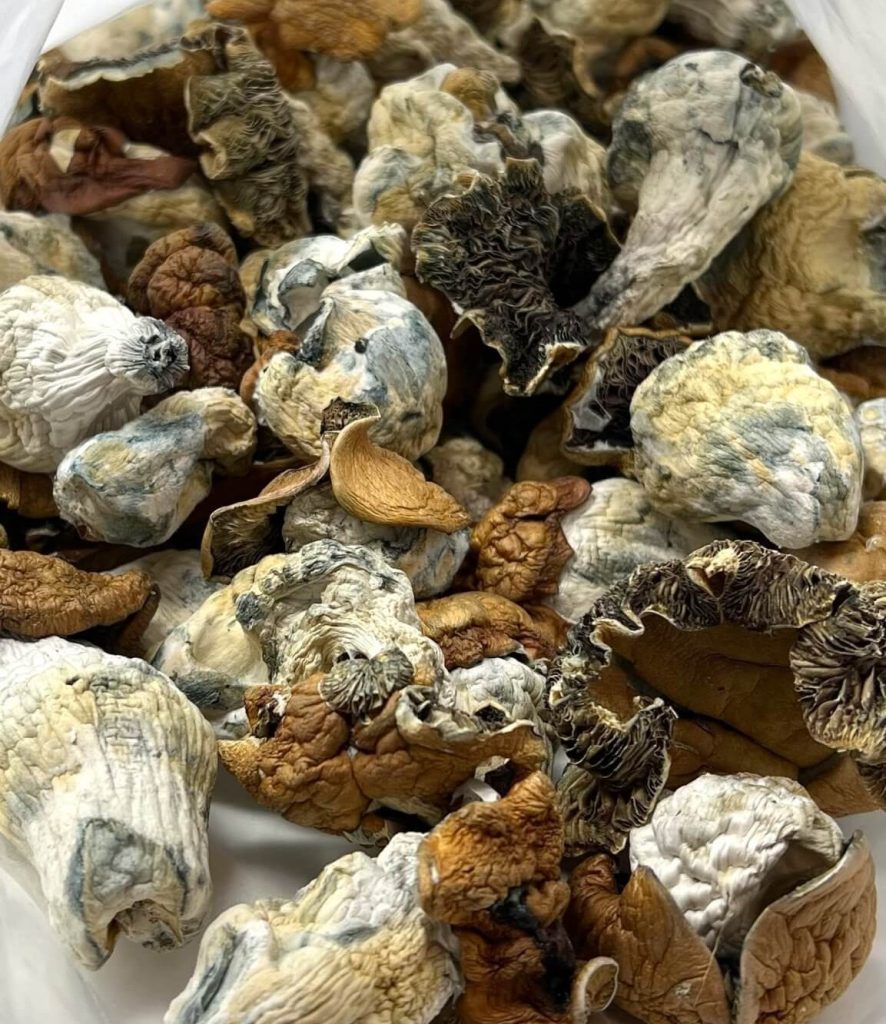
These compounds belong to a chemical family known as tryptamines. They interact with serotonin receptors in the human nervous system and can produce changes in perception, mood, thought processes and sensory experiences.
More than 50 mushroom species have been associated with psilocybin-containing fungi. Species belonging to the genera Psilocybe, Panaeolus and related groups have been documented in scientific literature.
Psilocybin is particularly interesting because it acts as a prodrug. After entering the body, it is converted into psilocin, which is responsible for much of its psychoactive activity.
Researchers study these compounds to understand how they influence brain activity, emotional processing and patterns of cognition.
Understanding psilocybin and psilocin
Although the names are frequently used together, psilocybin and psilocin are chemically different.
Psilocybin is the phosphorylated compound naturally present in many psychedelic mushrooms.
Psilocin is the pharmacologically active metabolite produced when the body processes psilocybin.
Both substances are important in psychedelic research. Understanding their chemical structures, stability and pharmacological properties helps scientists investigate their effects.
The European Union Drugs Agency provides a useful scientific overview of hallucinogenic mushrooms and their chemical composition.
2. Why Are People Interested in Buying Magic Mushrooms?
The search term “buy magic mushrooms” reflects several different interests. Understanding these motivations is important because not everyone searching for psychedelic mushrooms intends to consume them.
Scientific and academic interest
Researchers are increasingly investigating psilocybin because of its potential relevance to neuroscience, psychiatry and pharmacology.
Academic investigations include:
- Serotonin receptor activity.
- Brain connectivity and neural communication.
- Emotional processing.
- Psychological responses to psychedelic experiences.
- The relationship between consciousness and perception.
- Potential applications in psychiatric research.
For universities and research institutions, access to controlled substances is a regulated scientific process rather than an ordinary retail transaction.
Researchers must follow relevant institutional, ethical and national requirements.
Interest in mental health research
One of the most discussed areas of psychedelic research concerns depression and other mental health conditions.
Clinical researchers are investigating whether carefully controlled psilocybin-assisted interventions may have therapeutic potential for selected patients.
It is important to distinguish between promising research findings and established medical treatments.
A substance showing potential in clinical trials does not automatically become an approved medicine.
Interest in psychedelic education
Some readers are interested in understanding the history, cultural context, chemistry and psychological effects of psychedelic mushrooms.
Educational interest has also increased alongside public discussions about consciousness, mental health and emerging approaches to psychiatric research.
Reliable information is particularly important because online discussions sometimes exaggerate the benefits or underestimate the risks.
3. Can You Legally Buy Magic Mushrooms in Europe?
European psychedelic regulations are not uniform.
Although psilocybin and psilocin are controlled under the 1971 United Nations Convention on Psychotropic Substances, individual countries implement their own national laws.
Consequently, the legal status of mushrooms, possession, cultivation, supply and research activities can differ between jurisdictions.
This is one of the most important considerations for anyone searching for magic mushrooms in Europe.
The European regulatory framework
The United Nations Convention on Psychotropic Substances establishes an international framework for controlling substances such as psilocybin.
European countries have incorporated these obligations into their national legislation.
However, national legislation does not always treat the mushroom itself in precisely the same way as the isolated chemical compound.
Some jurisdictions specifically regulate psilocybin-containing mushrooms, while others apply laws concerning controlled substances, preparations or activities involving psychoactive compounds.
The European Union Drugs Agency explains that national interpretations and legal approaches differ.
Readers should therefore avoid assuming that something legally available in one European country can automatically be purchased, possessed or transported in another.
The Netherlands
The Netherlands is frequently discussed in conversations about psychedelic products.
An important legal distinction exists between magic mushrooms and magic truffles.
Fresh magic truffles, which are the underground sclerotia of certain fungi, have a different legal treatment under Dutch law from prohibited psilocybin-containing mushrooms.
This distinction does not mean that all psychedelic mushroom products are legal in the Netherlands.
Nor does it mean that products available under Dutch law can legally be transported across international borders.
Anyone researching Dutch psychedelic regulations should consult current official national guidance rather than relying exclusively on online retailer descriptions.
Czech Republic
The Czech Republic has introduced an important development in its regulatory approach.
From 1 January 2026, new legislation established a restricted framework for individually prepared psilocybin-containing medicinal products for therapeutic use.
This framework is not equivalent to general permission to purchase recreational magic mushrooms.
It establishes conditions involving qualified medical professionals, specified clinical circumstances and medical supervision.
The Czech National Institute of Mental Health also clarified in March 2026 that practical implementation and access arrangements were still being developed.
This is an important example of why psychedelic medicine, scientific research and recreational commerce must be treated as separate legal categories.
Other European countries
In countries such as Germany, France, Spain, Italy, Portugal, Belgium and the United Kingdom, national controlled-substance legislation must be considered individually.
Even where enforcement policies or penalties differ, this should not be interpreted as general commercial authorisation.
Before considering any transaction involving psilocybin, readers should verify the applicable law through the relevant national authority.
Important: Europsychedelics does not provide legal advice. This overview is educational and should not replace country-specific legal guidance.
4. What Does Scientific Research Say About Magic Mushrooms?
The scientific interest in psilocybin has expanded beyond basic pharmacology.
Researchers are investigating how the compound affects brain networks, emotional responses and psychological experiences.
Psilocybin and serotonin receptors
Psilocin interacts with several serotonin receptors, particularly the 5-HT2A receptor.
Serotonin is a neurotransmitter involved in multiple physiological and neurological processes, including mood regulation, perception and cognition.
The interaction between psilocin and serotonin receptors is one of the principal mechanisms researchers investigate when studying psychedelic experiences.
However, receptor activity alone does not explain every psychological effect associated with psilocybin.
Researchers also examine neural network activity, psychological context and individual differences.
Psilocybin and depression research
Depression is one of the most prominent areas of modern psilocybin research.
Clinical trials have investigated whether psilocybin-assisted psychotherapy may help certain individuals experiencing depressive symptoms, particularly where conventional treatments have not provided sufficient relief.
Some studies have reported promising results.
Nevertheless, the evidence remains an evolving research area.
Clinical trial results cannot be interpreted as proof that psilocybin is a universally effective treatment.
Researchers must consider:
- Study design and participant selection.
- Sample size.
- Duration of follow-up.
- Adverse events.
- Psychological support.
- Long-term outcomes.
- Differences between clinical settings.
These factors are essential when evaluating the quality of psychedelic research.
Psilocybin and neuroscience
Another important research direction involves brain connectivity.
Scientists use technologies such as functional magnetic resonance imaging (fMRI) to investigate changes in brain activity following psychedelic administration.
These studies examine how different brain regions communicate and how psychedelic compounds may temporarily alter patterns of connectivity.
The findings contribute to wider scientific discussions about consciousness, perception and cognitive flexibility.
However, neuroscience findings should be interpreted carefully. Changes in brain connectivity do not automatically demonstrate clinical benefit.
5. What Should Researchers Know About Psilocybin Access?
For researchers searching for ways to obtain psilocybin or magic mushroom material, it is essential to distinguish between academic research access and ordinary commercial purchasing.
Controlled substances generally require additional regulatory oversight.
Research institutions may need authorisation, ethical approval, appropriate facilities and compliance with controlled-substance handling requirements.
Research-grade materials
Scientific research requires materials that meet clearly defined specifications.
Important considerations include:
Identity: The substance must be correctly identified.
Purity: Chemical purity must be established using validated analytical methods.
Stability: Researchers must understand whether the compound changes during storage or handling.
Documentation: Material should have traceable documentation and appropriate quality records.
Regulatory compliance: Acquisition, possession, storage and use must comply with applicable national laws.
These requirements are particularly important when investigating psilocybin in laboratory or clinical settings.
Analytical testing
Analytical chemistry plays an important role in psychedelic research.
Depending on the research question, scientists may use:
- High-performance liquid chromatography (HPLC).
- Liquid chromatography-mass spectrometry (LC-MS).
- Nuclear magnetic resonance spectroscopy (NMR).
- Validated analytical reference standards.
These methods help researchers investigate chemical identity, composition and degradation.
A photograph, product description or supplier claim cannot substitute for laboratory verification.
Clinical research access
Clinical investigations involving psilocybin require additional safeguards.
Depending on the jurisdiction and study design, researchers may need clinical trial authorisation, ethics committee approval, informed consent procedures and appropriate medical oversight.
In the European Union, the Clinical Trials Information System provides public access to information about relevant clinical trials.
This is a useful starting point for academics investigating current psilocybin studies.
6. Potential Effects of Magic Mushrooms
Magic mushrooms can produce changes in psychological and sensory experiences.
The intensity and duration of effects can vary considerably.
Factors include the species, chemical composition, individual physiology, psychological state and surrounding environment.
Reported effects include:
- Changes in visual perception.
- Altered sense of time.
- Changes in emotional experiences.
- Heightened sensitivity to sensory information.
- Altered thought patterns.
- Changes in the perception of self and surroundings.
Some individuals report experiences they describe as meaningful or emotionally significant.
Others may experience anxiety, confusion or psychological distress.
It is important to recognise that psychedelic experiences are not consistently positive.
Physical and psychological risks
Psilocybin-containing mushrooms can produce adverse effects.
Potential concerns include:
- Nausea and gastrointestinal discomfort.
- Increased heart rate.
- Increased blood pressure.
- Anxiety and panic.
- Confusion and disorientation.
- Impaired judgement.
- Distressing perceptual experiences.
- Psychological destabilisation in susceptible individuals.
People with certain psychiatric vulnerabilities may face additional risks.
Interactions with other substances and medications also require professional consideration.
Anyone experiencing a serious or unexpected reaction should seek appropriate medical assistance.
7. Why Mushroom Identification and Product Verification Matter
One of the major concerns associated with wild mushroom collection is misidentification.
Several mushroom species have similar physical characteristics, and some poisonous species can resemble psychoactive mushrooms.
The European Union Drugs Agency highlights the difficulty of distinguishing certain hallucinogenic mushrooms from other small brown or tan fungi.
Visual identification alone is not a reliable safety method.
Why appearance is not enough
Mushroom appearance can change depending on:
- Age.
- Environmental conditions.
- Moisture.
- Physical damage.
- Growth stage.
- Geographic location.
Even experienced observers can encounter identification difficulties.
A mushroom should never be considered safe or psychoactive solely because it resembles an image found online.
Professional mycological identification and appropriate laboratory analysis are important in scientific investigations.
Product claims and quality concerns
Online descriptions sometimes use terms such as premium quality, laboratory tested or research grade.
These phrases should not automatically be accepted as evidence.
Researchers should expect independently verifiable documentation and appropriate analytical evidence.
For commercial consumers, it is equally important to understand that a product advertised online may not comply with the law in the buyer’s country.
8. Is Psilocybin an Approved Medical Treatment in Europe?
This question is particularly relevant because public discussions about psychedelic medicine have grown.
Psilocybin has been investigated in clinical research involving depression and other psychiatric conditions.
However, research activity and regulatory approval are different processes.
A clinical trial investigates a potential treatment under a defined research protocol.
A medicine receiving marketing authorisation must meet applicable regulatory requirements concerning quality, safety and efficacy.
The European Union Drugs Agency has previously explained that classical psychedelics have not generally been approved as medicines across the EU.
The Czech Republic’s restricted therapeutic framework, effective from January 2026, is a notable national development, but it should not be confused with EU-wide marketing authorisation.
Readers should consult the European Medicines Agency and relevant national medicines regulators for current information.
9. Where Can Researchers Find Reliable Psilocybin Information?
For people researching magic mushrooms, using credible sources is more valuable than relying on commercial descriptions or social media discussions.
Several institutions provide useful information.
European Union Drugs Agency
The EUDA publishes information about psychedelic substances, European drug trends, legal frameworks and public-health concerns.
Its drug profiles are useful for understanding the chemistry and broader context of hallucinogenic mushrooms.
European Medicines Agency
The EMA provides information about medicine regulation, clinical development and authorised medicines in Europe.
Researchers can use its resources to distinguish experimental treatments from approved medicines.
EU Clinical Trials Information System
The CTIS public portal allows readers to investigate clinical trials conducted under the European regulatory framework.
Searching for psilocybin can reveal trial objectives, study locations, sponsors and recruitment information.
Peer-reviewed scientific journals
Academic journals provide detailed research findings.
Useful areas of literature include:
- Psychedelic pharmacology.
- Clinical psychiatry.
- Neuroscience.
- Mycology.
- Toxicology.
- Clinical trial methodology.
Researchers should prioritise peer-reviewed publications and consider the limitations of individual studies.
10. Understanding the Commercial Landscape of Magic Mushrooms
The commercial landscape surrounding psychedelic products is changing.
Scientific interest has encouraged discussions about research materials, therapeutic development, laboratory services and psychedelic-related education.
However, these markets should not be treated as interchangeable.
There are important differences between:
Research materials: Substances and reference standards acquired through authorised scientific channels for legitimate research.
Medicinal products: Products prepared, prescribed or administered under applicable pharmaceutical and healthcare regulations.
Psychoactive mushroom products: Products containing naturally occurring controlled substances, whose legal status depends on national legislation.
Educational products: Books, scientific publications, identification resources and educational materials that do not contain controlled psychoactive substances.
For Europsychedelics, communicating these distinctions is important.
A website discussing the commercial landscape should avoid presenting unverified products as legal, medically approved or scientifically validated.
Transparency about product composition, legal status and evidence is essential for credibility.
11. What Should You Consider Before Making a Decision?
Anyone researching the possibility of purchasing magic mushrooms should first understand the legal and scientific context.
The following considerations are particularly important.
1. Check the law in your country.
Do not assume that a product legally available in one European jurisdiction can be purchased or possessed in another.
2. Understand what the product contains.
Product names and photographs are not sufficient evidence of chemical identity.
3. Distinguish scientific evidence from marketing claims.
A product advertised as therapeutic does not automatically have demonstrated medical benefits.
4. Understand the psychological risks.
Psychedelic substances can produce unpredictable psychological experiences and adverse reactions.
5. Do not rely on wild mushroom identification by appearance.
Misidentification can result in serious poisoning.
6. Consult appropriate professionals.
Researchers should work through authorised institutional and regulatory channels. People considering treatment should consult qualified healthcare professionals.
12. The Future of Psilocybin Research in Europe
The future of psychedelic research will depend on scientific evidence, regulatory development and responsible clinical practice.
Several areas are likely to remain important.
Improved clinical evidence
Larger and more rigorous clinical trials will help researchers understand whether psilocybin-assisted interventions offer meaningful benefits for particular conditions.
Better understanding of long-term outcomes
Researchers need to investigate not only immediate effects but also the duration of potential benefits and the possibility of delayed adverse outcomes.
Improved pharmaceutical standards
As research develops, standardisation, analytical quality and manufacturing controls will remain important.
Greater regulatory clarity
European countries will continue to face questions concerning controlled substances, research access, clinical development and public-health protection.
The challenge is to encourage legitimate scientific investigation without overlooking the risks associated with unregulated psychedelic markets.
Frequently Asked Questions About Buying Magic Mushrooms
1. Is it legal to buy magic mushrooms in Europe?
There is no single European rule that makes all magic mushroom transactions legal. Psilocybin and psilocin are controlled substances, and national laws determine how mushrooms and related activities are regulated. Always check the law in the relevant country.
2. What is the difference between magic mushrooms and magic truffles?
Magic mushrooms are the above-ground fruiting bodies of certain fungi. Magic truffles are underground fungal structures known as sclerotia. Their chemical composition and legal treatment can differ.
3. What is the main active compound in magic mushrooms?
Psilocybin is the principal psychoactive compound in many magic mushrooms. The body converts it into psilocin, which interacts with serotonin receptors.
4. Are magic mushrooms being studied for depression?
Yes. Researchers have investigated psilocybin-assisted interventions for depression, including treatment-resistant depression. However, promising clinical research does not mean that magic mushrooms are an approved or universally effective treatment.
5. Can researchers legally obtain psilocybin?
Researchers may be able to obtain psilocybin through authorised scientific and institutional channels, depending on national regulations. Appropriate permissions and controlled-substance safeguards may be required.
6. Are all magic mushrooms safe?
No. Some mushroom species are poisonous, and visual identification can be difficult. Even correctly identified psilocybin-containing mushrooms can produce adverse psychological and physical effects.
7. Is psilocybin approved as medicine throughout Europe?
No. The European regulatory landscape remains restrictive and varies by country. The Czech Republic introduced a specific, controlled therapeutic framework in 2026, but this does not constitute general commercial availability across Europe.
8. Where can I find reliable information about psilocybin?
The European Union Drugs Agency, European Medicines Agency, EU Clinical Trials Information System and peer-reviewed scientific journals are useful starting points.
Conclusion: Making Informed Decisions About Magic Mushrooms
The growing interest in the search for buy magic mushrooms reflects wider public curiosity about psychedelic science, neuroscience and the potential therapeutic applications of psilocybin.
However, understanding magic mushrooms requires a balanced approach.
Scientific evidence must be separated from commercial advertising, legal requirements must be understood at the national level, and potential psychological and physical risks must be taken seriously.
For researchers, the future of psilocybin depends on controlled investigations, reliable analytical methods and appropriate regulatory oversight.
For general readers, credible education is the foundation for understanding the subject.
At Europsychedelics, our aim is to provide accessible, evidence-informed information about psychedelic compounds, mushroom science, European regulations and emerging research.
Stay informed, consult credible scientific sources and approach psychedelic topics with curiosity, responsibility and critical thinking.
