Psychedelic Research
Dmt products online
Nov
DMT Explained: 7 Important Facts About Forms, Risks and European Law
Introduction
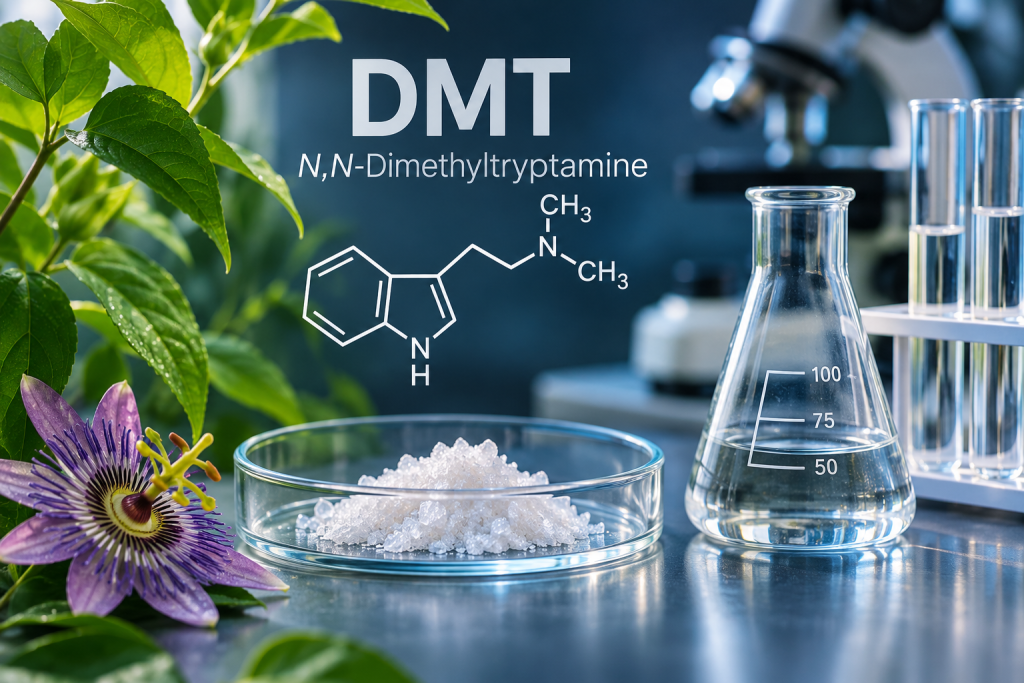
DMT, or N,N-dimethyltryptamine, is a powerful psychoactive compound belonging to the tryptamine family. It has attracted scientific interest because of its effects on perception, consciousness and brain function.
People searching for terms such as DMT products online” may encounter very different substances, preparations and product claims. However, the identity, composition, safety and legal status of these materials should never be assumed from a product description alone.
This guide examines DMT from a scientific, analytical and regulatory perspective, with particular attention to European legal considerations.
1. What Is DMT?
DMT stands for N,N-dimethyltryptamine. It is a naturally occurring and synthetically producible psychedelic compound.
DMT interacts with serotonin receptors in the central nervous system, particularly the 5-HT2A receptor, although its pharmacology involves additional mechanisms.
Researchers have investigated its effects on perception, cognition and consciousness. Nevertheless, scientific interest does not establish that DMT is a proven or approved treatment for medical conditions.
2. Different Forms and Preparations of DMT
DMT is discussed in several scientific and cultural contexts. The terminology can be confusing because a pure chemical compound, a plant-derived material and a mixture containing DMT are not necessarily equivalent.
Broad categories include:
- Isolated DMT: The chemically identified compound, which may be produced synthetically or isolated under authorised scientific conditions.
- Plant-derived preparations: Materials derived from plants that may contain DMT or related compounds.
- Traditional botanical mixtures: Certain traditional preparations contain multiple plant constituents, potentially including DMT.
- Research samples: Materials held and characterised within authorised scientific investigations.
The composition and legal treatment of these categories can differ. A botanical preparation should not automatically be assumed to have the same legal status as an isolated compound, or vice versa.
3. Understanding DMT Identity and Chemical Quality
Chemical identity is an essential consideration in scientific research.
A label or product description is not sufficient evidence that a material contains the stated compound. Reliable identification requires appropriate analytical methods performed by qualified laboratories.
Relevant analytical considerations include:
- Chemical identity
- Purity and composition
- Impurity assessment
- Contaminant screening
- Sample traceability
- Analytical documentation
Methods such as chromatography and mass spectrometry are used in analytical chemistry to characterise chemical materials.
For scientific credibility, analytical findings should be traceable to the specific sample or batch examined.
4. DMT Effects and Potential Health Risks
DMT is a powerful psychoactive substance. Its effects can include substantial changes in perception, thought processes and the experience of time.
Potential effects and risks include:
- Intense perceptual changes
- Altered awareness and cognition
- Anxiety, panic or confusion
- Increased heart rate and blood pressure
- Impaired judgement
- Psychological distress
- Unpredictable reactions
The effects can vary depending on individual factors, the material involved and the circumstances of exposure.
People with cardiovascular conditions or a history of serious psychiatric illness may face additional concerns. Interactions with medications and other psychoactive substances are also important safety considerations.
DMT should not be regarded as harmless simply because it occurs naturally in some plants.
5. DMT and Scientific Research
DMT has been investigated in pharmacology, neuroscience and studies of consciousness.
Research areas include:
- Serotonin-receptor activity
- Neuropharmacology
- Altered states of consciousness
- Perception and cognition
- Potential therapeutic applications
- Safety and tolerability
However, preliminary findings should not be confused with established clinical benefits.
Human research involving controlled DMT requires appropriate legal authorisation, ethical oversight and scientific safeguards. Research findings must be evaluated according to study quality, sample size, methodology and independent replication.
6. European Legal Status of DMT
DMT is listed in Schedule I of the United Nations 1971 Convention on Psychotropic Substances.
The convention establishes strict international controls. Article 7 limits the use of Schedule I substances to scientific and very limited medical purposes by duly authorised persons and appropriately authorised establishments.
National legislation determines how these international obligations are implemented and may introduce additional restrictions.
Consequently, the legal position can vary depending on the country, the material involved and the activity being considered.
Important distinctions include:
- Possession
- Manufacture
- Distribution
- Import and export
- Scientific research
- Plant-derived materials and preparations
There is no general European rule that makes DMT products freely available for commercial sale.
Anyone assessing the legal status of a DMT-related material must consult current legislation and the relevant national competent authority.
7. Responsible Information and Product Transparency
Accurate information is particularly important when dealing with controlled psychoactive substances.
Scientific and regulatory documentation should distinguish between verified facts and unsupported product claims.
Useful information may include:
- Correct chemical identification
- Clearly stated material composition
- Appropriate analytical documentation
- Sample or batch traceability
- Relevant safety information
- Accurate legal classification
- Transparent research methodology
A laboratory certificate should not be treated as proof that possession, distribution or sale is legally authorised. Analytical quality and legal permission are separate matters.
Frequently Asked Questions
What does DMT stand for?
DMT stands for N,N-dimethyltryptamine, a psychoactive compound belonging to the tryptamine family.
Is DMT naturally occurring?
Yes. DMT occurs naturally in certain plant species and can also be produced synthetically.
Is DMT controlled in Europe?
DMT is internationally controlled under Schedule I of the 1971 Convention on Psychotropic Substances. European countries implement controls through their national legislation.
Are all DMT-containing plant preparations legally treated the same way?
Not necessarily. The legal treatment of plant materials and preparations can involve additional questions of national law and interpretation. Their status should be checked in the relevant jurisdiction.
Can laboratory testing confirm DMT identity?
Appropriate analytical techniques can help identify chemical compounds and assess sample composition. The reliability of a result depends on the method, laboratory competence and sample traceability.
Is DMT an approved medical treatment?
DMT’s investigation in scientific studies does not mean it is an approved treatment. Medical approval and clinical evidence must be assessed separately in each jurisdiction.
Why is DMT subject to international control?
DMT is included in Schedule I of the 1971 Convention. The convention establishes strict controls intended to restrict its use to authorised scientific and very limited medical purposes.
Conclusion
DMT is a scientifically significant but strictly controlled psychoactive compound. Its chemistry, pharmacology and potential research applications continue to attract attention, while its effects and legal restrictions require careful consideration.
Understanding the differences between isolated compounds, botanical materials and research samples is essential when evaluating DMT-related information.
Scientific accuracy, transparent documentation, appropriate safety information and compliance with national legislation should remain central to any responsible discussion of DMT.
