
Amazonian Magic Mushrooms: Origins, Taxonomy, Characteristics & European Legal Context
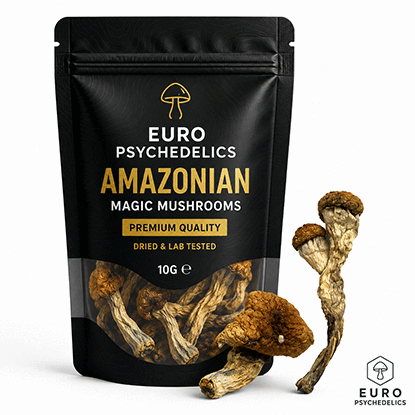
Amazonian Magic Mushrooms is a geographical name used within contemporary psychedelic mushroom culture. Unlike a formal scientific species name, “Amazonian” generally describes a reported geographical association or lineage rather than a distinct species.
The term is particularly interesting because the Amazon rainforest is one of the world’s most biologically diverse environments. Its enormous fungal diversity makes broad geographical labels difficult to interpret scientifically. When the name Amazonian is used in connection with psychedelic mushrooms, it is commonly associated with a lineage of Psilocybe cubensis.
Understanding the difference between a geographical name, a mushroom lineage and formal taxonomy is essential when discussing this subject accurately.
What Are Amazonian Magic Mushrooms?
Amazonian Magic Mushrooms is an informal name associated with psychedelic mushroom culture and is commonly used for a named Psilocybe cubensis lineage.
The word “Amazonian” refers to the Amazon region, but the name itself does not prove that a particular mushroom specimen originated from the wild Amazon rainforest.
This distinction matters because modern mushroom names can develop through community traditions, historical claims, commercial naming and lineage records.
Therefore:
- Amazonian is a common or lineage-style designation.
- Psilocybe cubensis is a recognised scientific species.
- Amazon rainforest is a vast geographical and ecological region.
These three concepts should not be treated as interchangeable.
Taxonomy of Psilocybe cubensis
When Amazonian refers to a Psilocybe cubensis lineage, the relevant scientific classification is:
- Kingdom: Fungi
- Phylum: Basidiomycota
- Class: Agaricomycetes
- Order: Agaricales
- Genus: Psilocybe
- Species: Psilocybe cubensis
Psilocybe cubensis is a formally recognised species.
Amazonian, however, is not a separate scientific species name. It functions primarily as a lineage or geographical descriptor within modern mushroom terminology.
The Amazon Rainforest
The Amazon rainforest is one of Earth’s most significant tropical ecosystems.
The Amazon Basin extends across several South American countries, with Brazil containing the largest portion. The wider region includes enormous areas of rainforest, rivers, wetlands and diverse terrestrial habitats.
Its environmental complexity creates conditions suitable for an extraordinary range of fungi.
Fungi are fundamental to rainforest ecosystems because they participate in decomposition, nutrient cycling and relationships with plants.
Consequently, discussing “Amazonian mushrooms” scientifically requires considerable care because the Amazon contains an enormous number of fungal species, most of which have nothing to do with psychedelic mushrooms.
Amazonian Biodiversity
The Amazon is frequently described as one of the world’s great centres of biodiversity.
Its biodiversity includes:
- plants;
- insects;
- mammals;
- birds;
- amphibians;
- microorganisms;
- fungi.
Fungal diversity is particularly interesting because it remains less comprehensively documented than many other groups of organisms.
New fungal species continue to be described by researchers, while many existing species remain poorly studied.
This broader context is important because the word “Amazonian” should not be interpreted as though it identifies one specific fungus.
Geographic Name Versus Species Name
Geographical naming is common throughout mushroom culture.
Names may refer to:
- countries;
- regions;
- islands;
- mountains;
- forests;
- cities;
- cultural groups.
Such names can communicate a reported lineage history or geographical association, but they do not automatically establish formal taxonomy.
For example, a mushroom described as Amazonian may belong to the same recognised species as mushrooms carrying completely different geographical names.
What Does “Amazonian” Actually Tell Us?
The name can provide a useful clue about claimed or traditional lineage history, but it does not answer every biological question.
It does not necessarily establish:
- exact collection location;
- wild versus cultivated origin;
- genetic identity;
- chemical composition;
- formal taxonomic status.
To establish those characteristics scientifically would require appropriate documentation and analysis.
This is one reason why scientific names are more reliable than common names when discussing fungal biology.
Appearance and General Morphology
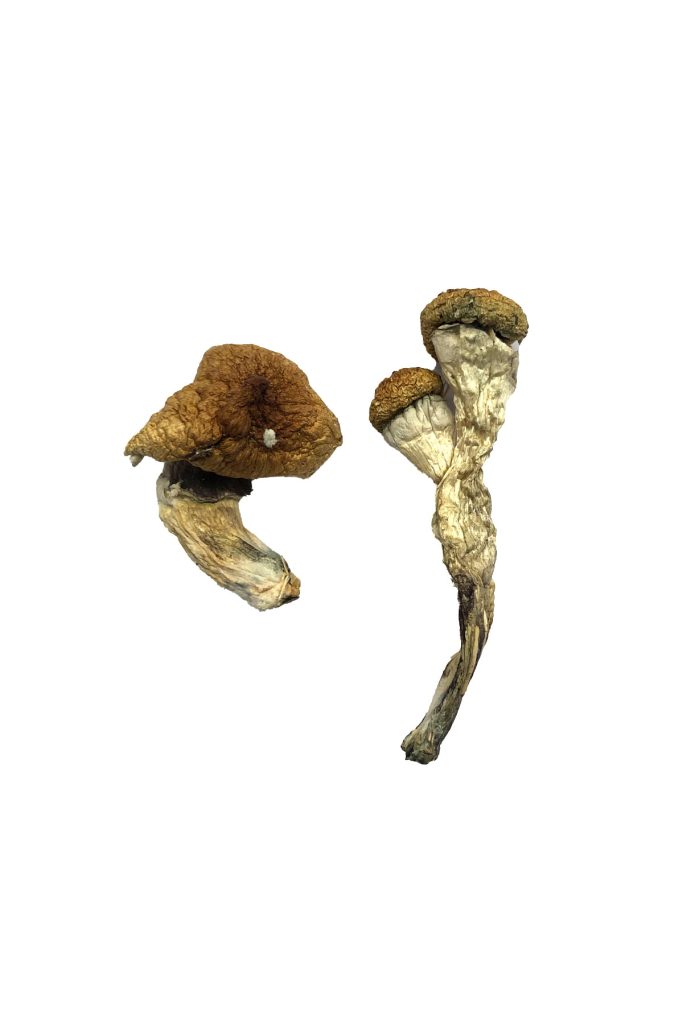
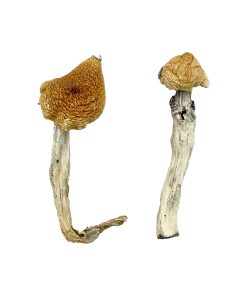
When Amazonian refers to Psilocybe cubensis, its general morphology falls within the characteristics of that species.
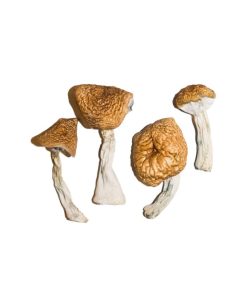
A typical P. cubensis mushroom has:
- a cap;
- a central stem;
- gills beneath the cap;
- dark spores.
The precise appearance can vary significantly.
Individual specimens may differ in:
- cap shape;
- cap colour;
- stem thickness;
- size;
- surface texture;
- maturity.
Genetics and environmental conditions can both influence morphology.
Consequently, the name Amazonian does not guarantee that every specimen will look identical.
Identifying Mushroom Lineages
Identifying a named mushroom lineage is more complicated than recognising a common name.
Scientific identification can involve:
- macroscopic characteristics;
- microscopic examination;
- spore morphology;
- geographic information;
- ecological characteristics;
- genetic analysis.
A name used by a mushroom community is not itself proof of identity.
This distinction becomes particularly important when geographical names are involved because a name can survive and circulate independently of its original provenance.
Psilocybin and Psilocin
The scientific interest surrounding Psilocybe cubensis is largely associated with naturally occurring psychedelic compounds, particularly psilocybin and psilocin.
Psilocybin is converted into psilocin within the body. Psilocin interacts with serotonin receptors and can produce substantial changes in perception, cognition and subjective experience.
Scientists have studied these compounds in neuroscience and psychology, including research into:
- consciousness;
- perception;
- emotional processing;
- brain activity;
- depression;
- addiction;
- potential therapeutic mechanisms.
The presence of scientific research does not mean that all uses are medically approved or legally permitted.
Chemical Variation
The chemical characteristics of fungi can vary.
Genetics, developmental stage and environmental factors can all contribute to differences between individual specimens.
Therefore, a geographical or lineage name should not be treated as a precise chemical specification.
Claims about a particular lineage’s chemistry require appropriate laboratory evidence rather than relying solely on community descriptions.
Amazonian Mushrooms and Ethnomycology
The Amazon has an exceptionally rich history of Indigenous knowledge concerning plants, fungi and other natural resources.
However, the ethnomycology of the Amazon should not be conflated with the much better-documented traditions of psychoactive mushrooms in parts of Mexico and Central America.
Indigenous peoples of the Amazon have developed highly diverse relationships with their environments, including extensive botanical and ecological knowledge.
A modern mushroom carrying the name “Amazonian” should not automatically be described as an Indigenous ceremonial mushroom without reliable historical evidence.
Avoiding Historical Overstatement
Geographical names can sometimes create assumptions about cultural history.
A mushroom labelled Amazonian does not necessarily mean:
“This is a traditional Amazonian ceremonial mushroom.”
That conclusion would require independent historical or ethnographic evidence.
A more accurate description is that the name references or claims an association with the Amazon region within modern mushroom culture.
This distinction respects both scientific accuracy and the complexity of Indigenous history.
Modern Psychedelic Mushroom Culture
Amazonian is one of many geographical names that have become established within contemporary psychedelic mushroom communities.
Such names can help communities distinguish between different lineages and preserve informal histories.
However, these naming systems are not standardised scientific taxonomy.
The same principle applies to names referencing countries, islands, cultural groups and other geographical locations.
Scientific Research Into Psilocybin
Psilocybin has become an increasingly important subject of scientific research.
Modern studies have investigated its effects on:
- perception;
- cognition;
- mood;
- emotional processing;
- brain network activity;
- consciousness.
Clinical researchers have also investigated potential therapeutic applications.
However, research findings should be interpreted carefully. Clinical trials take place under controlled conditions and involve defined protocols, participant screening and professional oversight.
Research interest does not automatically establish general safety or medical approval.
European Legal Context
For European readers, the geographical name “Amazonian” does not determine legal status.
Where a mushroom contains controlled compounds such as psilocybin or psilocin, the relevant legal framework depends on the jurisdiction.
The European Union Drugs Agency explains that psilocybin and psilocin are controlled under international drug-control conventions, while national approaches to mushrooms containing these substances differ across European countries.
Some countries specifically regulate mushrooms, while others regulate the compounds they contain.
Therefore, a mushroom’s geographical name does not create a separate legal exemption.
Different European Legal Frameworks
European countries can differ in their treatment of psilocybin-containing mushrooms.
Depending on the country, legislation can concern:
- possession;
- cultivation;
- importation;
- distribution;
- preparation;
- scientific research;
- medical applications.
The legal situation can also change.
Consequently, information published online several years ago may not accurately reflect current legislation.
For current legal questions, the appropriate national government or competent authority should be consulted.
Medical Research and Legal Status Are Different
The growing scientific interest in psilocybin can sometimes create the impression that psychedelic mushrooms have become broadly legal or medically approved.
That is not necessarily the case.
Scientific research and regulatory approval are separate processes.
A substance can be investigated in clinical studies while remaining subject to controlled-substance laws outside authorised research or medical frameworks.
The European Union Drugs Agency notes both the international controls surrounding psychedelics and the differences between national European laws.
Health and Safety Considerations
Psilocybin-containing mushrooms can produce powerful psychological and perceptual effects.
Potential adverse effects can include:
- anxiety;
- panic;
- confusion;
- nausea;
- impaired judgement;
- distressing perceptual experiences;
- temporary physiological changes.
Individual responses can vary substantially.
The European Union Drugs Agency has also highlighted concerns surrounding unregulated psychedelic practices, particularly for vulnerable people and individuals with pre-existing mental-health difficulties.
Mushroom identification is an additional concern because poisonous fungi can sometimes resemble unrelated species.
Amazonian Magic Mushrooms in Perspective
The most useful way to understand Amazonian Magic Mushrooms is to separate the name into its components.
Amazonian provides geographical or cultural context.
Psilocybe cubensis provides a possible scientific species classification when that is the lineage being referenced.
Psilocybin and psilocin describe the principal psychedelic compounds associated with the species.
National law determines the legal position in a particular European jurisdiction.
This framework prevents common names from being mistaken for scientific or legal classifications.
Why the Amazonian Name Remains Interesting
The name remains interesting because it connects modern mushroom culture with one of the world’s most remarkable ecosystems.
From a mycological perspective, the Amazon represents an enormous field of fungal biodiversity.
From a cultural perspective, it reflects the tendency of modern mushroom communities to use geographical names to distinguish lineages.
From a scientific perspective, however, formal identification requires evidence beyond the name itself.
Frequently Asked Questions
1. What are Amazonian Magic Mushrooms?
Amazonian Magic Mushrooms is an informal geographical or lineage-style name associated with psychedelic mushrooms. It is commonly discussed in connection with Psilocybe cubensis rather than being a separate scientific species.
2. Are Amazonian Magic Mushrooms a separate species?
No. “Amazonian” is not a formal scientific species name. Where the term refers to a Psilocybe cubensis lineage, P. cubensis is the recognised species.
3. Does the name prove that the mushrooms come from the Amazon rainforest?
No. A geographical name alone cannot scientifically establish the provenance of an individual specimen. Documented collection information and scientific analysis would be needed to establish origin.
4. What makes the Amazon important to mycology?
The Amazon Basin contains extraordinary biological diversity and provides a huge range of habitats for fungi. Many aspects of tropical fungal biodiversity remain incompletely documented.
5. What compounds are associated with Psilocybe cubensis?
The species is associated with naturally occurring psychedelic compounds including psilocybin and psilocin. These compounds are the subject of ongoing scientific research.
6. Are Amazonian Magic Mushrooms legal in Europe?
There is no single answer for all European countries. Psilocybin and psilocin are internationally controlled, while national laws concerning mushrooms containing these substances vary between jurisdictions.
| Quantity | 7grams, 14grams, 28grams |
|---|
Be the first to review “Amazonian Magic Mushrooms”
Related products
Magic Mushrooms
Magic Mushrooms
Magic Mushrooms
Magic Mushrooms
Magic Mushrooms
Magic Mushrooms
Magic Mushrooms
Magic Mushrooms
Reviews
There are no reviews yet.