
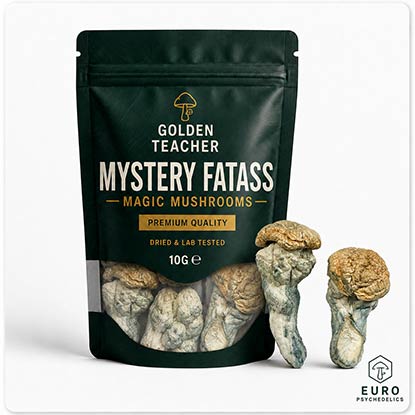

Mystery Fatass Magic Mushrooms: Origins, Morphology, Potency, and Cultivation
Introduction and Phenotypical Context
Within the vast and historically rich community of Psilocybe cubensis cultivation, names often emerge from grower lore, unusual physical traits, or localized adaptations rather than formal botanical classification. Among these colloquial names, the term “Fatass”—frequently discussed in early online mycology forums under designations like Mystery Fatass—carries a unique history.
Unlike stable genetic lineages or geographically isolated landraces (such as Golden Teacher or Escondido), “fatass” has historically been used by cultivators to describe mushrooms exhibiting a distinct physical mutation: exceptionally thick, bulbous, or swollen stipes paired with disproportionately small caps. While sometimes circulated under the moniker of a “mystery” strain due to ambiguous multi-spore origins or genetic drift, these specimens fundamentally share the core biological taxonomy of Psilocybe cubensis, offering a fascinating look at how environmental factors and phenotypic variation influence mushroom structure.
Botanical Morphology and Unusual Physical Traits of Mystery Fatass Magic Mushrooms
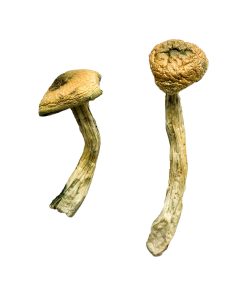
The primary reason for the distinctive name lies entirely in the unusual physical architecture these mushrooms display during the fruiting cycle.
Key Structural Characteristics
-
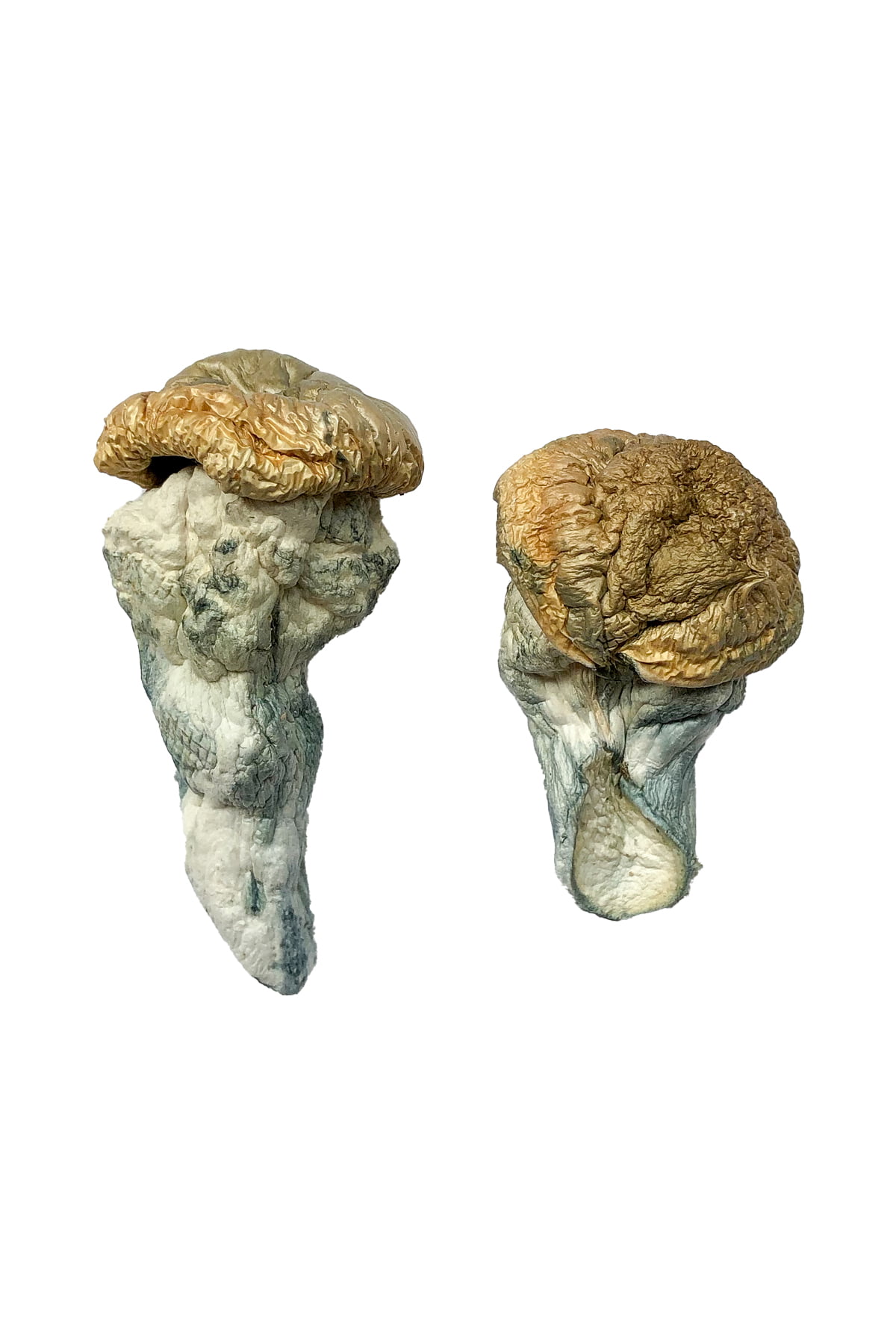
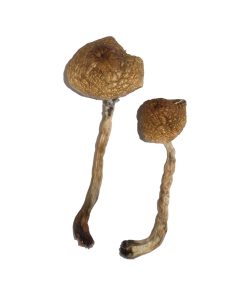
Stipe Architecture: The defining feature is an unusually thick, stout, and heavy stem base that appears swollen or weighted down, lacking the slender elegance of traditional wild-type cubensis varieties.
-
Cap Formation: Caps are typically underdeveloped or disproportionately small relative to the massive girth of the stipe, often remaining tightly closed or expanding only into shallow, undulating domes.
-
Internal Textures: Historical cultivation notes frequently describe these variant fruit bodies as having a dense, spongy, or cotton-like interior texture that dries into uniquely light, crisp wafers.
-
Bruising Dynamics: When handled, cut, or harvested, the dense flesh reacts with a standard deep blue-indigo bruising pattern, indicating normal psilocybin oxidation.
Environmental Influences and Cultivation Anomalies
In many instances, what cultivators historically labeled as the “Mystery Fatass” variant was not a distinct, fixed genetic strain, but rather the result of specific microclimate conditions inside indoor fruiting chambers.
Environmental Factors Driving Phenotypes
-
Fresh Air Exchange (FAE): Mycological observations suggest that restricted airflow or elevated carbon dioxide ($CO_2$) levels pooling at the base of a substrate block can induce heavy, distorted stem growth and stunted caps.
-
Substrate Moisture: High water retention in bulk substrates (such as coco coir-vermiculite blends) frequently triggers thick, bulbous mutations and dense, blob-like clusters reminiscent of PE-type mutations.
-
Genetic Drift: In multi-spore cultures lacking rigorous isolation, recessive physical traits expressing heavy stipe weights occasionally dominate a flush, leading to the “fatass” appearance.
Chemical Profile and Potency Expectations of Mystery Fatass Magic Mushrooms
Because variants grouped under this heading belong to the Psilocybe cubensis species, their chemical framework relies on the standard tryptamine matrix.
Alkaloid Distribution and Impact
-
Potency Classification: Categorized as a moderate potency profile, aligning closely with standard baseline commercial varieties (typically yielding between 0.5% and 0.9% total active tryptamines by dry weight).
-
Active Agents: Dominated by psilocybin and psilocin, backed by trace levels of auxiliary compounds like baeocystin.
-
The Experience Profile: Ethnobotanical community reports indicate that standard cubensis potency rules apply, delivering a balanced journey characterized by visual enhancement and cognitive introspection.
Frequently Asked Questions
What are Mystery Fatass magic mushrooms?
The term historically refers to Psilocybe cubensis specimens—sometimes circulated under obscure or mystery multi-spore labels—that exhibit an extreme mutation of short, exceptionally thick stems and small caps.
Is “Fatass” a genetically stable strain?
In many historical cases, it was described more as a phenotypic expression or mutation caused by environmental factors (such as high $CO_2$ and specific moisture levels) rather than a fixed, commercially stabilized genetic strain.
What do Mystery Fatass mushrooms look like when harvested?
They are characterized by heavy, bulbous, swollen stipes paired with disproportionately small, tight caps, occasionally forming dense, cotton-like internal structures or blob-like clusters.
How potent are these mushrooms compared to standard strains?
Because they are fundamentally Psilocybe cubensis, their potency remains comparable to standard baseline varieties, averaging between 0.5% and 0.9% total psilocybin and psilocin by dry weight.
Can environmental conditions cause mushrooms to grow thick stems?
Yes. High levels of carbon dioxide buildup combined with specific humidity parameters in a fruiting chamber frequently cause stipes to swell and caps to remain small.
What active compounds are found in these mushrooms?
The primary active compounds are psilocybin and psilocin, accompanied by trace amounts of secondary supporting alkaloids such as baeocystin.
| Quantity | 14grams, Oz, Qp, Hp, 1p |
|---|
Be the first to review “Mystery Fatass Magic Mushrooms”
Related products

Magic Mushrooms
Magic Mushrooms
Magic Mushrooms
Magic Mushrooms

Magic Mushrooms

Magic Mushrooms
Magic Mushrooms
Magic Mushrooms
Reviews
There are no reviews yet.