
Huautla Magic Mushrooms: Origins, Taxonomy, Characteristics & European Legal Context
Huautla Magic Mushrooms is a well-known name within psychedelic mushroom culture, with a strong connection to the region of Huautla de Jiménez in Oaxaca, Mexico. Unlike a formal scientific species name, “Huautla” is primarily a geographic and lineage-style designation.
The name has particular historical importance because the Huautla region became internationally associated with traditional mushroom use and ethnomycological research during the twentieth century.
It is important, however, to distinguish the documented cultural history of the Huautla region from modern claims about particular mushroom varieties. A geographic name does not automatically establish the exact species, genetics, chemical composition or provenance of an individual specimen.
For European readers, the legal question is similarly separate. Psilocybin and psilocin are internationally controlled substances, while individual European countries have different national approaches to mushrooms containing them.
What Are Huautla Magic Mushrooms?
“Huautla Magic Mushrooms” generally refers to psychedelic mushroom varieties or lineages associated with Huautla de Jiménez, a town in Oaxaca, Mexico.
The name has become particularly prominent because of the region’s association with traditional Mazatec mushroom practices and the international attention those practices received during the twentieth century.
“Huautla,” however, should not be treated as the scientific name of a mushroom species.
A geographic or lineage-style name cannot independently establish:
- the precise fungal species;
- genetic lineage;
- original collection location;
- chemical composition;
- potency; or
- legal status.
Those questions require separate evidence.
Huautla de Jiménez and Oaxaca
Huautla de Jiménez is located in the mountainous region of northern Oaxaca, Mexico.
The surrounding area is closely associated with the Mazatec people, an Indigenous group whose traditional knowledge includes longstanding relationships with various plants and fungi.
The region became internationally recognised during the twentieth century as Western researchers and writers documented traditional mushroom practices.
This history is an important part of ethnomycology—the study of relationships between people and fungi.
The Historical Importance of Huautla
Huautla became particularly well known internationally during the 1950s and 1960s.
Western attention increased following publications describing traditional mushroom ceremonies in the region.
The history is often discussed in connection with the Mexican curandera María Sabina, whose traditional practices and knowledge became internationally famous.
Her story is important to psychedelic history, but it should be understood within its Mazatec cultural and spiritual context, rather than reduced simply to modern recreational mushroom culture.
Ethnomycology and Traditional Knowledge
Ethnomycology examines the ways human societies interact with fungi.
Traditional knowledge can include relationships with fungi involving:
- cultural practices;
- spiritual traditions;
- medicine;
- food;
- folklore;
- ceremonies; and
- ecological knowledge.
The Mazatec relationship with psychoactive mushrooms is one of the most widely discussed examples in modern ethnomycological literature.
However, historical accounts should be approached carefully. Some early Western publications simplified or sensationalised Indigenous practices.
Modern discussion benefits from distinguishing Indigenous cultural traditions from the later Western psychedelic movement.
Huautla and Mushroom Taxonomy
The word “Huautla” is not itself a scientific species designation.
Several psychoactive mushroom species have been documented in Mexico, and historical literature has associated different fungi with traditional mushroom practices.
This means that it is not scientifically accurate to assume that every mushroom described as “Huautla” belongs to one unique species.
Formal identification requires appropriate taxonomic evidence.
Species versus geographic lineage
A geographic name can describe:
- where a historical collection originated;
- where a particular lineage became associated;
- a community naming tradition; or
- a modern cultivated variety.
None of these necessarily constitutes a formal biological species.
This distinction is especially important when researching named psychedelic mushroom varieties online.
Mexican Fungal Diversity
Mexico contains substantial fungal biodiversity due to its varied geography and ecosystems.
The country’s environments range from tropical forests to high-elevation regions, creating habitats for numerous fungal species.
Psychoactive fungi represent only one part of this broader biodiversity.
The scientific study of Mexican fungi therefore extends far beyond psychedelic species and includes taxonomy, ecology, conservation, evolution and traditional knowledge.
Psilocybin and Psilocin
Mushrooms commonly referred to as “magic mushrooms” are associated with naturally occurring psychedelic compounds, particularly psilocybin and psilocin.
Psilocybin is metabolised into psilocin within the body.
These compounds have attracted extensive scientific interest because of their effects on perception, cognition and brain function.
Modern research has investigated possible therapeutic applications, including research involving depression, anxiety and psychotherapy.
Scientific research should nevertheless be distinguished from personal use. Clinical studies take place under controlled conditions and do not establish that every mushroom variety has the same chemical profile or effects.
Can the Huautla Name Establish Potency?
No.
A geographic or lineage-style name cannot reliably establish the concentration of psilocybin, psilocin or other compounds.
Chemical composition can vary due to biological and environmental factors.
Relevant factors can include:
- genetics;
- species;
- developmental stage;
- environmental conditions;
- biological variation; and
- storage.
Therefore, precise potency claims should not be inferred from the word “Huautla” alone.
Appearance and Mushroom Identification
Mushroom identification can be complex.
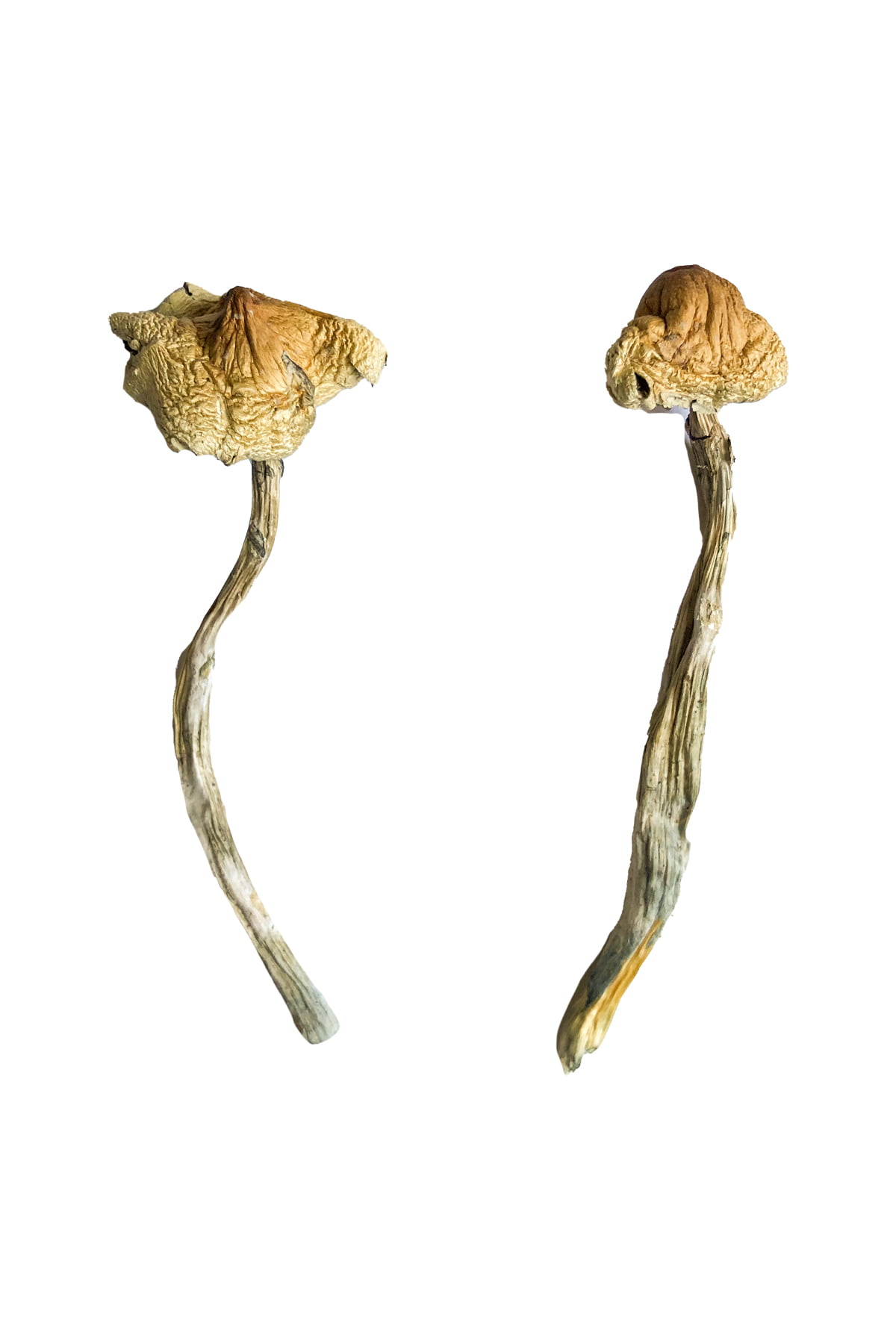
Visual characteristics can vary depending on genetics and environmental conditions, while unrelated species may sometimes have similar appearances.
Professional identification can involve several forms of evidence.
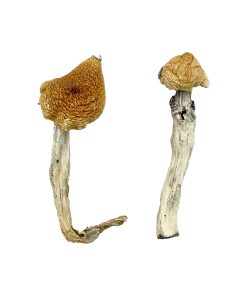
Macroscopic characteristics
These can include:
- cap shape;
- pigmentation;
- stem morphology;
- gill structure;
- surface texture; and
- developmental characteristics.
Microscopic characteristics
Microscopy can reveal structures not visible to the naked eye, including important spore characteristics.
Molecular methods
DNA-based techniques can provide additional evidence concerning species identity and genetic relationships.
This illustrates why a photograph or popular name should not be treated as definitive taxonomic evidence.
The Legacy of María Sabina
The international history of Huautla cannot be separated from the story of María Sabina, whose traditional mushroom practices became known internationally during the twentieth century.
Her story contributed significantly to Western awareness of Mexican mushroom traditions.
At the same time, her international exposure had complicated consequences for the local community.
The subsequent influx of outsiders contributed to cultural disruption and increased pressure on traditional practices.
For this reason, modern discussions of Huautla mushrooms should acknowledge the Indigenous cultural context rather than presenting the region solely as a source of psychedelic mushrooms.
Huautla and the Western Psychedelic Movement
The international attention surrounding Huautla contributed to the development of modern Western psychedelic culture.
During the 1950s and 1960s, growing Western interest in psychedelic substances intersected with:
- experimental psychology;
- counterculture;
- alternative spirituality;
- music;
- literature; and
- ethnobotanical research.
Mexican mushroom traditions played a significant role in this historical narrative.
However, the Western interpretation of these traditions was often very different from the cultural meanings attached to mushrooms within Indigenous communities.
Modern Psychedelic Research
Psychedelic research has expanded considerably in recent decades.
Researchers are investigating compounds such as psilocybin in controlled scientific settings.
Areas of interest include:
- neuroscience;
- consciousness;
- perception;
- depression;
- anxiety;
- addiction;
- psychotherapy; and
- brain-network research.
The European Union Drugs Agency has noted increasing scientific interest in psychedelic substances while also highlighting regulatory and public-health considerations.
The existence of clinical research should not be interpreted as proof that unregulated mushroom use is safe or medically established.
European Legal Context
The legal status of psilocybin-containing mushrooms differs between European countries.
There is no single European law that applies identically to every jurisdiction.
The European Union Drugs Agency states that psilocybin and psilocin are controlled under the 1971 United Nations Convention on Psychotropic Substances.
Individual countries implement their own legislation, which can result in significantly different legal approaches.
Depending on the jurisdiction, legislation may address:
- possession;
- cultivation;
- preparation;
- importation;
- distribution;
- supply;
- the form of the material; and
- the controlled compounds involved.
Why European readers should check national law
It would therefore be misleading to describe Huautla Magic Mushrooms as universally legal or illegal throughout Europe.
The applicable rules depend on the individual country and circumstances.
Because legislation can change, current national law and the relevant competent authority should be consulted when determining legal status.
Health Considerations
Psychedelic mushrooms can produce substantial changes in perception, cognition and mood.
Individual responses can differ significantly.
Potential concerns include:
- anxiety;
- confusion;
- impaired judgement;
- psychological distress; and
- unexpected psychological reactions.
There is also a general mushroom-identification risk because visually similar fungi can have very different properties.
Anyone with questions involving medications, mental health or possible interactions should consult an appropriately qualified healthcare professional.
Why Huautla Is Important to Ethnomycology
Huautla represents more than a mushroom name.
It is associated with a significant chapter in the history of ethnomycology and the interaction between Indigenous knowledge and Western science.
The region demonstrates how traditional ecological and cultural knowledge can attract international scientific interest while also raising important questions about:
- cultural respect;
- intellectual heritage;
- commercialization;
- tourism;
- documentation; and
- Indigenous rights.
This broader context makes Huautla particularly important when discussing the history of psychedelic mushrooms responsibly.
Huautla Magic Mushrooms in Modern Culture
Today, the name Huautla appears throughout modern mushroom culture.
It may refer to a geographic association, a named lineage, historical mushroom traditions or a modern community designation.
These meanings should not automatically be treated as equivalent.
The historical significance of Huautla is well established, but the exact identity and characteristics of an individual mushroom carrying the name require separate scientific evidence.
Huautla Magic Mushrooms in Context
The term Huautla Magic Mushrooms combines a rich cultural history with modern psychedelic terminology.
Huautla de Jiménez became internationally associated with traditional Mazatec mushroom practices, helping shape the modern Western understanding of psychedelic mushrooms.
Scientifically, however, “Huautla” is not itself a formal species name.
The most accurate approach is therefore to distinguish between geographic association, Indigenous cultural history, fungal taxonomy, chemical composition and legal status.
For European readers, legal status must be considered country by country because national regulations concerning psilocybin, psilocin and mushrooms containing these compounds differ.
Frequently Asked Questions
1. What are Huautla Magic Mushrooms?
Huautla Magic Mushrooms is a geographic and lineage-style term associated with Huautla de Jiménez in Oaxaca, Mexico, a region internationally known for traditional Mazatec mushroom practices.
2. Is Huautla a scientific mushroom species?
No. Huautla is a geographic designation rather than a formal scientific species name. A mushroom’s actual species requires appropriate taxonomic identification.
3. Why is Huautla famous in psychedelic history?
Huautla became internationally known because of documented traditional mushroom practices among the Mazatec people. The region subsequently became an important part of the history of Western psychedelic research and culture.
4. Is Huautla associated with María Sabina?
Yes. María Sabina became internationally known for her traditional mushroom practices in the Huautla region. Her story is an important part of twentieth-century ethnomycology and psychedelic history.
5. Does the Huautla name indicate a specific potency?
No. A geographic or lineage-style name cannot reliably establish the concentration of psilocybin or psilocin. Chemical composition requires appropriate analytical evidence.
6. Are Huautla Magic Mushrooms legal in Europe?
There is no universal European answer. National laws concerning psilocybin, psilocin and mushrooms containing these substances differ between European countries. The current law of the relevant jurisdiction should be checked.
| Quantity | 14grams, Oz, Qp, Hp, 1p |
|---|
Be the first to review “Huautla Magic Mushrooms”
Related products
Magic Mushrooms
Magic Mushrooms
Magic Mushrooms
Magic Mushrooms
Magic Mushrooms
Magic Mushrooms
Magic Mushrooms
Magic Mushrooms
Reviews
There are no reviews yet.