
Micro Immune Capsules 2000MG: Mushroom Composition, Immune Research & Product Overview
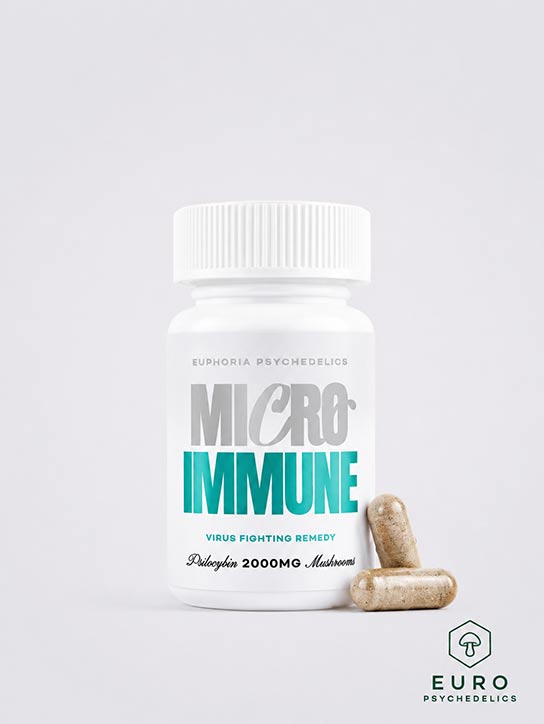
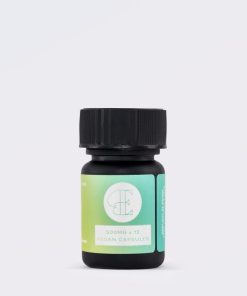
Micro Immune Capsules 2000MG are a mushroom-based capsule product from Euphoria Psychedelics, presented in the supplied packaging as a “Micro Immune” formulation containing 2000MG of mushroom material. The packaging also describes the product as a “virus fighting remedy.”
That wording should be understood as a product claim rather than evidence that the capsules can prevent, treat or cure a viral infection. Scientific research does show that compounds found in mushrooms—particularly fungal β-glucans—can interact with components of the immune system, but this does not establish that a particular commercial mushroom capsule can treat a viral illness.
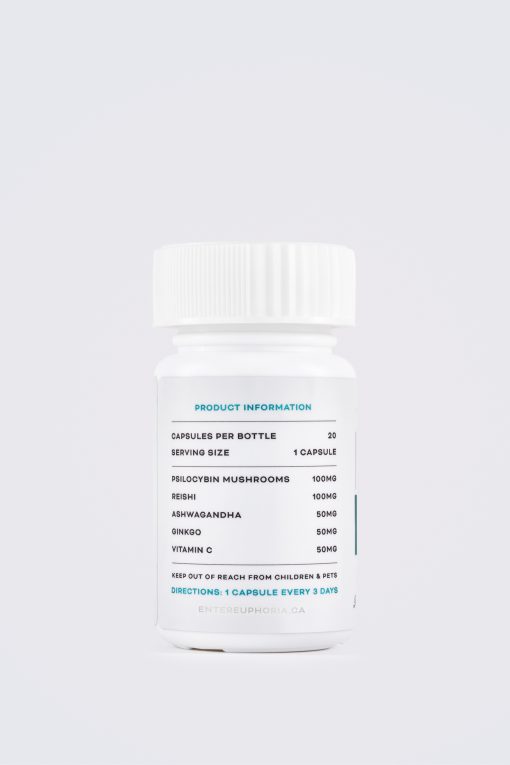
Because the supplied product image does not clearly identify the mushroom species or the precise amount of β-glucans, the description below focuses on what can be established about the product and the broader science of medicinal mushrooms without inventing an ingredient list.
What Are Micro Immune Capsules 2000MG?
Micro Immune Capsules 2000MG are presented as a mushroom-based capsule formulation.
The 2000MG specification is visible on the product packaging. However, the photograph does not provide enough information to establish whether this represents:
- 2000 mg of dried mushroom;
- 2000 mg of mushroom extract;
- a combined quantity from several mushroom species;
- or another manufacturer’s formulation measurement.
That distinction matters because the biological composition of mushrooms can vary considerably between species, growing conditions, parts of the mushroom used, extraction techniques and processing methods.
Scientific reviews specifically identify differences in mushroom species, strain, cultivation, extraction and storage as factors that can influence the compounds present and the observed biological activity.
Why Mushrooms Are Studied for Immune Function
Mushrooms have attracted considerable scientific interest because their cell walls contain complex polysaccharides known as β-glucans.
Mushroom β-glucans commonly contain β-1,3 and β-1,6 glycosidic structures. Their molecular structure differs from the β-glucans found in cereals such as oats and barley.
Researchers have investigated mushroom β-glucans because they can interact with receptors involved in innate immune signalling.
A 2025 review in Food Chemistry describes mushroom β-glucans as bioactive fungal polysaccharides with immunomodulatory properties, while emphasizing that differences in molecular structure and extraction methods influence their biological activity.
This provides a legitimate scientific basis for studying mushroom extracts in the context of immune biology.
It does not, however, mean that every mushroom capsule has the same effects.
What Does “Immune” Mean Scientifically?
The immune system is not a single organ or chemical pathway.
It consists of interconnected systems that include:
- innate immunity;
- adaptive immunity;
- macrophages;
- neutrophils;
- dendritic cells;
- natural killer cells;
- B cells;
- T cells;
- antibodies;
- cytokines and other signalling molecules.
Mushroom-derived compounds have been investigated for their potential ability to influence some of these pathways.
Research has particularly focused on β-glucans and their interactions with immune receptors.
A review published in Journal of Autoimmunity found that mushroom glucans and proteins are among the compounds responsible for many of the biological effects investigated in medicinal mushroom research. However, the authors also emphasized that much of the evidence comes from cell and animal studies, with relatively few clinical trials in humans.
That distinction is important when interpreting Micro Immune Capsules 2000MG.
What Effects Are Associated With Medicinal Mushrooms?
It would be inaccurate to promise a specific effect from Micro Immune Capsules without knowing the exact mushroom formulation.
However, medicinal mushroom research has investigated several biological areas, including:
Immune modulation
β-glucans may interact with immune-recognition receptors and influence signalling involving innate immune cells.
Research has examined effects involving macrophages, dendritic cells and other immune pathways.
Inflammatory signalling
Some mushroom compounds have demonstrated effects on inflammatory signalling pathways in experimental research.
However, an effect observed in a laboratory model should not automatically be interpreted as a clinically meaningful anti-inflammatory effect in humans.
Antioxidant activity
Mushrooms contain a variety of bioactive compounds, including phenolic compounds and other molecules with antioxidant activity.
Again, the precise composition depends on the species and processing method.
Gut and microbiome research
Recent research has also investigated fungal β-glucans as fermentable compounds capable of interacting with the gut microbiome.
A 2026 review describes emerging evidence connecting fungal β-glucans with gut microbial activity and immune signalling, while noting that clinical translation remains limited by differences in formulations and a lack of sufficiently standardized human trials.
Does Micro Immune Treat Viruses?
There is not enough evidence from the product information supplied to make that claim.
The phrase “VIRUS FIGHTING REMEDY” appears on the product packaging, but it should not be presented on the website as proof that the capsules treat or prevent viral infections.
The scientific literature on mushroom β-glucans is promising in certain areas, but researchers continue to distinguish between immunomodulatory activity and demonstrated clinical treatment of disease.
In fact, scientific reviews emphasize that evidence remains heterogeneous and that additional well-designed human research is needed.
Therefore, a more scientifically responsible description is that the product is a mushroom-based formulation associated with research into immune modulation, rather than a proven antiviral medicine.
Why the Mushroom Species Matters
The phrase “mushroom 2000MG” does not tell us the complete biological composition of the product.
For example, different mushroom species can have substantially different profiles of:
- β-glucans;
- proteins;
- polysaccharides;
- phenolic compounds;
- sterols;
- other secondary metabolites.
Even within one species, cultivation and processing can change the final composition.
This is one reason researchers caution against treating all medicinal mushrooms as interchangeable.
The 2025 review of mushroom β-glucans specifically highlights the relationship between molecular structure, mushroom species and extraction/purification techniques.
Micro Immune Capsules and Psychedelic Mushrooms
The product name Micro Immune should not be confused with psychedelic mushroom products.
The supplied packaging does not establish that the capsules contain psilocybin or psilocin.
Psilocybin-containing mushrooms represent a particular group of fungi and have a substantially different pharmacological profile from non-psychoactive functional or medicinal mushrooms.
Therefore, unless the manufacturer’s ingredient documentation specifically identifies a psilocybin-containing species, this product should not be described as a psychedelic mushroom product.
Product Quality and Transparency
For a mushroom capsule, the most useful supporting information would be a certificate of analysis or detailed ingredient specification identifying:
- mushroom species;
- amount of each species;
- whole mushroom versus extract;
- extraction method;
- β-glucan content;
- other active constituents;
- heavy-metal testing;
- pesticide testing;
- microbiological testing.
This information would allow the product’s scientific description to become considerably more precise.
At present, 2000MG is the verifiable quantity shown on the supplied packaging, while the precise mushroom composition remains unconfirmed.
Safety Considerations
“Mushroom-based” does not automatically mean risk-free.
Potential considerations depend on the actual mushroom species, extract concentration and other ingredients.
People with allergies to fungi or specific mushrooms should be particularly cautious. Individuals taking medication or managing an existing medical condition should also consult a qualified healthcare professional before using concentrated mushroom extracts.
Most importantly, a mushroom supplement should not be substituted for appropriate medical assessment or treatment of an infection.
Scientific reviews have also emphasized that mushroom preparations vary substantially, making it difficult to generalize safety and efficacy from one formulation to another.
A More Accurate Interpretation of the Product
The most evidence-based way to describe Micro Immune Capsules 2000MG is:
That description reflects the actual product packaging while avoiding an unsupported claim that the capsules cure or prevent viral disease.
The broader scientific evidence is interesting: mushroom β-glucans clearly have biological activity in experimental systems, and researchers continue to investigate their relationship with innate and adaptive immunity. However, the strength of evidence varies considerably between compounds and preparations, and more standardized human clinical research is required.
Frequently Asked Questions
1. What are Micro Immune Capsules 2000MG?
Micro Immune Capsules 2000MG are a mushroom-based capsule product from Euphoria Psychedelics. The supplied packaging identifies a 2000MG mushroom quantity, but the exact mushroom species or blend cannot be confirmed from the photograph alone.
2. What does the 2000MG specification mean?
The packaging states 2000MG, but the available image does not establish whether this represents dried mushroom material, extract or a combined mushroom formulation.
3. Are Micro Immune Capsules psychedelic?
The supplied product information does not establish that the capsules contain psilocybin or another psychedelic compound. They should not be described as psychedelic without verified ingredient information.
4. Why are medicinal mushrooms studied for immunity?
Mushrooms contain compounds including β-glucans that have demonstrated immunomodulatory activity in laboratory and experimental research. Human evidence is more limited and varies according to mushroom species and preparation.
5. Do Micro Immune Capsules treat viruses?
The packaging describes the product as a “virus fighting remedy,” but this should not be presented as an established medical treatment. The available scientific evidence does not establish that this specific commercial product treats or prevents viral infections.
6. What should I look for when evaluating a mushroom capsule?
The most useful information includes the exact mushroom species, extract ratio, β-glucan content, ingredient quantities and independent laboratory testing. These details make it possible to distinguish a standardized mushroom extract from a product for which only a total mushroom weight is provided.
Be the first to review “Euphoria Psychedelics – Micro Immune Capsules 2000MG”
Related products
Magic Mushrooms
Mushroom Chocolate Bars
Mushroom Capsules
Mushroom Capsules
Mushroom Chocolate Bars
Mushroom Capsules
Mushroom Capsules
Reviews
There are no reviews yet.