
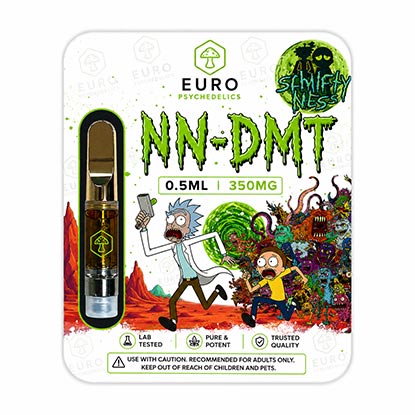
Schwifty Labs DMT (Cartridge) .5mL
Schwifty Labs DMT (Cartridge) .5mL is a product name associated with a cartridge-format preparation marketed or discussed as containing DMT, or N,N-dimethyltryptamine. Because products sold under this type of branding can fall outside regulated pharmaceutical supply chains, the name and stated volume alone do not establish the actual chemical composition, concentration, purity or safety of a particular cartridge.
That distinction is especially important for European consumers. DMT is a powerful psychedelic substance, and its legal status, permitted uses and penalties differ between European jurisdictions. The European Union Drugs Agency (EUDA) also highlights a broader concern surrounding unregulated psychedelic products: substances may be mislabelled, mixtures may contain unexpected compounds, and information about potency and long-term health effects can be limited.
This article therefore focuses on what can reasonably be established about DMT, cartridge-format products and the European regulatory context, rather than treating a branded cartridge as a verified pharmaceutical product.
What is DMT?
DMT stands for N,N-dimethyltryptamine, a naturally occurring psychedelic compound belonging to the tryptamine family. It is pharmacologically related to other classic psychedelics and produces profound changes in perception, cognition and subjective experience.
The substance has a long history of association with traditional plant preparations in South America, particularly ayahuasca. In contemporary Western culture, DMT has also attracted attention because of its exceptionally intense psychedelic effects and its inclusion in modern psychedelic research.
The EUDA classifies DMT among the classical psychedelic substances being investigated in clinical and scientific contexts. These substances generally produce their characteristic effects through interactions with the brain’s serotonergic system, particularly serotonin 5-HT2A receptors.
Importantly, the existence of scientific research does not mean that commercially advertised DMT products are medically approved. Clinical research takes place under controlled conditions, with defined substances, documented procedures, screening and professional oversight. Those circumstances are fundamentally different from an unregulated cartridge obtained through an illicit or informal market.
Understanding the “.5mL” specification
The “.5mL” designation refers to volume, not necessarily to the amount of DMT contained in the cartridge.
This is an important distinction when interpreting product listings. A cartridge containing 0.5 millilitres of liquid does not, by that measurement alone, tell a consumer how many milligrams of active DMT are present.
A liquid preparation can contain multiple components, including an active substance and other ingredients used to create a suitable formulation. Without reliable laboratory analysis, a stated volume cannot establish:
- The concentration of DMT
- The total quantity of DMT
- The identity of other ingredients
- The presence of contaminants
- Whether the stated contents are accurate
- Whether the formulation is consistent from one batch to another
Consequently, a product title containing “0.5mL” should not be interpreted as an independently verified statement of potency.
This issue becomes particularly relevant in unregulated markets. The EUDA reports that psychoactive substances appearing on European drug markets can be mislabelled or sold in mixtures, increasing uncertainty about what consumers are actually exposed to.
Cartridge-format DMT products
A cartridge is a delivery format rather than a distinct type of DMT.
In general terms, a cartridge-format product consists of a liquid preparation contained in a reservoir designed to interface with a compatible electronic device. The presence of a cartridge does not establish that the contents are pharmaceutical-grade, accurately labelled or manufactured according to European medicinal-product standards.
This is one reason it is useful to distinguish format from quality assurance.
A cartridge may look professionally manufactured while still lacking the independent testing, traceability and regulatory oversight expected from an authorised medicinal product. Packaging, branding, printed labels and batch-style information can therefore provide less assurance than consumers might assume.
For European readers, the more useful questions concern provenance, independent analytical verification and applicable law rather than the visual appearance of the cartridge.
What effects are associated with DMT?
DMT is capable of producing a very intense psychedelic experience. Reported effects can include major changes in sensory perception, visual phenomena, altered awareness of time and profound changes in cognition and emotional state.
Scientific and government sources describe DMT as capable of producing hallucinations and significant alterations in perception. Physiological effects can include increased heart rate, while psychological reactions may range from intensely positive experiences to fear, agitation or panic.
The experience can vary considerably between individuals. Factors influencing psychedelic experiences can include the substance itself, its concentration and purity, the person’s physical and psychological state, the surrounding environment and whether other substances are involved.
This variability is one reason why assumptions based on another person’s experience are unreliable.
Psychological effects
Psychedelic experiences can be difficult to predict. An individual may experience intense perceptual changes, distorted surroundings, unusual thoughts, powerful emotions or a temporary sense of disconnection from ordinary reality.
Although some people describe psychedelic experiences positively, others can experience acute anxiety, confusion or fear.
The EUDA specifically notes that challenging experiences and acute anxiety have been observed in psychedelic research, while safety information remains uneven across different substances and research settings.
Physical effects
DMT can also produce physiological effects. Published information identifies increased heart rate and other physical changes among possible acute effects.
The risks associated with an unregulated cartridge are more difficult to establish because the consumer may not know whether the stated substance, concentration or formulation is accurate.
That uncertainty is separate from the pharmacological risks of DMT itself.
Why purity and composition matter
One of the biggest concerns surrounding unregulated psychoactive products is the difference between what a label says and what laboratory analysis actually finds.
A professionally designed package is not equivalent to independent analytical testing.
For a DMT cartridge, unknown composition can introduce several uncertainties. The liquid may contain a different concentration than advertised, another psychoactive compound, residual manufacturing chemicals or contaminants. There may also be batch-to-batch differences.
The EUDA’s 2026 reporting emphasises that European drug markets are becoming increasingly diverse and complex, with new psychoactive substances appearing regularly and health risks sometimes difficult to assess. In 2025 alone, 50 new psychoactive substances were reported to the European early-warning system for the first time.
This does not establish that a particular Schwifty Labs cartridge contains an unexpected substance. Rather, it demonstrates why consumers should not infer laboratory quality from branding alone.
DMT and the European legal landscape
The legal situation surrounding DMT should be treated seriously.
European drug laws are not uniform. Although international drug-control agreements provide an important framework, individual countries establish their own national laws, classifications, offences and penalties.
The EUDA explains that most classical and atypical psychedelic substances are controlled internationally and that EU Member States have implemented national responses. It also stresses that national laws differ and can change, meaning the relevant national authority should be consulted for current information.
This means that a person should not assume that a DMT product is lawful simply because:
- It is advertised online
- It is sold under a brand name
- It is described as a “research” product
- It is available in another European country
- Another country has adopted a different approach to psychedelics
- A seller claims that the product is legal
Importation, possession, supply and other activities can have different legal consequences depending on the jurisdiction.
For anyone in Europe researching the legal position, the safest approach is to consult the relevant national government, medicines authority, customs authority or drug-control authority rather than relying on a commercial product listing.
DMT research versus commercial products
Interest in DMT has increased as psychedelic science has expanded.
The EUDA reports that clinical studies are investigating several psychedelic substances, including DMT, in connection with potential therapeutic applications. However, the agency also cautions against generalising findings from clinical research to uncontrolled or unregulated environments.
This distinction is essential.
A research study may use:
- A chemically characterised substance
- Defined concentrations
- Controlled manufacturing
- Medical screening
- Professional monitoring
- Documented inclusion and exclusion criteria
- Structured follow-up
An unregulated commercial product may not provide equivalent safeguards.
Consequently, claims that a branded DMT cartridge has therapeutic, psychological or wellness benefits should not automatically be interpreted as scientifically established claims.
The rise of psychedelic interest in Europe
Psychedelics have moved increasingly into public discussion across Europe.
The EUDA has identified growing interest in psychedelic substances for wellness, therapeutic and spiritual purposes, alongside the appearance of unregulated or illegal practices. Such activities can include retreats and other organised experiences involving substances such as DMT-containing ayahuasca preparations, psilocybin and other psychedelics.
This increased visibility has created an unusual situation.
On one hand, legitimate scientific research is exploring whether certain psychedelics could eventually have carefully regulated medical applications. On the other, commercial interest can sometimes move faster than the evidence.
Consumers should therefore distinguish between:
Scientific evidence: research conducted under defined conditions.
Medical approval: authorisation by a competent regulatory authority for a specific medical use.
Commercial marketing: claims made by a seller or brand.
These are not interchangeable categories.
Important considerations for European consumers
Anyone researching a DMT cartridge should consider several issues before relying on information attached to the product.
Product identity
A brand name does not independently verify the chemical identity of its contents.
Laboratory evidence
A credible analytical report is more informative than a marketing statement, although consumers should also consider whether the report genuinely corresponds to the particular batch or product.
Regulatory status
The legal classification of DMT and related preparations should be checked in the country where possession or use would occur.
Medical claims
Claims about treating depression, anxiety, addiction or other health conditions should be treated cautiously unless supported by appropriate clinical evidence and regulatory approval.
Unknown ingredients
An unregulated formulation may contain substances that are not clearly disclosed.
Individual vulnerability
Psychedelics can produce particularly challenging psychological experiences, and the EUDA highlights additional concerns for vulnerable individuals and people with certain mental-health circumstances.
DMT cartridges versus regulated medicines
It is also useful to understand the difference between a branded psychoactive cartridge and a regulated medicinal product.
A medicinal product supplied through a regulated European healthcare system is subject to requirements covering areas such as manufacturing quality, pharmaceutical controls, labelling, pharmacovigilance and authorised indications.
A cartridge sold through an unregulated channel may not be subject to equivalent requirements.
Therefore, consumers should avoid assuming that a product’s polished packaging, branded name or technical-sounding description represents pharmaceutical certification.
The distinction is particularly important when product listings make claims about purity or therapeutic value.
What the current evidence tells us
The scientific picture surrounding psychedelics is developing, but it is not complete.
The EUDA describes psychedelic research as an expanding field while noting substantial differences in the quantity and quality of available safety information. Some clinical findings are promising, but they cannot simply be transferred to uncontrolled use.
The broader European drug market is also changing rapidly. The EUDA’s 2026 report highlights the emergence of new substances, changing product markets and the difficulty of identifying what some products actually contain.
For consumers, the practical conclusion is straightforward: the product label is not the same thing as independently verified evidence.
Frequently Asked Questions
1. What is Schwifty Labs DMT (Cartridge) .5mL?
Schwifty Labs DMT (Cartridge) .5mL is a branded cartridge-format product name associated with DMT. The “.5mL” specification describes the stated liquid volume, but it does not by itself establish the concentration, purity or exact chemical composition of the contents.
2. Is DMT legal in Europe?
There is no single answer covering every European country. DMT is subject to international drug-control frameworks, while individual European countries apply their own legislation and penalties. The EUDA advises checking current national law because regulations differ and can change.
3. Does 0.5mL mean the cartridge contains 0.5mL of DMT?
No. Millilitres measure liquid volume. They do not establish how much active DMT is present. Determining the amount of an active substance requires reliable information about concentration and, ideally, appropriate analytical verification.
4. Is a branded DMT cartridge necessarily pharmaceutical-grade?
No. Branding and packaging do not establish pharmaceutical quality. A regulated medicine is manufactured and controlled according to applicable pharmaceutical requirements, whereas an unregulated psychoactive product may not have equivalent quality assurance.
5. Is DMT being researched for medical applications?
Yes. DMT is among the psychedelics being investigated in clinical research. However, research findings should not be confused with general medical approval, and controlled clinical studies differ substantially from unregulated use.
6. What are the main concerns surrounding unregulated DMT products?
Key concerns include uncertain composition, inaccurate labelling, unknown potency, contaminants, unpredictable psychological effects and legal consequences. The EUDA also warns more broadly that European drug markets increasingly contain mislabelled or mixed psychoactive products, creating additional health risks.
Be the first to review “Schwifty Labs DMT (Cartridge) .5mL”
Related products
DMT Vape Pen
DMT Vape Pen
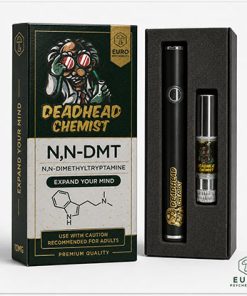
DMT Vape Pen
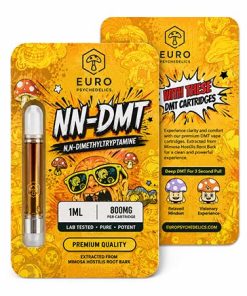
DMT Vape Pen
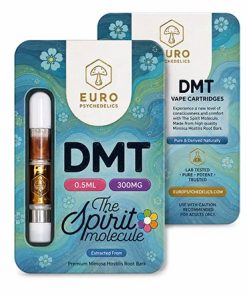
DMT Vape Pen
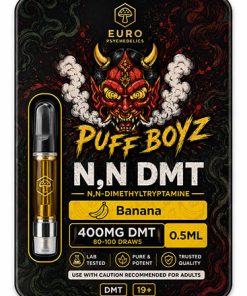
DMT Vape Pen
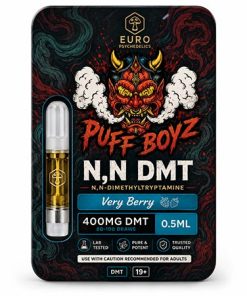
DMT Vape Pen
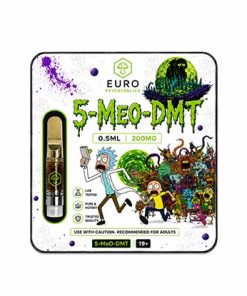
DMT Vape Pen
Reviews
There are no reviews yet.